In the realm of precision measurement and sensing, laser sensors stand as pivotal tools across industries such as manufacturing, telecommunications, and biomedical engineering. A fundamental yet often nuanced aspect of their operation is polarization—the orientation of the electric field vector of the laser light wave. Mastering polarization control is not merely an academic exercise; it is essential for optimizing sensor performance, minimizing noise, and ensuring reliable data acquisition. This article delves into the principles, challenges, and practical applications of laser sensor polarization, offering insights for engineers and technicians seeking to harness its full potential.
At its core, polarization refers to the direction in which the electric field oscillates perpendicular to the light's propagation direction. In laser sensors, light is typically emitted with a specific polarization state, which can be linear, circular, or elliptical. Linear polarization, where the electric field vibrates in a single plane, is most common in industrial sensors due to its simplicity and predictability. The polarization state directly influences how laser light interacts with target surfaces, atmospheric conditions, and optical components within the sensor system. For instance, when linearly polarized light reflects off a surface, its polarization can shift based on the material's properties and angle of incidence—a phenomenon described by Fresnel equations. This shift, if unaccounted for, can introduce measurement errors in applications like distance sensing, surface profiling, or vibration analysis.

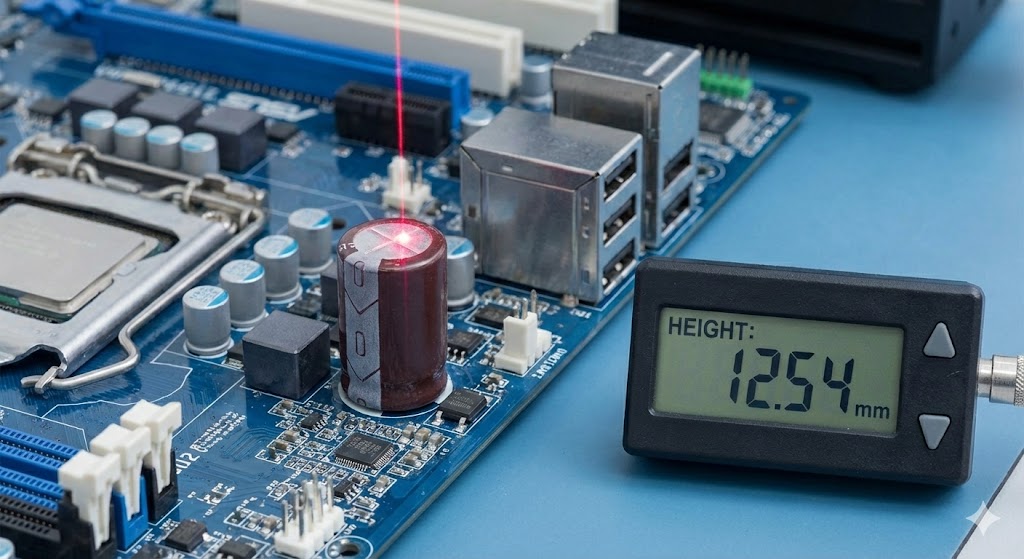
The design and implementation of polarization control in laser sensors involve several critical components. Polarizers, waveplates, and beam splitters are routinely integrated to manipulate and analyze polarization states. A polarizer, often made from birefringent crystals or wire-grid structures, filters light to allow only a specific polarization orientation to pass. Quarter-waveplates and half-waveplates, crafted from materials like quartz or mica, retard one component of the light wave relative to another, converting linear polarization to circular or rotating its plane. In sensor systems, these elements help maintain signal integrity, reduce glare from reflective surfaces, and enhance contrast in imaging applications. For example, in laser triangulation sensors used for height measurement, controlling polarization minimizes specular reflections that could saturate detectors, thereby extending the dynamic range and improving accuracy.
However, managing polarization is fraught with challenges. Environmental factors such as temperature fluctuations, mechanical stress on optical fibers, and atmospheric scattering can depolarize laser light, leading to signal degradation. In fiber-optic laser sensors, which are prevalent in distributed sensing networks, birefringence within the fiber—caused by imperfections or external pressures—can alter polarization randomly over time. This necessitates polarization-maintaining fibers or active compensation techniques, such as polarization controllers with feedback loops, to stabilize output. Additionally, the coherence of laser light amplifies interference effects; unwanted polarization mixing can create noise patterns that obscure measurement signals. Engineers must therefore conduct thorough polarization analysis during sensor calibration, using tools like polarimeters to characterize the state of polarization and adjust optical layouts accordingly.
Practical applications underscore the importance of polarization mastery. In lidar systems for autonomous vehicles, polarized laser pulses help distinguish between objects like wet roads and metallic surfaces by analyzing backscattered polarization signatures, enhancing object detection in adverse weather. In biomedical sensors, such as optical coherence tomography, polarization-sensitive designs enable tissue differentiation by detecting birefringence in collagen fibers, aiding in early disease diagnosis. Industrial alignment lasers rely on polarization to project stable reference lines unaffected by ambient light, while in telecommunications, polarization-division multiplexing doubles data transmission capacity by encoding information on orthogonal polarization states. Each case demands tailored polarization strategies to mitigate cross-talk, maximize signal-to-noise ratios, and ensure long-term reliability.
Looking ahead, advancements in laser technology and materials science are poised to refine polarization control further. Metasurfaces and nanostructured optical elements offer compact, tunable polarization manipulation with minimal losses, ideal for next-generation miniaturized sensors. Machine learning algorithms are being integrated to predict and correct polarization drifts in real-time, adapting to dynamic environments without manual intervention. As sensors evolve toward higher resolutions and faster response times, a deep understanding of polarization will remain indispensable. For professionals in the field, continuous education on polarization principles—coupled with hands-on experimentation—is key to innovating robust sensor solutions that meet the stringent demands of modern industry.
In summary, laser sensor polarization is a multifaceted discipline that bridges theoretical optics and practical engineering. By appreciating its impact on measurement fidelity and system design, engineers can unlock new levels of precision, driving progress in automation, healthcare, and beyond. Whether deploying sensors in a factory floor or a research lab, prioritizing polarization optimization is a strategic investment in accuracy and performance.