For engineers, procurement specialists, and product designers in the automation, automotive, and manufacturing sectors, the location of a proximity sensor manufacturer's Research and Development (R&D) center is far more than a point on a map. It represents the epicenter of innovation, a critical hub where fundamental physics meets practical application to solve real-world industrial challenges. Understanding where and how these centers operate provides invaluable insight into a company's technological roadmap, its commitment to quality, and its ability to partner in developing next-generation solutions.
The concept of a single, monolithic "Proximity Sensor R&D Center" is somewhat of a misnomer in today's globalized industry. Leading sensor manufacturers typically maintain a network of specialized facilities, each with a distinct focus, strategically distributed across key global markets. The primary, or flagship, R&D center is often located at the company's global headquarters or in a region renowned for its technological ecosystem. For many European and American giants, this means centers are situated in industrial heartlands like Germany's Ruhr region, Switzerland, Japan, or in tech clusters such as Silicon Valley in the United States. These locations offer deep pools of engineering talent, proximity to leading universities, and a culture of intensive research into materials science, semiconductor fabrication, and electromagnetic theory—the bedrock of inductive, capacitive, and magnetic proximity sensor technology.
However, a significant and growing trend is the establishment of major R&D centers in Asia, particularly in China, South Korea, and Singapore. This strategic shift is driven by the massive concentration of manufacturing and the rapid evolution of local markets demanding sensors for electric vehicles, advanced robotics, and consumer electronics. An R&D center in Shanghai or Shenzhen, for instance, is not merely a satellite office; it is a full-fledged innovation hub focused on applications engineering, cost-optimized design for high-volume production, and rapid prototyping to meet the specific needs of Asian OEMs. This decentralized model ensures that sensor development is intimately connected to the pulse of local industry demands.
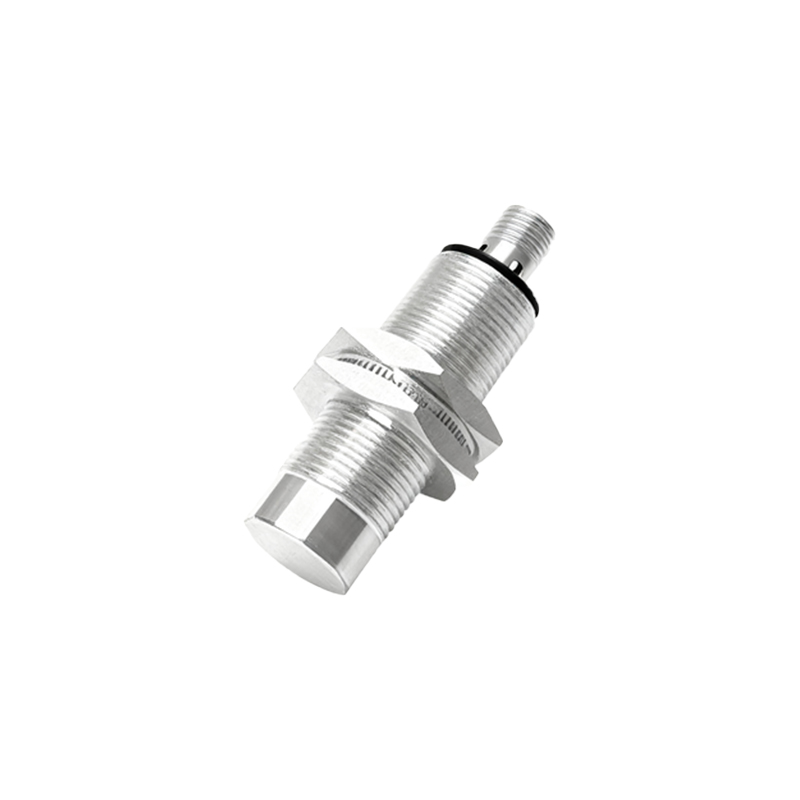
So, what truly happens inside these centers? The work transcends simple product iteration. Core teams are dedicated to advancing sensing principles. This includes research into new coil designs for inductive sensors to achieve longer ranges or greater immunity to electromagnetic interference (EMI), developing novel dielectric materials for capacitive sensors to detect non-metallic objects with higher precision, and refining magneto-resistive elements for magnetic sensors. Simultaneously, another crucial wing focuses on integration and intelligence. Here, engineers work on embedding microprocessors and developing algorithms for smart sensors with IO-Link communication, condition monitoring features, and advanced diagnostics. They tackle the challenges of miniaturization, enhanced environmental robustness (IP69K ratings, extended temperature ranges), and power efficiency for battery-operated devices.
For an industry professional evaluating a sensor supplier, the question "Where is your R&D center?" should be followed by more probing inquiries: What is the specific focus of each global R&D location? How do these centers collaborate across continents? What percentage of revenue is reinvested into these facilities? The answers reveal much. A company with a strong, well-funded R&D center in a key market demonstrates a commitment to long-term support and co-engineering. It means they possess the capability to develop custom solutions, not just offer a standard catalog. It ensures that their products are tested and validated against the most stringent regional standards and real-world operating conditions from the outset.
In conclusion, the modern proximity sensor R&D landscape is a global, interconnected network. While the historical centers of excellence in Europe, North America, and Japan continue to drive core technology breakthroughs, dynamic hubs in Asia are accelerating application-specific innovation and production scalability. The most reliable and innovative suppliers are those that leverage this global footprint, allowing their R&D efforts to be both deeply fundamental and immediately relevant. Therefore, when specifying sensors for a critical automation line, a new vehicle platform, or a smart appliance, considering the geographic and technical depth of a manufacturer's R&D operations is not an ancillary detail—it is a fundamental criterion for ensuring performance, reliability, and future-proofing your investment.