In the realm of industrial automation, consumer electronics, and automotive systems, proximity sensors play a pivotal role. Understanding the correct English terminology associated with these devices is crucial for engineers, technicians, and procurement specialists working in global environments. A proximity sensor is a non-contact sensor that detects the presence or absence of an object within a specified range without physical contact. The core principle involves emitting an electromagnetic field, beam, or radiation and looking for changes in the field or return signal.
The most common types are defined by their underlying technology. Inductive Proximity Sensors are widely used for detecting metallic objects. They generate an oscillating electromagnetic field from a coil. When a metallic target enters this field, it induces eddy currents, causing a change in oscillation amplitude that is detected by the sensor circuit. Key terms include sensing distance, shielded vs. unshielded design, and ferrous/non-ferrous metals.
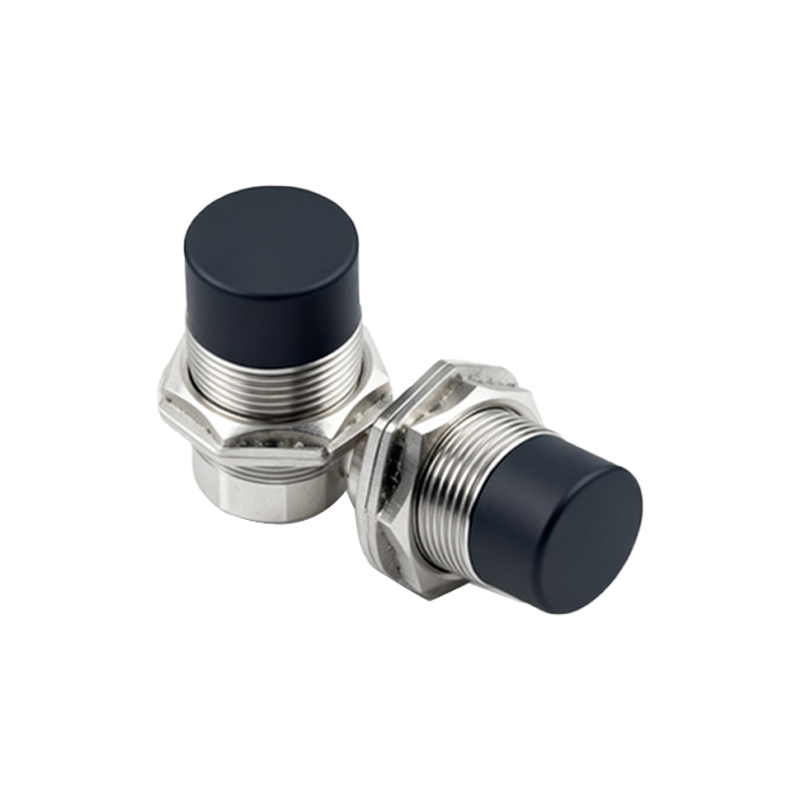
Capacitive Proximity Sensors can detect both metallic and non-metallic materials, such as liquids, plastics, or wood. They function by generating an electrostatic field. The presence of any material with a dielectric constant different from air alters the capacitance of the system, triggering detection. Important vocabulary here includes dielectric constant, sensitivity adjustment, and material influence.
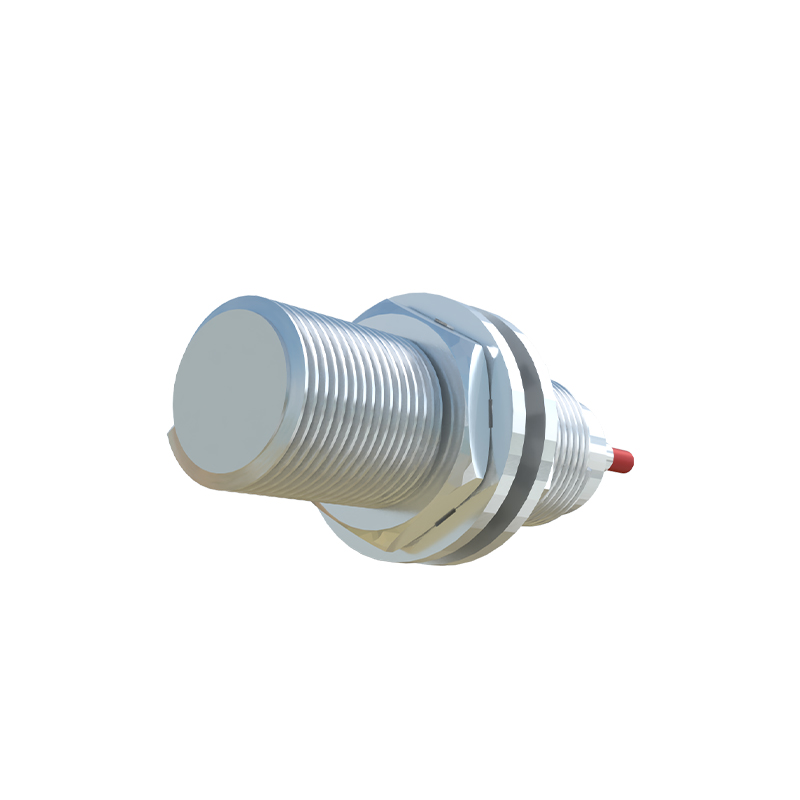
Photoelectric Sensors, often used for longer ranges, operate by emitting a light beam (visible, infrared, or laser) and detecting its reflection or interruption. While not always classified strictly as "proximity" sensors in narrow terms, their function is similar. Sub-types include through-beam, retro-reflective, and diffuse reflective modes. Terms like light-on/dark-on operation, response time, and background suppression are essential.
Ultrasonic Proximity Sensors measure distance by emitting high-frequency sound waves and calculating the time for the echo to return. They are effective for detecting objects of various materials and under challenging conditions like dust or fog. Relevant terminology encompasses echo, time-of-flight, blanking distance, and temperature compensation.
Key performance parameters, universally described in English datasheets, must be mastered. Sensing Distance (Sn): The nominal operating distance under standardized conditions. Hysteresis: The difference between the switch-on and switch-off points, preventing chatter. Repeatability: The consistency of the sensing point. Output Configuration: Described as NPN (sinking) or PNP (sourcing) for DC sensors, and NO (Normally Open) or NC (Normally Closed) contact states. IP Rating (Ingress Protection): Indicates protection against solids and liquids (e.g., IP67).
Applications dictate terminology usage. In automotive assembly, inductive sensors monitor engine block position or gear tooth counting. In mobile phones, a capacitive or infrared sensor enables display blanking during calls. On packaging lines, photoelectric sensors ensure bottle cap presence verification. In warehouse automation, ultrasonic sensors guide AGV (Automated Guided Vehicle) obstacle avoidance.
Selecting the right sensor involves analyzing the target material, required sensing range, environmental factors (like washdown, temperature, or EMI), switching frequency, and output compatibility with the controller (PLC). Always refer to the manufacturer's datasheet for precise specifications, not just the generic product name.
Mastering this lexicon facilitates precise communication in technical documentation, international project specifications, and troubleshooting guides. It ensures correct sensor selection, leading to reliable system integration, reduced downtime, and enhanced operational safety. As Industry 4.0 and IoT evolve, terms like IO-Link (a communication protocol for sensors) and smart sensor are becoming integral to the proximity sensor vocabulary, enabling advanced diagnostics and parameter setting remotely.