In industrial automation and robotics, the ability to detect objects or measure distances in confined areas is critical. Narrow gap proximity sensors, specifically designed for such challenging environments, have become indispensable components. These sensors operate effectively in minimal clearance settings, often where traditional sensors cannot fit or function reliably.
The core principle behind narrow gap proximity sensors involves electromagnetic or capacitive sensing technology. Inductive variants, for instance, generate an oscillating electromagnetic field. When a metallic object enters this field, eddy currents are induced, altering the oscillation amplitude. This change is detected and converted into a switch signal. Their design typically features an elongated, slim profile, allowing installation in gaps as small as a few millimeters. This compact form factor does not compromise sensing distance or accuracy, a significant engineering achievement.
Applications span numerous sectors. In automated assembly lines, these sensors verify the presence of tiny components like screws or springs within densely packed modules. Semiconductor manufacturing equipment utilizes them for wafer positioning, where even micron-level misalignment can cause defects. The automotive industry integrates them into brake systems to monitor pad wear or in transmission systems for gear position sensing. Additionally, they are vital in precision machinery, medical devices, and even consumer electronics assembly, ensuring delicate operations proceed without physical contact.
Selecting the appropriate narrow gap sensor requires careful consideration of several parameters. The sensing distance, often specified as the nominal range, must suit the application without being too large to cause interference. Material composition of the target object is crucial; inductive sensors detect only metals, with factors like material type and size affecting performance. Environmental conditions such as temperature extremes, humidity, oil, or coolant exposure demand sensors with suitable ingress protection (IP) ratings. Output types—whether NPN, PNP, or analog—must align with the control system's requirements. Furthermore, response time and switching frequency are critical in high-speed operations to ensure no detection lag.
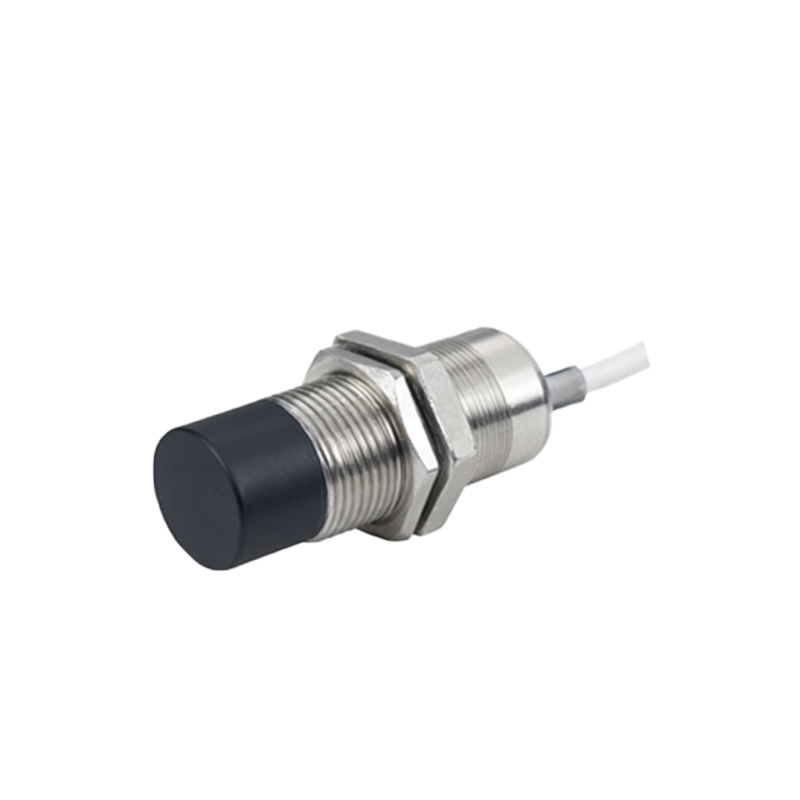
Installation and alignment are paramount for optimal performance. Even with a slim design, improper mounting can lead to false triggers or missed detections. Engineers must ensure the sensor is positioned parallel to the target's approach direction, with the sensing face unobstructed. Minimal lateral offset is essential, as the sensitive area is precisely defined. Using non-metallic brackets and maintaining clean sensing surfaces prevent interference. Regular maintenance checks for accumulation of metallic dust or debris, which can attenuate the sensing field, are recommended.
Advancements in materials and microelectronics continue to enhance these sensors. Modern versions incorporate robust housings from stainless steel or PBT plastic, resisting mechanical stress and chemical corrosion. Integrated electronics now offer improved noise immunity, stable operation amid electrical interference from motors or frequency converters. Some models feature built-in diagnostics like LED indicators for operational status, simplifying troubleshooting. The trend towards miniaturization pushes the limits, enabling sensors for increasingly tighter spaces without sacrificing range or durability.
Compared to alternative detection methods like miniature photoelectric sensors or ultrasonic sensors, narrow gap inductive proximity sensors offer distinct advantages in metallic target scenarios. They are immune to ambient light, color, or surface finish variations that affect optical sensors. They provide consistent performance in dirty or dusty environments where optical windows might get obscured. Their solid-state design ensures long operational life with no moving parts to wear out. However, for non-metallic objects, capacitive narrow gap sensors become the alternative, detecting materials like plastics, liquids, or wood based on dielectric constant changes.
In conclusion, narrow gap proximity sensors exemplify how specialized engineering solutions address precise operational demands. Their ability to deliver reliable, non-contact detection in spatially constrained applications underpins modern automation's efficiency and accuracy. As industries pursue higher precision and miniaturization, the evolution of these sensors will remain a key enabler, ensuring machines see and react in the tightest of spaces.