In industrial automation, manufacturing, and harsh environment applications, proximity sensors are indispensable components for non-contact detection of objects. However, one of the most significant challenges they face is reliable operation under high-temperature conditions. A standard proximity sensor's performance can degrade dramatically when ambient temperatures exceed its specified operating range, leading to false triggers, reduced sensing distance, permanent damage, or complete failure. Understanding the causes, implications, and solutions for high-temperature operation is crucial for system integrity and safety.
The core issue stems from the sensor's internal components. The oscillator coil, semiconductor circuitry, and housing materials all have thermal limits. Excessive heat can cause coil resistance to increase, altering the oscillation characteristics and thus the effective sensing distance. For inductive and capacitive sensors, the dielectric properties of materials can change with temperature. Semiconductor components, like the output transistor or IC, may experience thermal runaway or parameter drift, leading to unstable switching behavior. Prolonged exposure to high temperatures accelerates the aging of plastics, seals, and potting compounds, potentially causing brittleness and loss of environmental protection (IP rating).
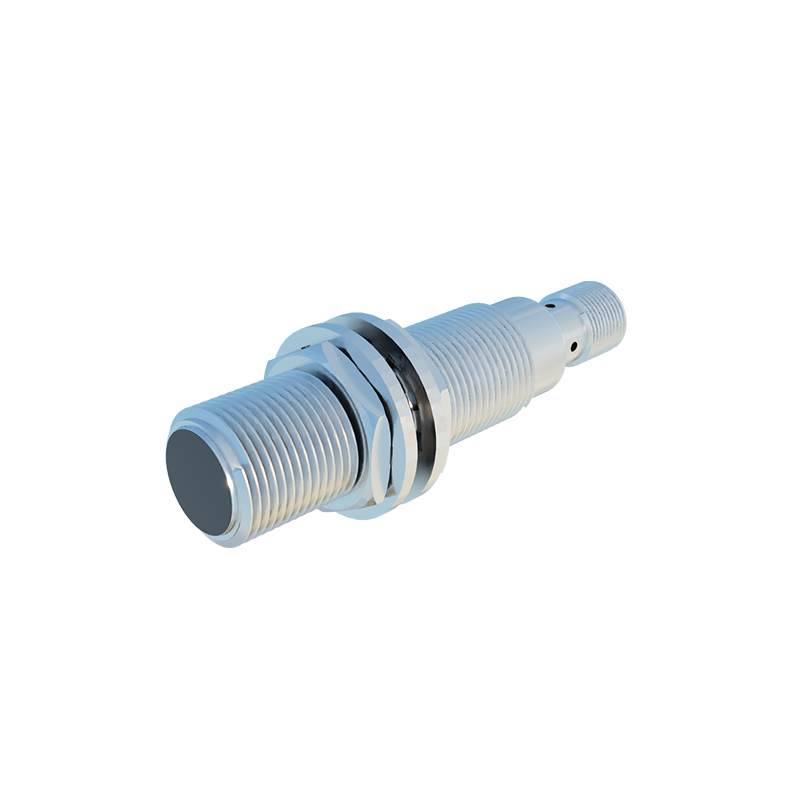
Typical industrial proximity sensors are rated for operations between -25°C to +70°C. Applications exceeding this range are common, such as in die-casting machines, near furnaces, in automotive engine bays, within food and beverage sterilization processes, or in metal forging and welding cells. In these scenarios, ambient temperatures can consistently reach 100°C, 150°C, or even higher, with additional radiant heat from hot objects being a major factor.
To address these challenges, specialized high-temperature proximity sensors are engineered. Key design strategies include:
1. High-Temperature Rated Components: Using wire with high-temperature insulation for coils, high-temperature stable capacitors and resistors, and semiconductors rated for extended junction temperatures.
2. Thermal Management: Designing the housing from metals like stainless steel, which acts as a heat sink, and using high-temperature plastics (e.g., PEEK, PPS) that resist deformation. Internal potting with silicone-based compounds can improve heat dissipation and protect circuitry from thermal shock.
3. Circuitry Compensation: Advanced sensors incorporate temperature compensation circuits that automatically adjust the sensing threshold or oscillation amplitude to maintain a consistent switching point across a wide temperature range, minimizing drift.
4. Increased Derating: Manufacturers specify a derating curve, indicating how the nominal sensing distance (Sn) reduces as ambient temperature increases. Selecting a sensor with a higher initial Sn to compensate for this derating is a common practice.
5. Physical Installation Techniques: Simple measures can significantly extend sensor life. Using a mounting bracket as a heat shield, installing the sensor away from direct radiant heat sources, ensuring good airflow for cooling, and using extension cables to relocate the electronics to a cooler area are highly effective field solutions.
When selecting a sensor for a high-temperature application, critical parameters to scrutinize on the datasheet include the continuous operating temperature range, the storage temperature range, the derating graph for sensing distance, and the housing material specification. It is not enough to consider ambient air temperature alone; one must also account for the temperature of the target object if it is hot and the duration of exposure. For instance, a sensor briefly sensing a hot metal part requires different considerations than one constantly bathed in hot air.
Beyond inductive and capacitive models, specialized technologies like magnetic (reed switch or Hall effect) sensors in high-temperature housings can be excellent for detecting hot ferrous objects, as the sensing element can be better isolated from heat. Fiber optic proximity sensors are another robust solution for extreme temperatures, as the sensitive electronics can be located remotely, with only the durable optical fiber tip exposed to the heat zone.
In conclusion, the demand for proximity sensors in high-temperature environments is growing. Failure to account for thermal effects leads to costly downtime and maintenance. By acknowledging the thermal limits of standard sensors and proactively selecting or applying solutions designed for thermal management—through specialized products, careful selection, and smart installation—engineers can ensure detection reliability, enhance system robustness, and achieve long-term operational stability in even the most demanding thermal conditions. The upfront investment in a properly specified high-temperature sensor invariably pays dividends in reduced failure rates and consistent process quality.