In industrial automation and control systems, proximity sensors play a critical role in detecting the presence or absence of objects without physical contact. Selecting the appropriate sensor is essential for ensuring reliability, efficiency, and safety in operations. This article outlines the fundamental principles and practical methods for choosing the right proximity sensor based on application requirements.
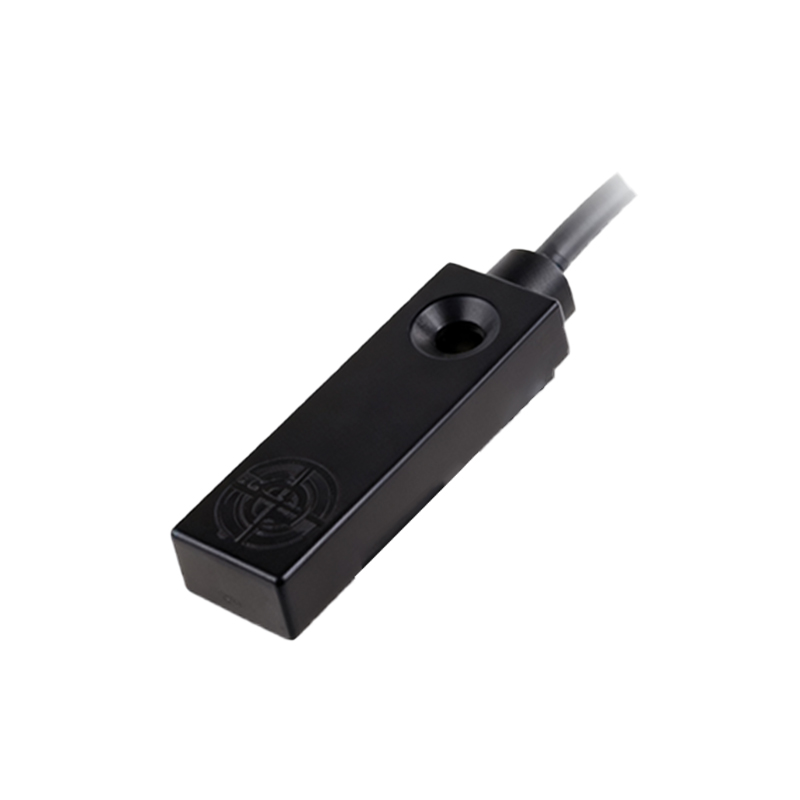
Proximity sensors operate on various principles, each suited to specific conditions and materials. The most common types include inductive, capacitive, ultrasonic, and photoelectric sensors. Inductive sensors detect metallic objects by generating an electromagnetic field. When a metal target enters this field, it induces eddy currents, causing a change in the sensor's oscillation amplitude. This change triggers an output signal. These sensors are ideal for harsh environments with dust, oil, or moisture, as they are sealed and resistant to interference. However, they only work with metals, limiting their use with non-metallic materials.
Capacitive sensors, on the other hand, can detect both metallic and non-metallic objects, such as plastics, liquids, or granules. They function by measuring changes in capacitance between the sensor and the target. When an object approaches, it alters the dielectric constant, leading to a capacitance shift that activates the output. Capacitive sensors are suitable for level detection, material handling, and applications involving transparent or thin materials. However, they can be sensitive to environmental factors like humidity or temperature variations, requiring careful calibration.
Ultrasonic sensors use sound waves to detect objects. They emit high-frequency ultrasonic pulses and measure the time taken for the echo to return after hitting a target. This time-of-flight principle allows them to sense objects regardless of color, transparency, or material composition. Ultrasonic sensors are effective for distance measurement, object positioning, and detecting liquids or uneven surfaces. Their performance can be affected by air turbulence, temperature, or acoustic interference, so installation in stable environments is recommended.
Photoelectric sensors rely on light beams, typically infrared or laser, to detect objects. They consist of an emitter and a receiver. When an object interrupts or reflects the light beam, the receiver detects the change and sends a signal. Photoelectric sensors offer long sensing ranges and high precision, making them ideal for packaging, assembly lines, or clean rooms. They can detect small or fast-moving objects but may struggle in dusty, foggy, or highly reflective conditions.
When selecting a proximity sensor, consider key factors such as sensing distance, target material, environmental conditions, output type, and mounting requirements. First, determine the required sensing range. Manufacturers specify nominal and effective ranges, but real-world factors like target size, shape, and orientation can affect performance. Always test under actual operating conditions. Second, identify the target material. For metals, inductive sensors are often the best choice, while capacitive or ultrasonic sensors handle non-metals. Third, assess the environment. Factors like temperature extremes, humidity, vibration, or exposure to chemicals can impact sensor durability. Choose sensors with appropriate ingress protection (IP) ratings and housing materials, such as stainless steel or plastic.
Output configuration is another critical aspect. Proximity sensors typically provide digital (e.g., NPN, PNP) or analog outputs. Digital outputs are simple on/off signals, suitable for presence detection, while analog outputs offer continuous data for distance or position monitoring. Ensure compatibility with your control system, such as PLCs or microcontrollers. Additionally, consider the electrical requirements, including voltage supply and current consumption, to avoid overloading circuits.
Mounting and installation also influence sensor performance. Factors like sensor size, shape, and mounting style (e.g., flush, non-flush) affect the sensing field and potential interference from surrounding metals. Follow manufacturer guidelines for spacing and alignment to prevent false triggers. For high-speed applications, response time is crucial; select sensors with fast switching frequencies to keep up with rapid object movements.
In summary, choosing the right proximity sensor involves a balanced analysis of technical specifications and practical needs. Start by defining the application's core requirements, then match them with sensor principles and features. Consult datasheets, conduct trials, and seek expert advice if needed. By following these methods, engineers can optimize system performance, reduce downtime, and enhance operational safety in diverse industrial settings.