Proximity sensors are essential components in modern industrial automation, robotics, and safety systems. Their ability to detect the presence or absence of an object without physical contact makes them invaluable across numerous applications. Understanding the composition and structure of these sensors is crucial for engineers and technicians involved in system design, integration, and maintenance. This article provides a detailed breakdown of the typical components and structural design of common proximity sensor types, primarily focusing on inductive and capacitive variants.
At its core, a standard proximity sensor consists of several key structural and functional blocks. The primary components can be categorized as follows: the sensing element/oscillator, the signal conditioning and processing circuit, the output stage, the housing, and the connection interface.
The heart of the sensor is the sensing element and oscillator circuit. In an inductive proximity sensor, this is a coil wound around a ferrite core, which, along with a capacitor, forms an LC tank circuit. This circuit generates a high-frequency electromagnetic field at the sensing face. When a metallic target enters this field, eddy currents are induced in the target, causing a change in the oscillation amplitude or frequency. Capacitive sensors operate on a similar principle but use a capacitor plate as the sensing element. The plate forms one part of a capacitor, with the target (or the environment) acting as the other plate. Changes in capacitance, caused by the proximity of any material (not just metals), alter the state of an internal oscillator.
The signal from the oscillator is fed into the signal conditioning and processing circuit. This stage typically includes an amplifier to boost the weak signal, a demodulator to convert the AC oscillation change into a DC voltage level, and a Schmitt trigger or comparator circuit. The comparator compares the processed signal against a predefined threshold. Once the signal strength exceeds (or falls below, depending on the design) this threshold, it triggers the output stage. This circuit is responsible for the sensor's hysteresis, which prevents output chatter when the target is at the exact switching point.
The output stage converts the decision from the processing circuit into a usable industrial control signal. Common output types include:
PNP (Sourcing): Switches the positive voltage line to the load.
NPN (Sinking): Switches the negative or ground line to the load.
Analog (e.g., 0-10V, 4-20mA): Provides a continuous signal proportional to the distance to the target.
Push-Pull / Complementary: Can act as either sourcing or sinking.
This stage utilizes solid-state switches like transistors or MOSFETs, or in some cases, mechanical relays (though less common in modern miniature sensors).
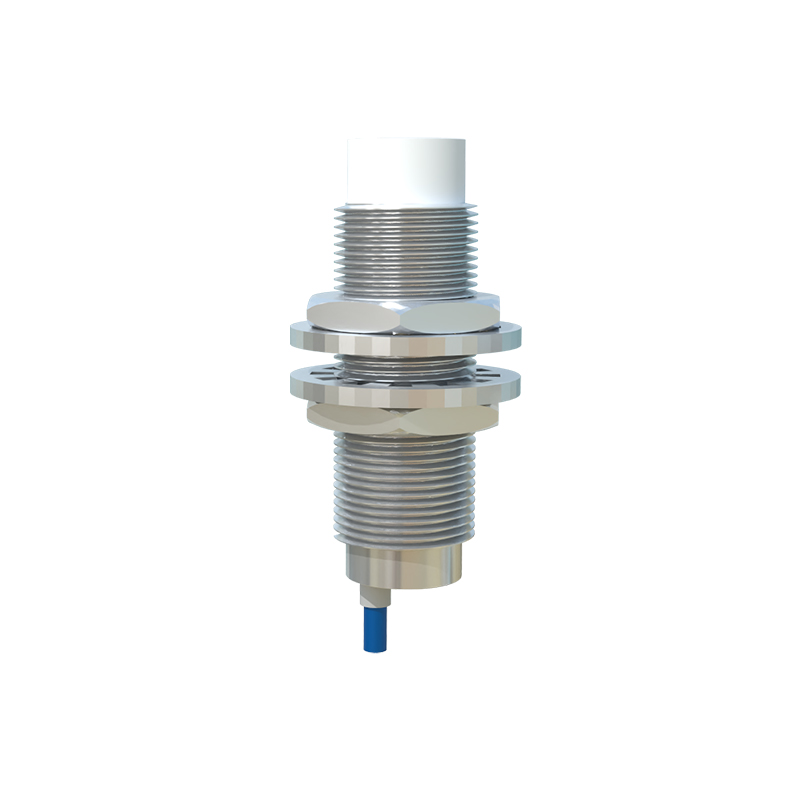
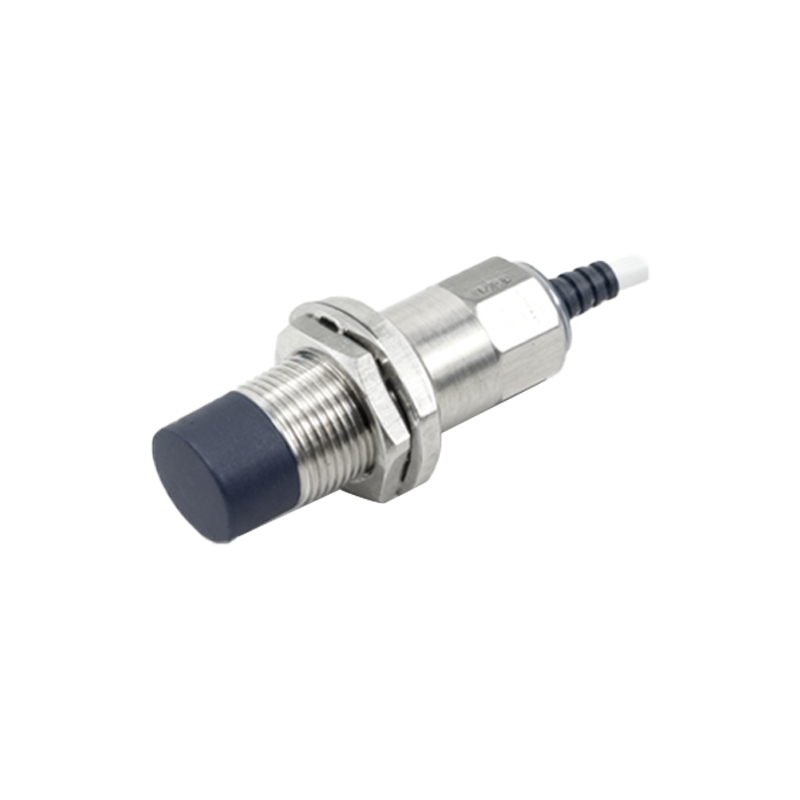
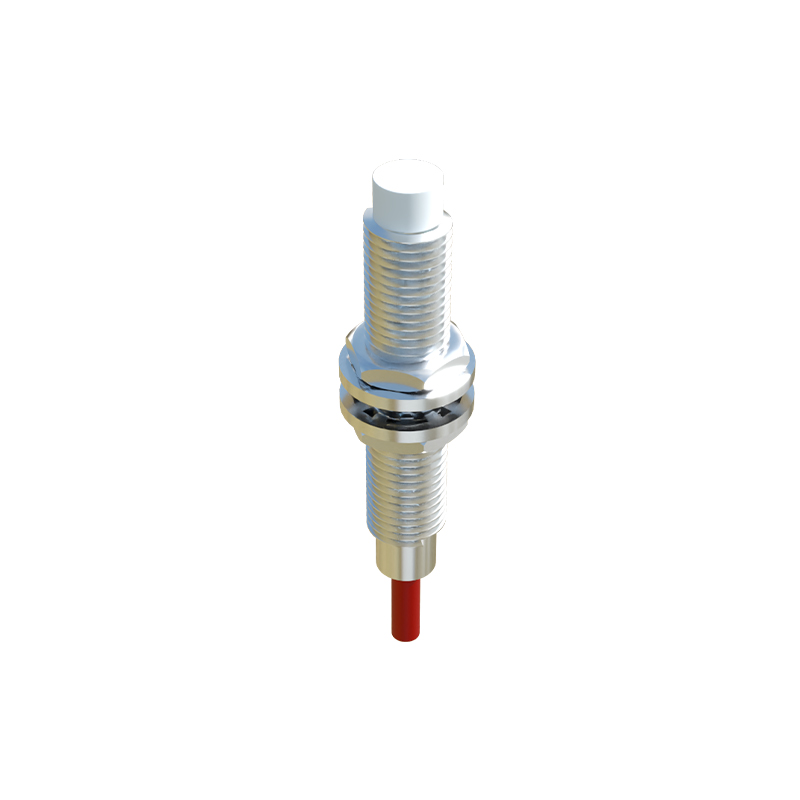
Encasing and protecting these electronic components is the housing. The housing material is selected based on the application environment. Common materials include nickel-plated brass, stainless steel (V2A/AISI 304, V4A/AISI 316), or engineering plastics like PBT or PPS. The housing provides mechanical strength, environmental sealing (typically rated IP67 or IP69K for washdown applications), and shields the internal electronics from electromagnetic interference (EMI). The sensing face is often made of a specific material, such as a ferrite-loaded plastic in inductive sensors, which concentrates the electromagnetic field while protecting the coil.
Finally, the connection interface allows for integration into a control system. This can be a pre-attached cable (often PUR or PVC sheathed) with standard color coding (e.g., brown for +V, blue for 0V, black for output), or a quick-disconnect connector (e.g., M8, M12, M23 standards). Some advanced sensors also feature diagnostic LEDs that indicate power status and output switching.
The physical structure is also defined by the form factor. Common designs include cylindrical barrels (e.g., M8, M12, M18, M30 diameters), rectangular or block-style housings, and slot-style sensors. The choice depends on mounting constraints, sensing range requirements, and the need for features like embeddability (flush or non-flush mounting in inductive sensors).
In summary, the efficient and reliable operation of a proximity sensor is the result of a sophisticated interplay between its electromagnetic or electrostatic sensing element, precise electronic signal processing, robust output driving circuitry, and a durable, application-suited mechanical housing. A deep understanding of this composition enables better sensor selection, troubleshooting, and optimization for specific automation challenges.