In the rapidly evolving landscape of industrial automation, laser proximity sensors have become indispensable components for precision detection, positioning, and measurement. For procurement specialists, system integrators, and agents navigating this market, understanding the pricing structure is crucial for making informed decisions and securing competitive advantages. The cost of a laser proximity sensor is not a single figure but a complex amalgamation of various technical and commercial factors.
At its core, the price is heavily influenced by the sensor's performance specifications. Key parameters include measurement range, spot size, repeatability, and response time. A standard diffuse-reflective sensor with a 0.5m range and ±1mm accuracy will occupy a different price tier than a high-precision background-suppression model with a 5m range and ±0.1mm repeatability, designed for demanding applications like robotic guidance or semiconductor manufacturing. The type of laser—typically red visible laser or Class 1/Class 2 infrared laser—also affects cost, with infrared variants often commanding a premium for eye-safety and performance in specific environments.
The sensing principle is a primary cost driver. Basic diffuse (proximity) models are generally the most economical. Retro-reflective sensors, which require a reflector, and through-beam (sender-receiver) models are typically mid-range. The most sophisticated and expensive are the background suppression (BGS) and true background suppression (T-BGS) sensors, which can precisely detect an object while ignoring surfaces beyond a set distance. Furthermore, specialized variants like distance-measuring sensors, which provide an analog output proportional to distance, incorporate more complex optics and electronics, leading to higher price points.
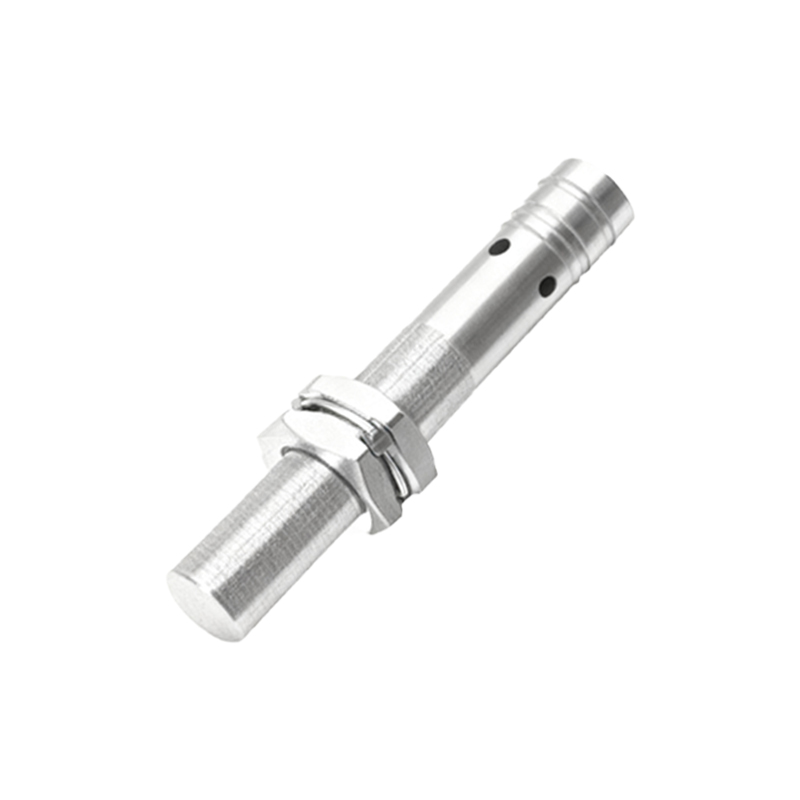
Build quality and housing material significantly impact durability and price. Sensors with robust metal housings (e.g., stainless steel) and high Ingress Protection ratings (IP67, IP69K) for washdown or harsh environments are more costly than standard plastic-housed units for light-duty applications. The connection type—pre-wired cable, quick-disconnect M8/M12 connectors—also adds to the unit cost.
Beyond the hardware, the brand and origin play a substantial role. Established global leaders from Europe, North America, and Japan (e.g., Keyence, SICK, Banner, Omron, Pepperl+Fuchs) offer premium products with extensive R&D, global support, and reliability, reflected in their pricing. Their sensors often represent the higher end of the market. In contrast, competitive alternatives from other Asian manufacturers or newer entrants provide more budget-friendly options, though potential trade-offs may exist in long-term consistency, certification completeness, or application support.
For agents and volume buyers, the pricing model shifts from a single unit list price to a tiered structure based on annual volume commitments (AVC). Manufacturers and authorized distributors offer significant discounts for projected yearly purchases. An agent securing an annual commitment for 500 units will receive a drastically different per-unit cost compared to a one-off purchase. This is where negotiation and a clear forecast become critical. Furthermore, manufacturers often provide additional discounts for design-in projects or for specifying their sensors in new OEM machinery.
The total cost of ownership (TCO) must be considered beyond the initial purchase price. Factors include longevity, mean time between failures (MTBF), availability of spare parts, calibration needs, and the ease of integration. A slightly more expensive sensor from a reputable brand with a 5-year warranty and minimal drift can offer lower TCO than a cheaper alternative requiring frequent replacement or causing production downtime.
In conclusion, agent pricing for laser proximity sensors is a multi-faceted equation. It balances technical performance (range, accuracy, principle), construction (housing, IP rating), brand value, and commercial terms (volume discounts, project pricing). Successful agents and buyers conduct a thorough needs analysis for their target applications, compare specifications beyond just the price tag, and build strong partnerships with distributors or manufacturers to access favorable commercial conditions and technical support, ensuring a valuable proposition for the end-user in the competitive field of industrial automation.