In the realm of industrial automation and machine safety, selecting the right proximity sensor is a critical decision that balances performance, durability, and cost. The question of "what price is good" is inherently linked to "what value is delivered." A cheap sensor that fails prematurely or causes production downtime is ultimately far more expensive than a premium model ensuring years of reliable operation. This guide explores the key factors influencing proximity sensor pricing and how to identify the best value for your specific application.
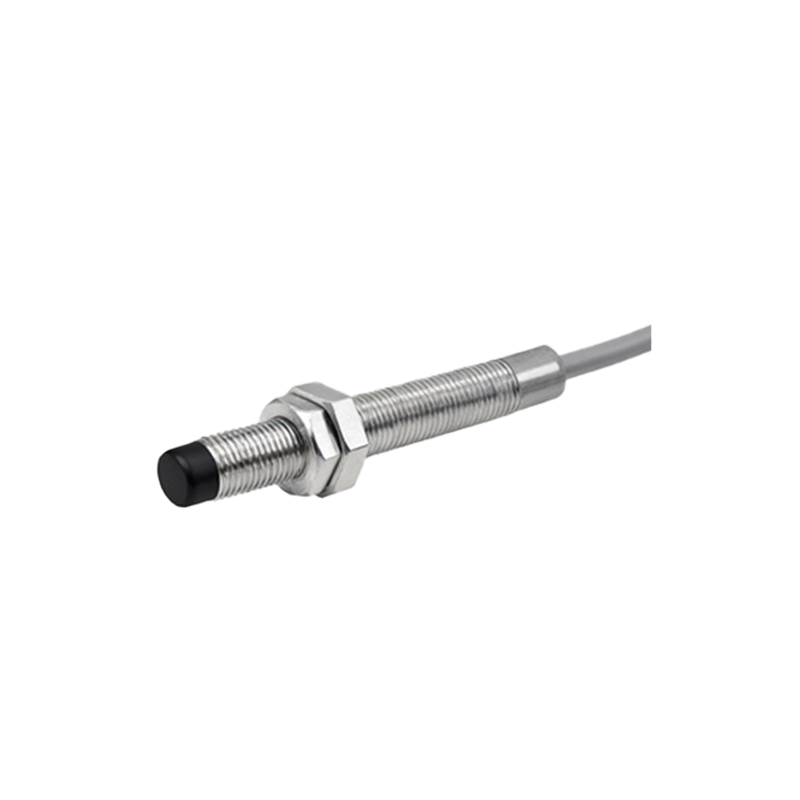
Proximity sensors are broadly categorized by their sensing technology, which is the primary driver of cost. Inductive sensors, used for detecting metallic objects, are generally the most cost-effective, with prices ranging from $20 to $200 USD. Basic shielded tubular models for standard sensing distances are at the lower end, while specialized models with extended range, high-temperature tolerance, or weld-field immunity command higher prices. Capacitive sensors, capable of detecting both metallic and non-metallic materials like liquids or plastics, typically carry a 20-40% premium over comparable inductive models due to their more complex circuitry.
Photoelectric sensors represent a wider price spectrum, from $30 to over $500. Simple diffuse-reflective sensors are economical, but long-range, background-suppression, or precise thru-beam models are significantly more expensive. Ultrasonic sensors, ideal for distance measurement and level detection of varied materials, often start above $100 and can exceed $1000 for highly accurate, long-range versions in harsh environments.
Beyond core technology, several features directly impact the price-to-performance ratio. Sensing range is a major factor; a sensor with a 2mm range is cheaper than one with a 20mm range. The housing material is crucial; nickel-plated brass or stainless-steel housings for corrosive or washdown environments (IP67, IP69K ratings) cost more than standard PBT plastic housings. Output configuration (PNP vs. NPN, NO vs. NC) has a minor price effect, but analog outputs (4-20mA, 0-10V) or IO-Link digital communication add considerable cost and functionality, enabling predictive maintenance and parameter setting.
Brand reputation and supply chain reliability also influence pricing. Established global manufacturers like Siemens, Omron, Pepperl+Fuchs, and Balluff command premium prices, justified by rigorous testing, global certification (e.g., UL, CE), extensive technical support, and proven mean time between failures (MTBF). Their sensors are investments in system stability. Conversely, generic or lesser-known brands offer lower upfront costs, which can be suitable for non-critical, low-duty-cycle applications, but may involve risks regarding long-term availability, consistency, and technical documentation.
So, what constitutes a "good" price? It is the price that delivers optimal Total Cost of Ownership (TCO). Consider these steps for value-based selection:
1. Define Application Requirements Precisely: Target material, required sensing distance, switching frequency, environmental conditions (temperature, contaminants, shock/vibration), and required electrical interface. Over-specifying leads to unnecessary cost; under-specifying leads to failure.
2. Prioritize Reliability for Critical Points: On a high-speed packaging line or a safety interlock, never compromise. The cost of a single hour of unplanned downtime can eclipse the price difference between a budget and a premium sensor. Here, the "good" price is for the most reliable option.
3. Evaluate Standardization Benefits: Using a single, versatile sensor family across a plant, even at a higher unit cost, can reduce spare parts inventory, simplify technician training, and minimize procurement complexity, offering hidden savings.
4. Consider Smart Sensor Capabilities: For Industry 4.0 initiatives, sensors with IO-Link, while more expensive, provide diagnostic data (operating temperature, signal strength, contamination warnings) that can prevent failures and optimize processes, delivering a high return on investment.
In conclusion, the quest for a "good price" on a proximity sensor is not about finding the cheapest unit. It is a technical procurement exercise to find the sensor that delivers the required performance and reliability at the lowest total cost over its operational lifecycle. The most economical choice is often a mid-range or premium sensor from a reputable supplier, perfectly matched to a well-defined application, ensuring seamless integration and uninterrupted productivity. Investing in the right sensor upfront is a strategic decision that safeguards your operational efficiency and bottom line.