In modern industrial automation, the reliability of sensor systems is paramount. Among the various sensing technologies, proximity sensors play a critical role in object detection, positioning, and process control. However, a persistent challenge in many environments is optical interference from ambient light sources, such as factory LED lighting, sunlight through windows, or welding arcs. This interference can cause false triggers, reduced sensing ranges, or complete sensor failure, leading to costly production downtime and safety hazards. This article delves into the technology behind anti-light interference proximity sensors, exploring their operating principles, key design features, and application benefits.
Traditional photoelectric proximity sensors, which typically use modulated infrared (IR) or visible light, are highly susceptible to external light. Standard pulsed LED operation can be overwhelmed by constant or flickering ambient light, causing the receiver circuit to misinterpret signals. The core solution lies in advanced optical filtering and sophisticated signal processing. Modern anti-interference sensors employ several synergistic technologies. First, they utilize a specific modulated light signal, often at a high frequency (e.g., several kHz). The receiver circuit is tuned to detect only this specific modulation frequency, effectively filtering out constant DC light and most AC light sources operating at different frequencies, like standard 50/60 Hz lighting.
Secondly, physical optical filters are crucial. Narrow-bandpass filters are placed in front of the receiver photodiode or phototransistor. These filters are designed to allow only a very specific wavelength of light—precisely matching the wavelength emitted by the sensor's own IR LED—to pass through. This blocks a significant portion of the ambient light spectrum. For instance, if the sensor operates at 880nm, the filter will attenuate light at 850nm, 940nm, and all visible wavelengths. Furthermore, the use of sunlight-blocking lenses, often made of specialized dark plastics that absorb visible light while transmitting the IR wavelength, provides an additional layer of defense, particularly against intense solar radiation.
The third pillar is intelligent electronic evaluation. State-of-the-art sensors incorporate microprocessors that run complex detection algorithms. These algorithms can distinguish between the sensor's own reflected pulse pattern and random noise or sporadic light pulses from the environment. Techniques like checking for a minimum number of consecutive valid pulses or analyzing the pulse shape enhance noise immunity. Some high-end models feature automatic background suppression, where they dynamically adjust their sensitivity based on the ambient light level detected during a calibration phase, ensuring stable operation even as lighting conditions change.
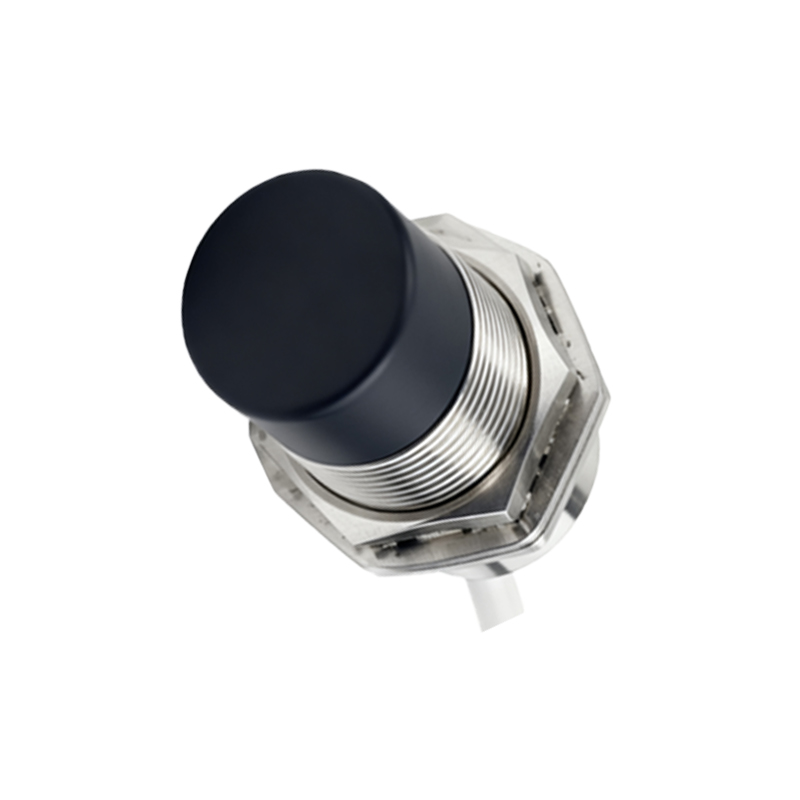
The benefits of deploying these robust sensors are substantial. They enable reliable operation in previously problematic areas: near skylights, in brightly lit assembly stations, or alongside other machinery that emits light. This expands the possible application range without needing costly light shrouds or enclosures. Enhanced reliability directly translates to increased Overall Equipment Effectiveness (OEE) by minimizing false stops. In safety-critical applications, such as light curtains or automated guided vehicle (AGV) obstacle detection, this immunity is non-negotiable. Common applications include packaging machinery exposed to warehouse lighting, outdoor vehicle detection systems, robotic pick-and-place cells with varying light conditions, and electronic assembly lines with inspection cameras.
When selecting an anti-light interference proximity sensor, key specifications to evaluate include the stated ambient light immunity, often listed in lux (e.g., immune up to 10,000 lux), the sensing range under such conditions, and the response time. The type of light source against which it is tested (sunlight, halogen, LED) should also be considered. Enclosure rating (IP67/IP69K for washdown environments) and output configuration (PNP/NPN, analog, IO-Link) remain important standard selection criteria.
In conclusion, the evolution of proximity sensors with dedicated anti-light interference capabilities represents a significant leap forward for industrial sensing. By integrating optical filtering, high-frequency modulation, and smart electronics, these devices deliver unwavering performance in optically noisy environments. As factories become smarter and more interconnected, the demand for such reliable, maintenance-free sensing components will only intensify, making them a cornerstone of resilient industrial automation systems.