Proximity sensors are indispensable components in modern industrial automation, renowned for their ability to detect the presence or absence of an object without physical contact. Their performance, however, is intrinsically linked to the material of the target object. Understanding material compatibility is paramount for ensuring reliable operation, optimal sensing range, and system longevity. This guide delves into the core technologies and their corresponding suitable materials.
The most common type is the inductive proximity sensor. It generates an electromagnetic field and detects changes caused by eddy currents induced in a target. Consequently, inductive sensors are exclusively designed for detecting metallic objects. Their performance varies significantly with the type of metal:
Ferrous Metals (e.g., Mild Steel, Iron): These are the ideal targets. They offer the longest nominal sensing range (Sn), typically 100% of the rated distance. The magnetic properties of ferrous materials strongly disturb the sensor's field.
Non-Ferrous Metals (e.g., Aluminum, Brass, Copper): These metals are detectable but with a reduced sensing range. For instance, aluminum typically reduces the effective range to approximately 40-50% of Sn, while copper and brass may reduce it to 20-30%. Sensor factor charts provided by manufacturers are essential for accurate adjustment.
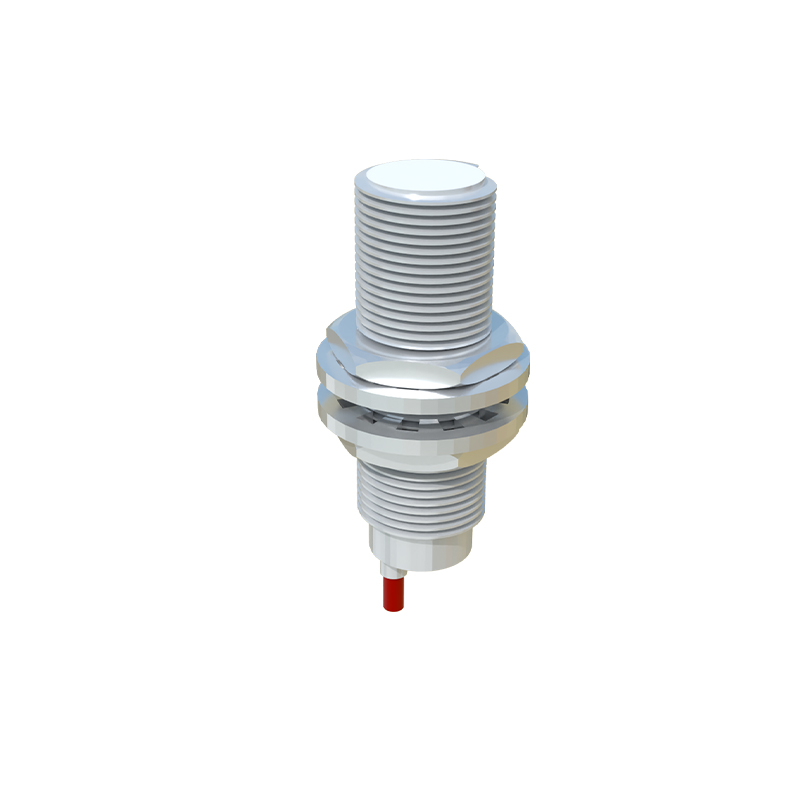
For non-metallic materials, capacitive proximity sensors are the solution. They function by detecting changes in capacitance between the sensor's face and the target, which acts as a dielectric. This makes them versatile for a wide array of materials:
Liquids: Water, oils, chemicals, and beverages.
Granules & Powders: Plastic pellets, flour, grain, sand.
Solid Non-Metals: Wood, paper, cardboard, glass, ceramics, and most types of plastics.
The sensing range for capacitive sensors is influenced by the material's dielectric constant. Materials with high constants (like water) are detected more easily and at longer ranges than those with low constants (like certain plastics). Sensitivity adjustment is a critical feature to tune out background interference or container walls.
Ultrasonic proximity sensors operate on a time-of-flight principle, emitting sound waves and measuring their reflection. They are largely material-agnostic. Any solid or liquid object with a sufficiently reflective surface can be detected, regardless of color, transparency, or material composition. This makes them excellent for:
Detecting transparent objects like glass or clear films.
Level sensing for liquids, powders, and bulk solids.
Applications involving varied or unpredictable material types.
However, soft, sound-absorbing materials (like foam or thick fabric) can attenuate the signal, potentially reducing range or reliability.
Photoelectric sensors, while often used for longer ranges, also function as proximity devices in diffuse mode. Their detection is based on light reflection, so the target's surface properties—color, reflectivity, and texture—are more critical than its base material. A glossy plastic, painted metal, or even a white piece of paper can be excellent reflectors, while matte black surfaces of any material are challenging to detect.
Key Considerations for Material Selection:
1. Factor 1: Always consult the manufacturer's datasheet for reduction factors (for inductive sensors) or dielectric constant references (for capacitive sensors).
2. Surface Condition: Rust, paint, coatings, or plating can affect detection. A thin, non-conductive coating (e.g., paint) may be negligible for an inductive sensor, but a thick layer can reduce range.
3. Target Size: The target must meet the minimum specified size relative to the sensor's active face to ensure consistent switching.
4. Environment: Consider material interactions with the environment, such as metallic dust adhering to capacitive sensors or condensation affecting optical/ultrasonic units.
In summary, selecting the correct proximity sensor technology is a direct function of the target material. Inductive for metals, capacitive for nearly everything else (especially non-solids), and ultrasonic for universal or challenging surface applications. A thorough analysis of the target material's electrical and physical properties is the first and most crucial step in designing a robust and fault-free sensing solution.