Proximity Hall Effect sensors represent a cornerstone technology in modern industrial automation and control systems. Their unique operating principle, based on the Hall Effect discovered by Edwin Hall in 1879, enables non-contact detection of magnetic fields, which is then used to infer the presence, absence, or position of a ferromagnetic or permanent magnet target. Unlike inductive proximity sensors, Hall Effect sensors specifically respond to magnetic flux density, making them exceptionally versatile and reliable in diverse and often challenging environments.
The fundamental characteristic of a proximity Hall Effect sensor is its ability to generate a voltage differential, known as the Hall voltage, across a semiconductor material when subjected to a perpendicular magnetic field and a constant bias current. This voltage is directly proportional to the magnetic flux density. In a practical proximity sensor, this phenomenon is harnessed by integrating the Hall element with signal conditioning electronics. The output can be configured as analog (providing a voltage proportional to the distance or strength of the magnetic field) or digital (providing a simple ON/OFF switch signal when a predefined magnetic threshold is crossed). The digital output types are further categorized into unipolar (responding to a single magnetic pole), bipolar (responding to both north and south poles with different switching behaviors), and omnipolar (responding to either pole).
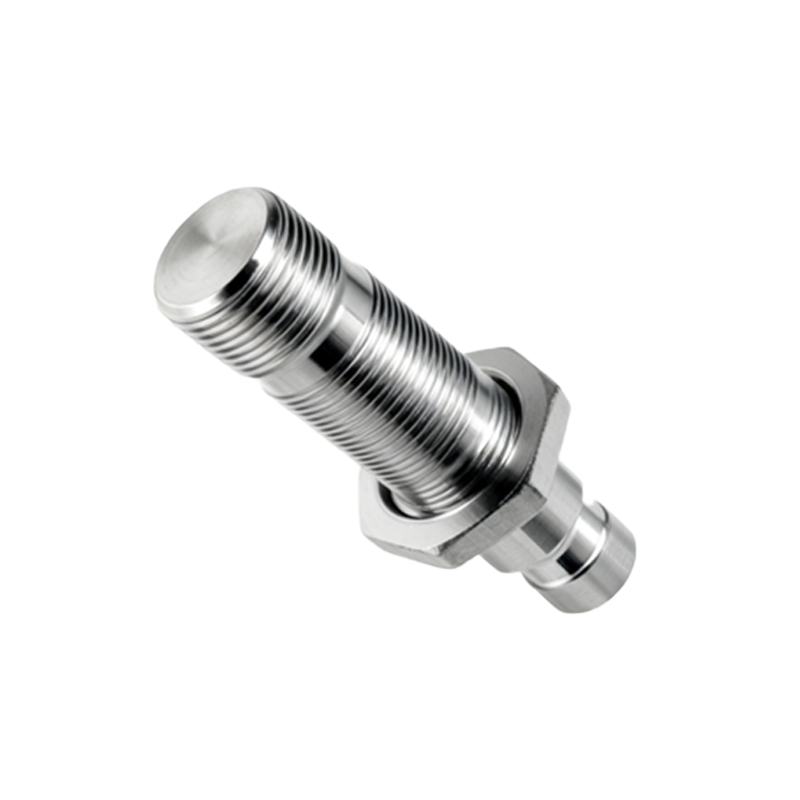
Key performance characteristics define their suitability for applications. Sensing Distance: This is typically shorter than inductive sensors, often ranging from a few millimeters up to about 20-30mm for specialized units. The effective sensing distance is highly dependent on the strength and size of the target magnet. Response Time: Hall Effect sensors boast extremely fast response times, often in the microsecond range, making them ideal for high-speed counting, indexing, and speed detection tasks, such as in brushless DC motor commutation or gear tooth sensing. Output Configuration: As mentioned, outputs can be NPN or PNP sinking/sourcing, push-pull, or analog 0-10V/4-20mA, allowing direct interface with PLCs, controllers, and other industrial logic.
Environmental Robustness is a major advantage. Being solid-state devices with no moving parts and encapsulated in robust housings (often IP67 or higher), they are immune to contamination from dust, oil, and moisture. They are not affected by non-ferrous materials like aluminum, brass, or plastic in their sensing field, eliminating false triggers. However, they can be susceptible to strong external magnetic fields or electromagnetic interference (EMI), which necessitates proper shielding and installation practices in electrically noisy environments.
Temperature Stability is another critical feature. High-quality industrial Hall sensors are designed with compensation circuits to maintain stable switching points across a wide temperature range, commonly from -40°C to +125°C or beyond. This ensures consistent performance in applications from frozen food processing to near engine components.
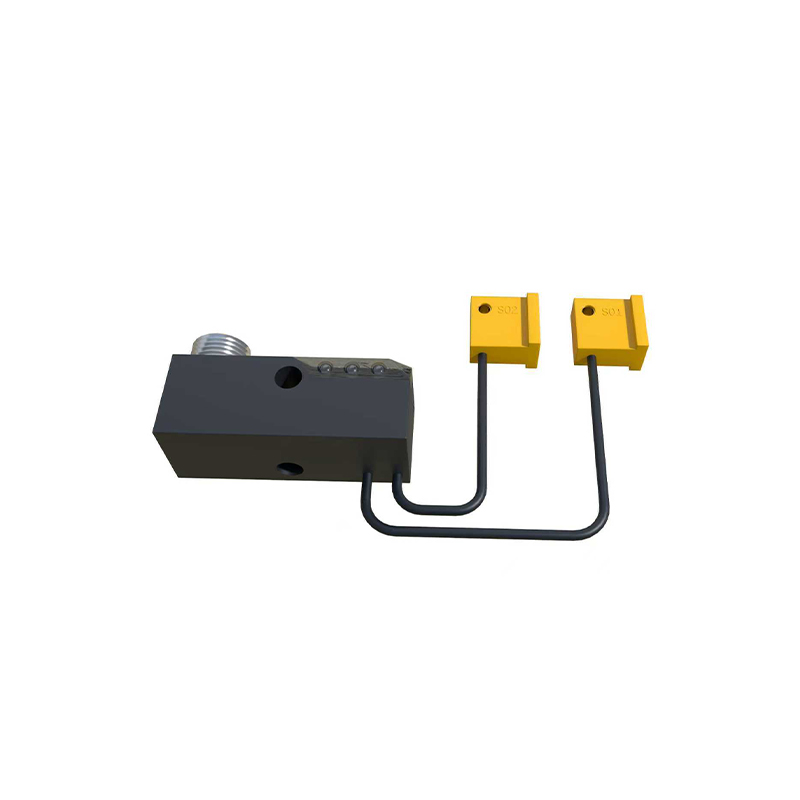
Precision and Repeatability are hallmarks of this technology. The digital switch point is very precise, leading to excellent repeatability in position detection. This makes them perfect for end-of-travel limits, valve position feedback, and precise angular encoding when used with rotary magnets.
Typical industrial applications are vast. They are ubiquitous in Motion Control: detecting piston position in pneumatic and hydraulic cylinders (often with embedded ring magnets), providing feedback for servo systems. In Automotive and Transportation, they are used for wheel speed sensing (anti-lock braking systems), transmission speed, and seat belt buckle detection. Factory Automation relies on them for part presence verification, conveyor belt indexing, and robotic arm end-effector positioning. Furthermore, their use in Current Sensing—by measuring the magnetic field around a current-carrying conductor—is a related and crucial application for power monitoring and overload protection.
When selecting a proximity Hall Effect sensor, engineers must consider the magnetic source (strength, orientation, pole), required sensing distance, output type needed by the control system, electrical requirements (voltage, current), environmental conditions (temperature, potential for EMI), and physical mounting constraints. Proper alignment between the sensor's active face and the target magnet is also paramount for optimal performance.
In conclusion, the characteristics of proximity Hall Effect sensors—non-contact operation, high speed, environmental durability, and solid-state reliability—make them an indispensable solution for precise and robust position and speed detection across the industrial landscape. Their continued evolution, including the development of 3D Hall sensors capable of detecting vector magnetic fields, promises even greater integration and intelligence in the factories of the future.