Laser sensors have become indispensable tools across various industrial sectors due to their precision, reliability, and versatility. These devices operate by emitting laser beams and analyzing the reflected light to measure distance, detect objects, or monitor processes. Understanding the different types of laser sensors is crucial for selecting the right technology for specific applications. This article explores the primary categories of laser sensors, their working principles, and typical use cases in industry.
One of the most common types is the triangulation laser sensor. This sensor uses geometric triangulation to determine the position of an object. A laser diode projects a spot onto the target surface, and the reflected light is focused onto a position-sensitive detector, such as a CCD or CMOS array. By calculating the angle of the reflected beam, the sensor accurately measures distance or displacement. Triangulation sensors excel in high-precision tasks like thickness gauging, contour profiling, and surface inspection. They are widely used in automotive manufacturing for panel gap measurement and in electronics for component placement verification.
Another key category is the time-of-flight (ToF) laser sensor. These sensors measure the time it takes for a laser pulse to travel to a target and back. Since the speed of light is constant, the distance can be calculated precisely. ToF sensors are ideal for long-range measurements, often spanning several meters, and are less sensitive to surface color or reflectivity compared to triangulation sensors. Common applications include bulk level monitoring in silos, vehicle detection in traffic systems, and obstacle avoidance in autonomous guided vehicles (AGVs). Their ability to provide rapid, long-distance readings makes them suitable for dynamic environments.

Confocal laser sensors represent a high-end option for ultra-precise measurements. They utilize a confocal optical system where only light from a specific focal plane is detected, filtering out reflections from other distances. This allows for nanometer-level resolution in measuring height, thickness, or surface topography. Confocal sensors are particularly valuable in semiconductor fabrication, medical device manufacturing, and precision optics, where minute details must be captured accurately. They can handle transparent or multi-layered materials, such as glass or film coatings, without interference.
Laser curtain sensors, or light curtains, are safety-oriented devices that create a plane of laser beams. When an object interrupts this plane, the sensor triggers a safety response, such as stopping machinery. These are critical in hazardous areas like robotic cells, press brakes, and assembly lines to protect workers. Unlike other types, their primary function is intrusion detection rather than measurement, emphasizing reliability and fail-safe operation.
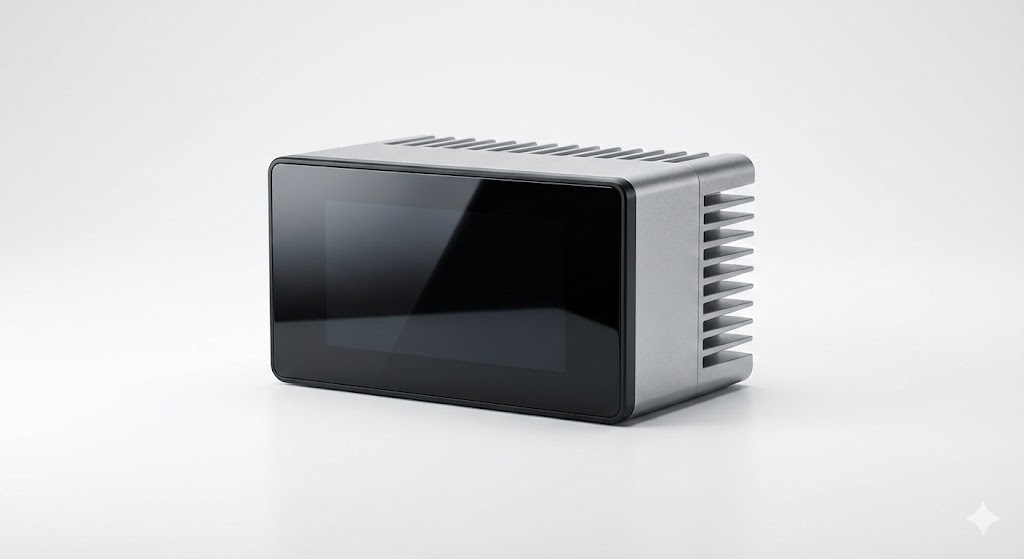
Additionally, laser profile sensors (or line lasers) project a laser line onto a surface and use a camera to capture the deformation of that line. This generates a 3D profile of the object, useful for inspecting complex shapes, weld seams, or tire treads. In logistics, they enable volume measurement of packages, while in metalworking, they assess weld quality. Their ability to provide full-field data makes them powerful for quality control.

Each type of laser sensor offers distinct advantages. Triangulation sensors provide high accuracy at short ranges, ToF sensors cover long distances efficiently, confocal sensors deliver extreme precision, curtain sensors ensure safety, and profile sensors capture detailed geometries. Factors like measurement range, resolution, target material, and environmental conditions (e.g., dust, vibration) influence the selection. For instance, in a clean room for microelectronics, a confocal sensor might be preferred, whereas a ToF sensor could be better for monitoring inventory in a warehouse.
In summary, laser sensors are categorized based on their operating principles and applications. From triangulation and time-of-flight to confocal, curtain, and profile sensors, each serves unique industrial needs. As technology advances, these sensors continue to evolve, integrating features like Ethernet connectivity, IoT compatibility, and enhanced algorithms for smarter automation. By leveraging the appropriate laser sensor type, industries can achieve greater efficiency, safety, and quality in their operations, driving innovation forward in the era of Industry 4.0.