In the realm of industrial automation and machinery, proximity sensors play a pivotal role in ensuring operational efficiency, safety, and precision. Among the diverse range available, the 2-meter (2m) proximity sensor stands out for its extended detection range, making it indispensable in numerous demanding applications. This article delves into the technology, types, applications, and selection criteria for 2m proximity sensors, providing a thorough understanding for engineers and industry professionals.
A proximity sensor is a non-contact device designed to detect the presence or absence of an object within a specified distance without physical contact. The 2m variant specifically refers to sensors capable of reliably detecting objects at distances up to two meters. This extended range is achieved through advanced sensing technologies, primarily inductive, capacitive, ultrasonic, and photoelectric principles, each suited to different material types and environmental conditions.
Inductive proximity sensors are widely used for detecting metallic objects. They operate by generating an electromagnetic field. When a metal target enters this field, it induces eddy currents, causing a change in the sensor's oscillation amplitude, which triggers a switch signal. For a 2m range with metals, specialized inductive sensors or more commonly, ultrasonic or photoelectric sensors are employed, as standard inductive sensors typically have shorter ranges.
Capacitive proximity sensors can detect both metallic and non-metallic materials (liquids, plastics, wood) by sensing changes in capacitance. While their range can be extended, achieving a full 2m detection for various materials often involves careful calibration and is more common in specific capacitive designs or through other technologies better suited for long-range.
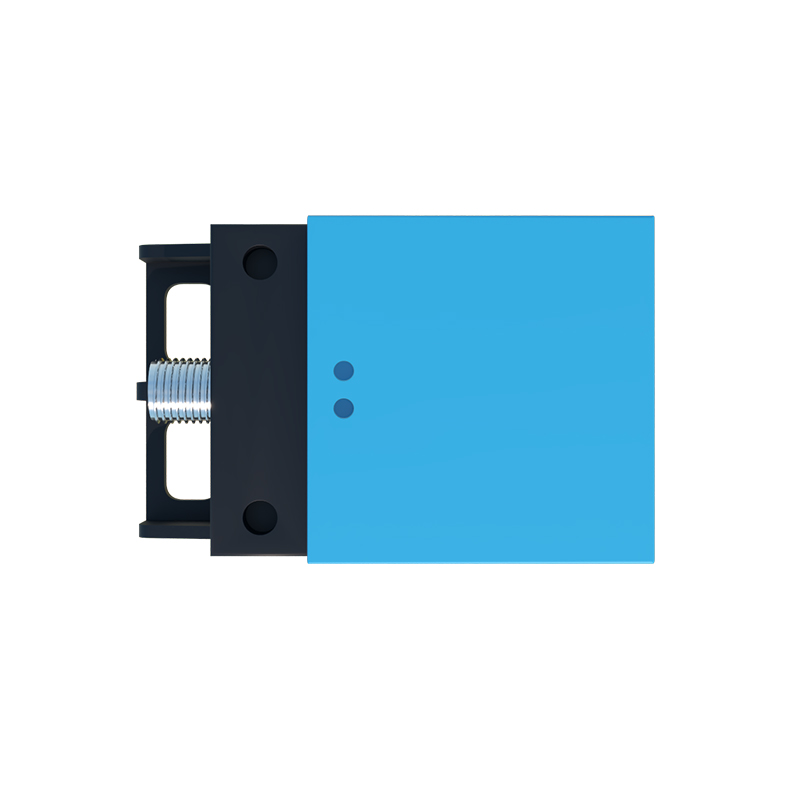
The most common technologies enabling reliable 2m detection are ultrasonic and photoelectric (through-beam or retro-reflective) sensors. Ultrasonic sensors emit high-frequency sound waves and measure the time taken for the echo to return. They are excellent for detecting objects of virtually any material, shape, or color, and are robust in environments with dust, smoke, or light interference. A 2m ultrasonic sensor is ideal for level detection, pallet profiling, and distance measurement in challenging conditions.
Photoelectric sensors use a light beam (usually infrared, laser, or visible LED). The through-beam type, with a separate emitter and receiver, offers the longest and most reliable sensing ranges, easily exceeding 2m. They are perfect for precise detection across conveyors, door systems, and material handling equipment. Retro-reflective models, which bounce light off a reflector, also achieve 2m ranges effectively. However, photoelectric sensors can be affected by extreme ambient light, transparent objects, or dirty lenses.
Key applications for 2m proximity sensors are vast. In automotive manufacturing, they monitor the position of vehicle bodies on assembly lines. In packaging, they control the stacking height of boxes or detect large containers. In warehouse automation, they are crucial for AGV (Automated Guided Vehicle) obstacle detection and high-bay storage retrieval systems. Furthermore, in agricultural machinery, they help in implement positioning and obstacle avoidance.
Selecting the right 2m proximity sensor requires careful consideration of several factors. First, identify the target material: metal, plastic, liquid, or other. Next, assess the environmental conditions: presence of dust, moisture, temperature extremes, or vibration. The required output type (PNP/NPN analog, digital, IO-Link) and housing material (e.g., stainless steel for washdown areas) are also critical. Finally, consider the sensing technology: ultrasonic for versatility in harsh settings, photoelectric for precision and speed, or specialized inductive for long-range metal detection.
Installation and maintenance are straightforward but vital. Ensure the sensor is mounted securely, aligned correctly (especially for photoelectric types), and free from obstructions in its field of view. Regular cleaning of lenses or transducer surfaces and checking for electrical noise interference will guarantee long-term reliability and accuracy.
In conclusion, the 2m proximity sensor is a powerful tool in the industrial sensor arsenal, enabling automation over greater distances. By understanding the underlying technologies—ultrasonic and photoelectric being primary for this range—and carefully matching the sensor to the application's specific demands, engineers can significantly enhance system performance, safety, and productivity. As Industry 4.0 advances, the integration of these sensors with smart networks and IIoT (Industrial Internet of Things) platforms will further unlock their potential for predictive maintenance and data-driven optimization.