In the realm of industrial automation and control systems, the reliable detection of object presence, position, and movement is paramount. Two fundamental classes of devices that fulfill this critical role are proximity sensors and limit switches. While they share a common objective—to provide a discrete electrical signal based on a physical condition—their operating principles, applications, and performance characteristics differ significantly. Understanding these differences is key to selecting the right component for a given task, ensuring system reliability, efficiency, and safety.
Proximity sensors are non-contact electronic devices designed to detect the presence or absence of an object within a specified sensing range without any physical contact. They operate by emitting an electromagnetic field, beam, or ultrasonic waves and monitoring for changes in the field or return signal. The most common types include inductive, capacitive, and photoelectric sensors. Inductive proximity sensors are widely used for detecting metallic objects. They generate an oscillating electromagnetic field from a coil. When a conductive metal enters this field, it induces eddy currents, causing a change in the oscillation amplitude. This change is detected by the sensor's circuitry, which triggers a solid-state output switch. These sensors are robust, resistant to environmental contaminants like dust and oil, and offer high switching frequencies, making them ideal for high-speed counting or positioning of metal parts in machinery.
Capacitive proximity sensors can detect both metallic and non-metallic materials, including liquids, plastics, and wood. They function by generating an electrostatic field. Any object that enters this field alters the capacitance of the system, triggering the output. This makes them suitable for applications like liquid level detection, material handling of non-metallic goods, or detecting filled containers. Photoelectric sensors use a light beam (visible, infrared, or laser) and consist of an emitter and a receiver. They detect objects by sensing either the interruption of the beam (through-beam), the reflection from the object (retro-reflective), or the diffuse reflection from the object's surface (diffuse). They offer very long sensing ranges and are excellent for detecting small or transparent objects.
In contrast, limit switches are electromechanical devices that require physical contact to operate. A typical limit switch consists of an actuator (like a lever, roller, or plunger) mechanically linked to a set of electrical contacts. When an object or machine part makes contact with the actuator, it moves, causing the internal contacts to change state—either opening or closing a circuit. This provides a direct, hard-wired signal. Their operation is simple, straightforward, and highly reliable. They are often used as safety interlocks or for defining the endpoints of linear or rotary motion, such as in the travel limits of a crane, the door position of an elevator, or the homing position of a machine tool slide.
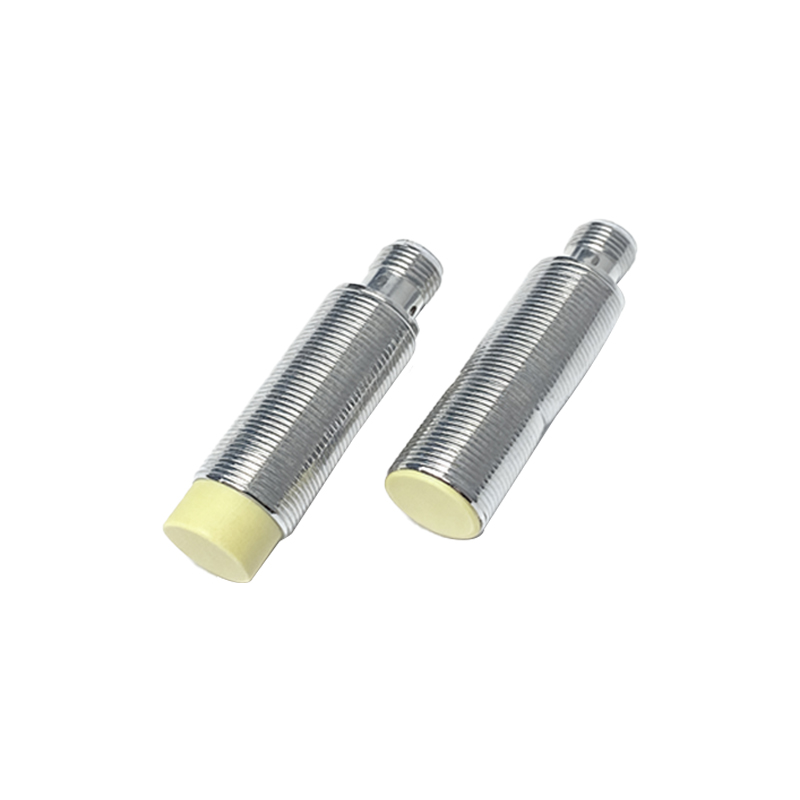
The choice between a proximity sensor and a limit switch hinges on several application-specific factors. Proximity sensors, being non-contact, suffer no mechanical wear from repeated operation, leading to a longer operational life, especially in high-cycle applications. Their solid-state nature allows for very fast response times and high switching frequencies. Since there is no physical contact, they are not susceptible to issues like actuator bounce or mechanical failure of moving parts. They also perform well in harsh environments where contaminants might jam a mechanical switch. However, they can be influenced by environmental factors like temperature extremes, strong electromagnetic interference, or the material properties of the target object. They also typically have a higher initial cost than basic limit switches.
Limit switches, on the other hand, are generally less expensive for simple applications. They provide a very positive, physical confirmation of position, which is often required for safety-critical functions. The physical actuation force can be an advantage in some scenarios, ensuring the target object has indeed reached a specific point. They are largely immune to electrical noise and are simple to install and troubleshoot due to their direct wiring. The primary drawback is mechanical wear. The moving parts—the actuator, springs, and contacts—will eventually fatigue or wear out after millions of cycles. Contact arcing can also occur, especially with inductive loads. Their slower response time and the potential for contact bounce make them less suitable for high-speed counting or precision positioning compared to proximity sensors.
In modern industrial design, these devices are not mutually exclusive but are often used in complementary roles. A system might use non-contact proximity sensors for high-speed process monitoring and precision positioning on a production line, while employing rugged limit switches as positive, fail-safe end-of-travel limits for machine axes. The integration of both types into Programmable Logic Controller (PLC) networks forms the backbone of automated control, providing the essential digital inputs that dictate machine sequences, ensure operator safety, and guarantee product quality.
In conclusion, both proximity sensors and limit switches are indispensable tools in the electrical engineer's arsenal for industrial automation. The selection process must carefully consider factors such as required sensing distance, target