In the rapidly evolving landscape of industrial automation, laser sensors have emerged as pivotal components, driving efficiency, precision, and reliability across diverse applications. This article delves into several compelling success stories that highlight the transformative impact of laser sensors in modern manufacturing and beyond.
One notable case involves a leading automotive assembly plant that faced persistent challenges in quality control for weld seam inspection. Traditional methods, relying on manual checks or basic optical sensors, often resulted in inconsistencies and production delays. By integrating high-resolution laser displacement sensors, the plant achieved real-time, non-contact measurement of weld seams with micron-level accuracy. These sensors, capable of detecting minute variations in surface topography, enabled automated rejection of defective parts, reducing scrap rates by over 40%. The system's adaptability to different vehicle models, facilitated by programmable settings, further streamlined operations, leading to a 25% increase in overall throughput. This implementation not only enhanced product quality but also significantly cut downtime, showcasing how laser sensors can optimize complex production lines.
Another success story originates from the logistics sector, where a major warehouse operator struggled with inventory management due to inaccurate package dimensioning. Conventional systems often failed with irregularly shaped items, causing bottlenecks in sorting and shipping. The adoption of 3D laser scanners revolutionized this process. These sensors rapidly capture precise length, width, and height data of parcels on conveyor belts, regardless of their orientation or surface texture. By integrating this data with warehouse management software, the operator automated billing based on volumetric weight and optimized storage space allocation. As a result, sorting efficiency improved by 60%, while shipping errors dropped by 30%. The laser sensors' robustness in dusty environments, a common warehouse condition, ensured consistent performance, underscoring their durability in harsh industrial settings.

In the realm of robotics, laser sensors have enabled breakthroughs in autonomous navigation and object handling. A collaborative robot (cobot) manufacturer integrated laser distance sensors into their arms to enhance safety and precision in human-robot workspaces. These sensors provide continuous feedback on proximity to obstacles, allowing the cobots to adjust speed or halt movements instantly, preventing accidents. In a specific application at an electronics factory, these sensor-equipped cobots precisely place delicate components onto circuit boards. The lasers measure minute distances to ensure correct positioning, reducing assembly errors by 50% compared to previous vision-based systems. This advancement has accelerated the adoption of cobots in sensitive tasks, merging human dexterity with machine accuracy.
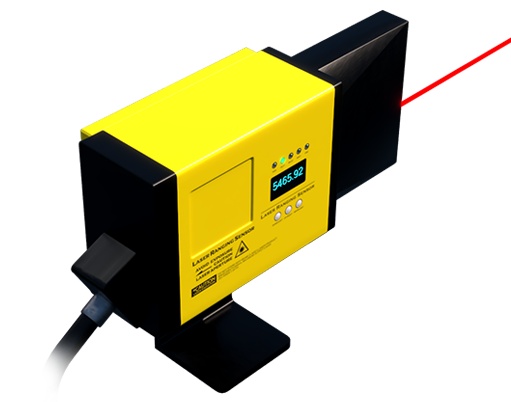
The food and beverage industry also benefits from laser sensor technology, particularly in packaging integrity checks. A dairy company implemented laser-based inspection systems to detect leaks in sealed milk cartons. Using laser triangulation sensors, the system scans each carton for subtle deformations or gaps invisible to the human eye. Any deviation from the standard profile triggers automatic removal from the line. This non-invasive method maintains hygiene standards while achieving a 99.8% detection rate for faulty seals, virtually eliminating contamination risks and product recalls. The sensors' fast response time supports high-speed production lines, processing thousands of units per hour without compromise.
Furthermore, in renewable energy, laser sensors play a crucial role in solar panel manufacturing. A photovoltaic cell producer utilized laser micrometers to measure the thickness of silicon wafers with nanometer precision. Consistent wafer thickness is vital for optimal energy conversion, and manual sampling proved inadequate. The laser sensors enabled 100% inline inspection, ensuring each wafer met strict tolerances. This led to a 20% boost in panel efficiency and a significant reduction in material waste. The data collected also fed into predictive maintenance algorithms, anticipating equipment wear before failures occurred.

These success stories illustrate the versatility and impact of laser sensors across industries. Key factors driving their adoption include high accuracy, non-contact operation, and resilience in challenging environments. As Industry 4.0 advances, the integration of laser sensors with IoT and AI promises even greater innovations, from predictive analytics to fully autonomous systems. Companies investing in this technology are not only solving immediate operational issues but also future-proofing their processes against evolving demands. In essence, laser sensors have transitioned from niche tools to essential enablers of modern industrial automation, delivering tangible returns on investment through enhanced productivity, quality, and safety.