In the modern smartphone, a symphony of sensors works tirelessly to enable intuitive and seamless user interactions. Among these, the proximity sensor, often nestled near the earpiece or within the display bezel, plays a critical yet frequently overlooked role. This component is fundamental to the device's ability to perceive its immediate environment and respond intelligently, directly impacting power efficiency, user experience, and hardware longevity. This article delves into the technology behind proximity sensors in mobile displays, their operational principles, and their evolving applications within the consumer electronics industry.
At its core, a proximity sensor is a type of non-contact sensor designed to detect the presence or absence of nearby objects without any physical contact. In smartphones, its primary and most recognizable function is to blank the touchscreen during a phone call when the device is held close to the user's ear. This serves a dual purpose: it prevents accidental touch input from the cheek or ear, and it conserves battery power by turning off the display backlight when not needed. The underlying technology for this function is typically based on infrared (IR) light.
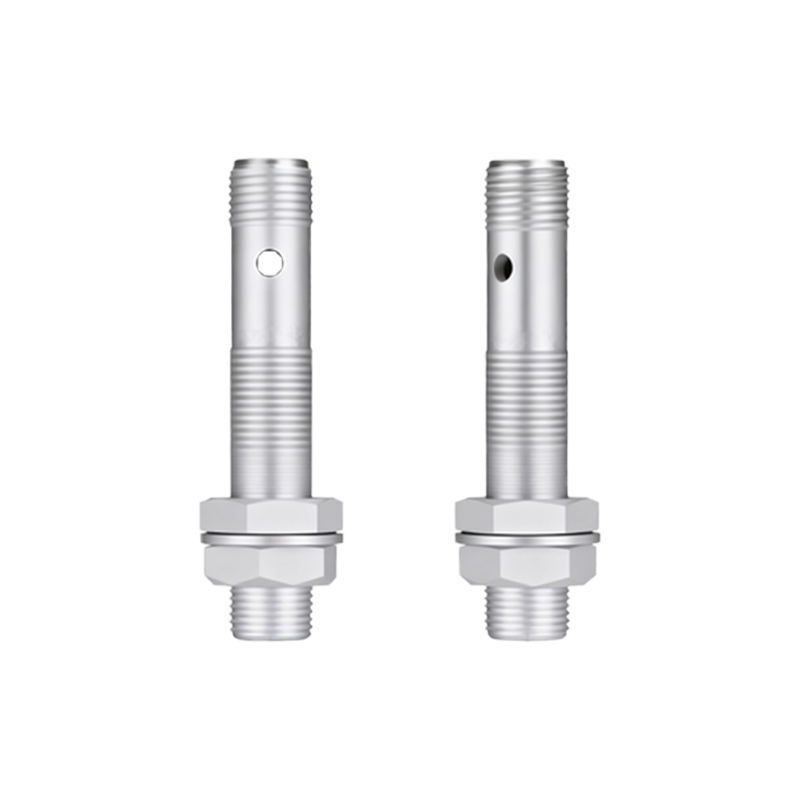
A standard IR-based proximity sensor module consists of two key elements: an IR Light-Emitting Diode (LED) and an IR photodetector (often a photodiode or phototransistor). The IR LED emits a beam of invisible infrared light. When an object, such as the user's head, approaches the screen, this light reflects off the object and is captured by the adjacent IR photodetector. The sensor's integrated circuit then measures the intensity of the reflected light. A significant increase in intensity indicates a nearby object, triggering the system to disable the touchscreen and turn off the display. When the object moves away, the reflected signal drops, and the screen is restored to its active state.
The integration of this sensor has presented significant engineering challenges, particularly with the industry's relentless drive toward full-screen, bezel-less displays. Traditional discrete sensors placed in the "forehead" bezel are no longer feasible. This has led to the development of under-display or in-display sensor technologies. Manufacturers now embed tiny, transparent openings within the OLED display matrix or use specially designed materials that allow specific wavelengths of IR light to pass through the display layers. This allows the sensor to function from behind the active screen area, preserving the aesthetic of a seamless front panel. Calibration is paramount here, as the sensor must distinguish between ambient IR light (from the sun or indoor lighting) and its own emitted signal, requiring sophisticated algorithms and factory-level tuning.
Beyond the classic call-scenario, the utility of proximity sensing is expanding. It is integral to advanced features like automatic screen wake-up when a user picks up the phone or looks at it. Some implementations work in tandem with the ambient light sensor to optimize brightness more dynamically based on how the phone is being held or stored. In accessory ecosystems, proximity detection can be used to identify when a flip cover is closed or open, managing power states accordingly. Furthermore, the fundamental principle of time-of-flight (ToF) measurement, a more advanced form of proximity sensing, is crucial for features like AR (Augmented Reality) depth mapping and improved portrait-mode photography, where understanding the distance to objects is key.
From an industry perspective, the design and implementation of proximity sensors involve critical considerations of power consumption, response time, and reliability. Engineers must balance sensor sensitivity to ensure it works reliably with various skin tones, hair types, and headwear, while avoiding false triggers from objects in a pocket or bag. Power management is also crucial; the sensor must draw minimal current during its polling cycles to not detrimentally impact battery life. The shift toward under-display solutions also introduces optical challenges, such as signal attenuation through multiple layers, necessitating more powerful IR emitters or more sensitive detectors.
Looking forward, the role of the proximity sensor may become even more deeply fused with other sensing modalities. Sensor fusion, combining data from the proximity sensor, accelerometer, gyroscope, and front-facing camera, can enable more context-aware behaviors. The line between a simple proximity detector and a sophisticated 3D sensing system (like those used for facial recognition) continues to blur. As displays evolve with new form factors like foldables and rollables, the integration of reliable, robust proximity sensing will remain a key engineering imperative to maintain the intuitive and power-efficient interaction paradigm that users now expect.
In conclusion, the proximity sensor is a masterpiece of miniaturized optoelectronics that performs a vital function in smartphone usability and efficiency. Its evolution from a discrete component to an under-display element mirrors the broader trends in mobile device design. For industry professionals, understanding its operation, integration challenges, and future trajectory is essential for innovating the next generation of intelligent mobile devices. It is a small component that embodies a significant principle: the most effective technology is often