In the realm of industrial automation and control systems, proximity sensors stand as indispensable components, enabling non-contact detection of objects with high precision and reliability. These devices are fundamental to countless processes, from assembly line sequencing and robotic guidance to safety interlocks and material handling. Understanding the different types of proximity sensors is crucial for engineers and technicians to select the optimal technology for a given application. This guide delves into the primary classifications, operating principles, and typical use cases of the most common proximity sensor types.
The first major category is the Inductive Proximity Sensor. These sensors are designed to detect metallic objects, primarily ferrous metals like steel and iron, though some specialized versions can sense non-ferrous metals. Their operation is based on the principle of electromagnetic induction. The sensor generates an oscillating electromagnetic field from its active face. When a conductive metal object enters this field, eddy currents are induced on the object's surface. This causes a change in the oscillation amplitude within the sensor's coil, which is detected by the internal circuitry, triggering a switching output. Inductive sensors are highly robust, resistant to environmental factors like dust, oil, and moisture, and offer excellent repeatability. They are widely used in metal machining, automotive manufacturing, and conveyor systems for part presence detection, counting, and position verification.
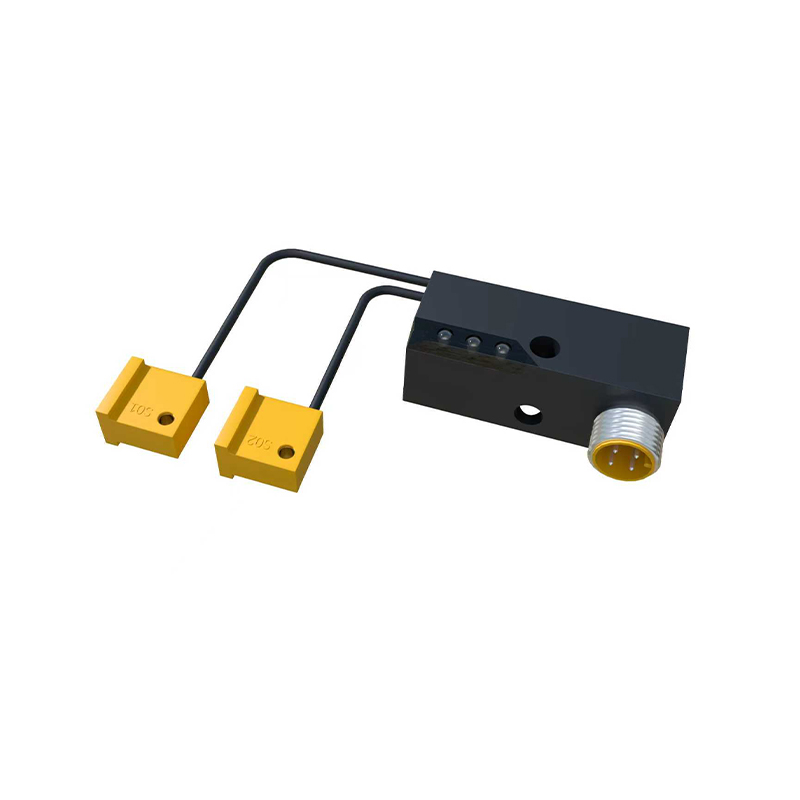
The second prominent type is the Capacitive Proximity Sensor. Unlike their inductive counterparts, capacitive sensors can detect a much wider range of materials, including metals, plastics, glass, wood, liquids, and granular substances. They operate by generating an electrostatic field. The sensor and the target act as two plates of a capacitor. When any material with a dielectric constant different from air enters the sensing field, it alters the capacitance of the system. This change is measured, and when it exceeds a preset threshold, the sensor switches its output state. This makes capacitive sensors ideal for applications like liquid level detection in non-metallic tanks, monitoring the presence of plastic or glass bottles on a line, or detecting powdered materials in hoppers. They are sensitive to environmental changes like humidity and require careful calibration.
Ultrasonic Proximity Sensors form another critical category. These devices use sound waves beyond the human hearing range (typically above 20 kHz) to detect objects and measure distance. The sensor emits ultrasonic pulses and then listens for the echo reflected from a target. By calculating the time delay between the emitted pulse and the received echo (time-of-flight principle), the sensor can determine the presence and distance of an object. Ultrasonic sensors are excellent for detecting objects of virtually any material, shape, or color, and they are unaffected by transparency or reflectivity issues that plague optical sensors. Common applications include pallet detection, loop control in winding machines, distance measurement, and level sensing for bulk solids or clear liquids. However, they can be influenced by temperature variations, air turbulence, and soft, sound-absorbing materials.
Photoelectric Sensors, while often considered a broader category, are a key form of proximity sensing. They use light, typically infrared, visible red, or laser, to detect objects. For proximity-style detection, the diffuse reflective mode is most common. In this setup, the sensor contains both an emitter and a receiver. The emitted light beam strikes a target, and some of the diffused reflection is picked up by the receiver. When the received light intensity surpasses a set level, the sensor activates. Photoelectric sensors offer long sensing ranges and can detect small objects. They are versatile but can be affected by the target's color, reflectivity, and environmental contaminants like dust or fog. They are prevalent in packaging, material handling, and electronic assembly.
Finally, Magnetic Proximity Sensors (often Reed Switches or Hall Effect sensors) are designed specifically to detect permanent magnets. Reed switches consist of two ferromagnetic reeds sealed in a glass tube. When a magnet approaches, the reeds magnetize and attract each other, closing the contact. Hall Effect sensors produce a voltage output when exposed to a magnetic field. These sensors are extremely reliable for detecting the position of cylinders with integrated magnets (piston position in pneumatic cylinders), in door/window security systems, and in low-speed rotational sensing. They are immune to non-magnetic contaminants and are very cost-effective for simple presence detection of a magnet.
In conclusion, the selection of a proximity sensor type—Inductive, Capacitive, Ultrasonic, Photoelectric, or Magnetic—is dictated by the target material, required sensing distance, environmental conditions, and performance needs. Inductive sensors excel with metals in harsh environments. Capacitive sensors offer material versatility. Ultrasonic sensors provide reliable detection and distance measurement for diverse objects. Photoelectric sensors deliver long-range and precise detection for many surfaces. Magnetic sensors offer simple, robust solutions for magnet detection. A thorough understanding of these categories empowers