Proximity sensors are fundamental components in modern industrial automation, providing non-contact detection of objects within a specific range. Their ability to function without physical contact makes them exceptionally reliable, durable, and suitable for harsh environments where mechanical wear, contamination, or high-speed operations would compromise other sensing methods. The core principle underlying most proximity sensors is the disturbance of an electromagnetic field or energy beam by a target object. This article delves into the working principles of the primary types of proximity sensors and explores their critical applications.
The most common type is the inductive proximity sensor. It operates on the principle of electromagnetic induction. The sensor's active face contains a coil that is part of an oscillator circuit, generating a high-frequency alternating electromagnetic field. When a metallic object (the target) enters this field, eddy currents are induced on the surface of the metal. These eddy currents draw energy from the oscillator, causing a reduction in its oscillation amplitude. This change in amplitude is detected by a threshold circuit, which subsequently triggers a solid-state switch to change the output state (e.g., from OFF to ON). Inductive sensors are exclusively for detecting metals, with their sensing range and sensitivity influenced by the target's material properties, with ferrous metals like iron and steel typically offering the longest sensing distances.
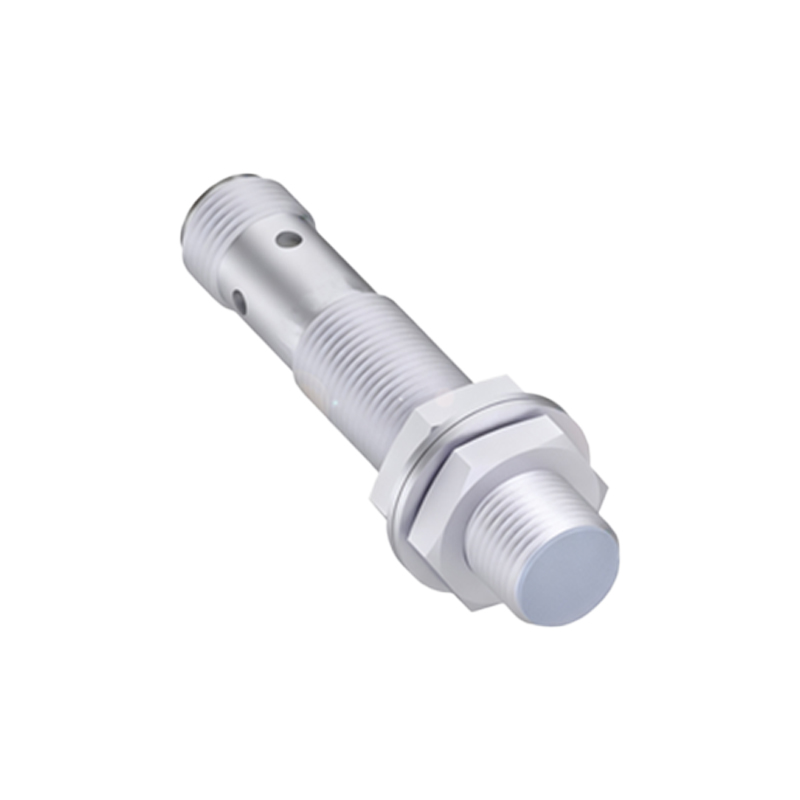
In contrast, capacitive proximity sensors can detect both metallic and non-metallic objects, including liquids, powders, plastics, and wood. Their operation is based on capacitance change. The sensor face acts as one plate of a capacitor, with the target object acting as the other plate, and the air gap as the dielectric. The internal oscillator circuit is tuned so that it only oscillates when a target is present, altering the capacitance of the circuit. When an object enters the sensing field, it changes the dielectric constant, increasing the capacitance. Once the capacitance reaches a preset threshold, it triggers the output switch. This makes capacitive sensors versatile for level detection of materials inside non-metallic containers or for detecting filled vs. empty packaging.
Another major category is the photoelectric proximity sensor, which uses a beam of light. It consists of a light emitter (usually an LED producing visible red, infrared, or laser light) and a receiver. There are three main operational modes. The through-beam (or opposed) mode has separate emitter and receiver units; detection occurs when the target object interrupts the light beam. The retro-reflective mode uses a single housing containing both emitter and receiver, relying on a reflector to bounce the light back; the target is detected when it blocks this reflected beam. The diffuse (or proximity) mode also has a combined emitter and receiver, but it detects the light reflected directly off the target itself. Photoelectric sensors offer long sensing ranges and are excellent for detecting objects of various materials, colors, and surface properties.
Ultrasonic proximity sensors function similarly to sonar. They emit high-frequency sound waves (typically beyond human hearing) and evaluate the echo received after reflection from a target. The sensor calculates the time interval between sending the signal and receiving the echo to determine the distance to the object. These sensors are highly effective for detecting objects regardless of color, transparency, or material, and are widely used for distance measurement, level sensing of liquids and bulk solids, and in challenging environments with dust or vapor.
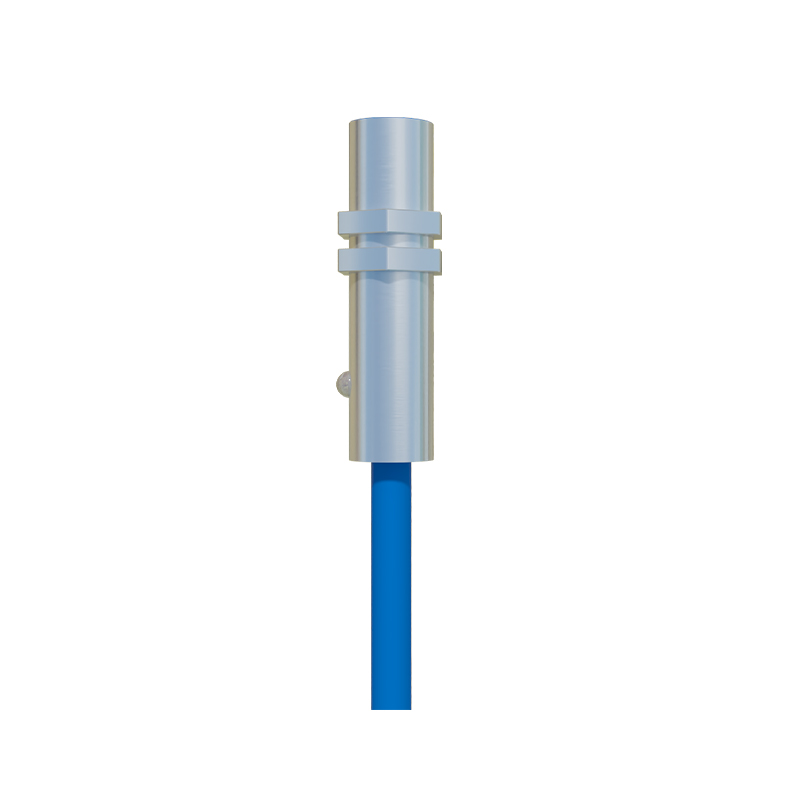
The output of most modern proximity sensors is a solid-state switch, either as a PNP (sourcing) or NPN (sinking) transistor configuration, providing a clean, fast, and bounce-free signal to a Programmable Logic Controller (PLC) or other control system. Key selection parameters include sensing range, repeat accuracy, response frequency, housing material (e.g., stainless steel for washdown areas), and environmental ratings like IP67 for protection against dust and temporary immersion.
In industrial applications, proximity sensors are ubiquitous. Inductive sensors are the workhorses on assembly lines for detecting metal parts, counting products, monitoring robot arm position via sensing metallic flags, and as end-of-travel limit switches on machinery. Capacitive sensors monitor fill levels in tanks containing liquids, grains, or chemicals, and detect the presence of non-metallic objects like glass or plastic bottles. Photoelectric sensors are essential in packaging, material handling for object detection on conveyors, and ensuring correct positioning. Ultrasonic sensors provide precise control in palletizing, loop control in web processes, and liquid level management.
Understanding the underlying principle of each proximity sensor type—whether inductive, capacitive, photoelectric, or ultrasonic—is crucial for selecting the right sensor for a given application. This ensures optimal system reliability, efficiency, and safety in automated industrial processes, from discrete manufacturing to complex process control. Their non-contact nature continues to make them indispensable in the evolution towards smarter, more connected factories.