In the realm of industrial automation and control systems, proximity sensors stand as fundamental components, enabling machines to "sense" the presence or absence of objects without physical contact. These non-contact devices are pivotal for enhancing efficiency, ensuring safety, and enabling sophisticated automation sequences. Their operation is based on detecting changes in a field or by emitting a beam of electromagnetic radiation. This article delves into the core principles, primary types, key applications, and critical selection factors for proximity sensors.
The fundamental principle behind a proximity sensor is its ability to detect a target object within a specified sensing range without making any physical contact. This is achieved by perturbing or interrupting an electromagnetic field, acoustic wave, or light beam. The absence of mechanical contact eliminates wear and tear, significantly increasing the sensor's operational lifespan and reliability. Furthermore, it allows for the detection of fragile, soft, or rapidly moving objects that could be damaged or misaligned by tactile methods.
Several types of proximity sensors dominate the industrial landscape, each with distinct operating principles and ideal use cases.
Inductive Proximity Sensors are among the most common. They generate an oscillating electromagnetic field. When a metallic object (ferrous or non-ferrous) enters this field, it induces eddy currents within the target, causing a change in the oscillation amplitude. This change is detected by the sensor's circuitry, triggering an output signal. Inductive sensors are robust, resistant to environmental contaminants like dust and oil, and are excellent for detecting metal parts in machinery, such as in CNC machines, robotic arms, and conveyor systems. Their limitation is that they only detect metallic objects.
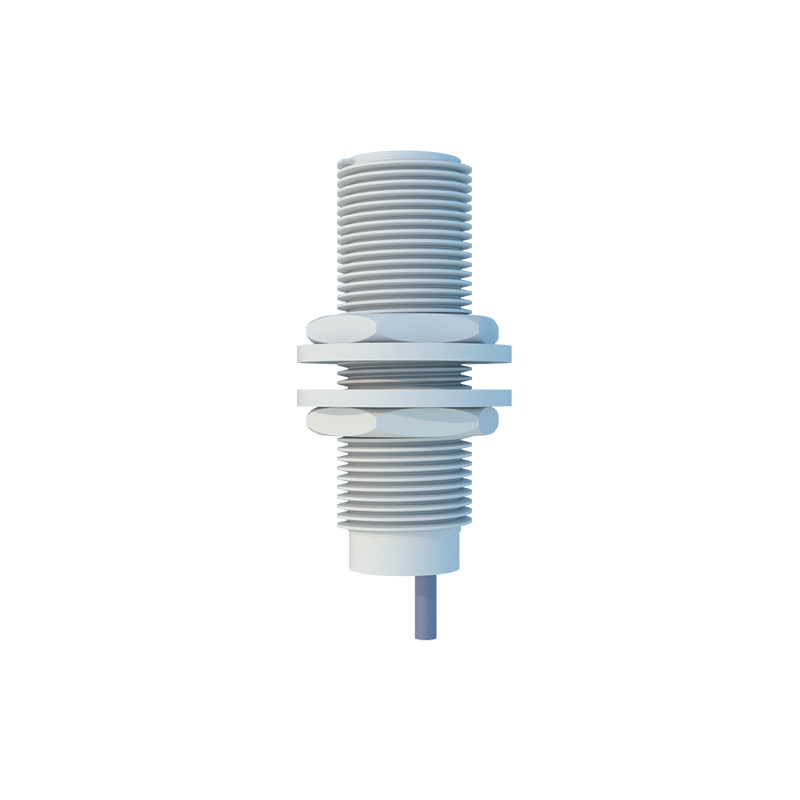
Capacitive Proximity Sensors operate by generating an electrostatic field. They can detect both metallic and non-metallic materials, including liquids, powders, plastics, and wood. The sensor detects a change in capacitance when a target object enters the electrostatic field. This makes them versatile for applications like level detection in tanks (liquid or granular materials), detecting filled bottles on a line, or sensing the presence of non-metallic materials. They can be sensitive to environmental factors like humidity.
Photoelectric Sensors, while sometimes categorized separately, function as proximity devices. They consist of an emitter (light source - LED or laser) and a receiver. They detect objects by interpreting changes in the received light signal. There are three main modes: through-beam (separate emitter and receiver, object breaks the beam), retro-reflective (object reflects light back to a combined unit), and diffuse (reflective), where the sensor detects light reflected directly from the object itself. Photoelectric sensors offer long sensing ranges and can detect virtually any material, but their performance can be affected by color, transparency, and environmental conditions like fog or dust.
Ultrasonic Proximity Sensors emit high-frequency sound waves and evaluate the echo received after reflection from a target. By calculating the time interval between sending the signal and receiving the echo, the sensor can determine the presence and distance of an object. They are highly effective for detecting objects regardless of material, color, or transparency, and are ideal for challenging environments with dust, smoke, or vapors. Common applications include distance measurement, level sensing in bulk solids, and pallet detection in logistics.
Magnetic Proximity Sensors (Reed Switches or Hall Effect sensors) detect the presence of a permanent magnet. They are simple, cost-effective, and used in applications where only a magnetic field needs to be sensed, such as in cylinder position detection or door/window security systems.
The applications of proximity sensors are vast and integral to modern industry. They are used for object detection and counting on assembly lines, precise position control of robotic end-effectors, jam detection in material handling systems, limit switching in automated guides, and safety interlocking on machine guards. In automotive manufacturing, they ensure parts are correctly positioned for welding or assembly. In packaging, they verify lid placement or label presence.
Selecting the right proximity sensor requires careful consideration of several parameters. The sensing distance (nominal and effective) must be suitable for the application, with a safety margin. The target material dictates the sensor type (inductive for metals, capacitive for non-metals). The output type (PNP/NPN, NO/NC, analog) must be compatible with the PLC or controller. Environmental conditions such as temperature extremes, washdown requirements (IP rating), and exposure to chemicals are critical for durability. Finally, the housing size and shape must fit the mechanical constraints of the installation.
In conclusion, proximity sensors are indispensable eyes of the automated industrial world. Understanding their operating principles, strengths, and limitations is crucial for designing reliable, efficient, and safe control systems. From simple presence detection to complex positioning tasks, the correct selection and application of these sensors directly impact productivity, quality, and operational uptime in virtually every manufacturing sector