Proximity switch sensors are indispensable components in modern industrial automation, providing non-contact detection of metallic and, in some cases, non-metallic objects. Their reliability, speed, and durability make them superior to mechanical limit switches in countless applications. At the heart of their functionality lies the sensing mechanism, which defines their operating principle, capabilities, and ideal use cases. This article delves into the primary sensing technologies employed in proximity sensors, offering a detailed analysis for electrical engineers and system designers.
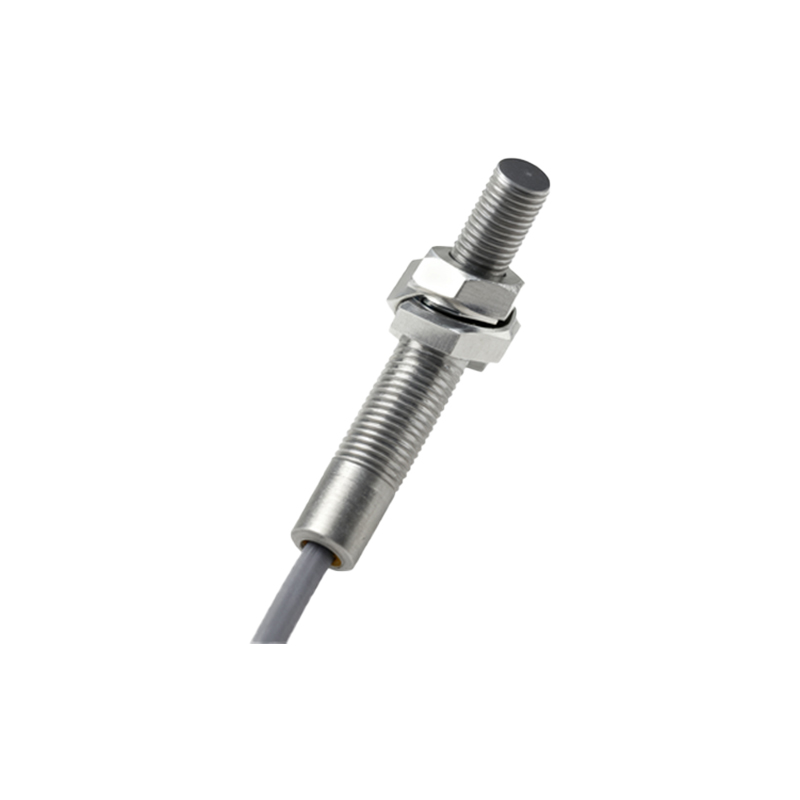
The most prevalent type is the Inductive Proximity Sensor. This sensor generates an electromagnetic field via a coiled oscillator circuit. When a metallic object (typically ferrous like iron or steel, or non-ferrous like aluminum, copper, or brass) enters this field, eddy currents are induced on the surface of the target. These eddy currents draw energy from the oscillator, causing a reduction in its amplitude. This amplitude change is detected by a threshold circuit, which subsequently switches the sensor's output state (e.g., from OFF to ON). Key characteristics include: detection limited to metallic objects; typically shorter sensing ranges compared to other types; excellent resistance to environmental contaminants like dust, oil, and moisture; and high switching frequencies suitable for high-speed counting or positioning tasks. Factors like target material, size, and shape significantly influence the effective sensing distance, a parameter known as the "correction factor."
For applications requiring detection of non-metallic objects—such as wood, plastic, glass, liquids, or granular materials—the Capacitive Proximity Sensor is the tool of choice. Its operating principle is analogous to an open capacitor. The sensor's active face forms one plate of the capacitor, and the sensed object forms the other (or alters the dielectric constant between plates). The sensor generates an electrostatic field. The introduction of an object changes the capacitance of this field. This change is measured by an internal circuit, triggering an output switch when a preset threshold is exceeded. These sensors can detect virtually any material but require careful calibration to avoid false triggers from humidity changes or unintended background objects. They are ideal for level detection in tanks (liquid or solid), material handling of non-metals, and presence detection of packaged goods.
A third major category is the Magnetic Proximity Sensor, often referred to as a reed switch or Hall-effect sensor. These devices detect the presence of a permanent magnet. In a reed switch, two ferromagnetic reeds are sealed in a glass tube filled with inert gas. When a magnetic field of sufficient strength is applied, the reeds attract each other and make contact, closing the circuit. Hall-effect sensors, which are solid-state, produce a voltage difference (the Hall voltage) when a magnetic field is applied perpendicular to current flow in a conductor. Magnetic sensors are extremely reliable for detecting the position of cylinders with integrated magnets (piston position in pneumatic cylinders), in door/window security systems, and in low-speed rotational encoding. They are immune to non-magnetic contaminants and offer very long operational life, especially the solid-state Hall-effect variants.
Ultrasonic and Photoelectric sensors also fall under the broad proximity sensing umbrella but are based on different physical principles. Ultrasonic sensors measure the time-of-flight of a sound wave reflected from a target, making them suitable for distance measurement and level sensing of various materials, including transparent objects. Photoelectric sensors use a light beam (visible, infrared, or laser) and are categorized into through-beam, retro-reflective, and diffuse reflective modes. While not always classified as "proximity switches" in the strictest sense, their diffuse reflective variants function similarly for non-contact detection at longer ranges.
Selecting the appropriate sensing mechanism is critical. An engineer must consider: Target Material (metal, non-metal, specific type); Required Sensing Distance; Environmental Conditions (temperature, presence of washdown chemicals, dust, chips); Electrical Output Requirements (PNP/NPN, NO/NC, analog); Switching Frequency; and Physical Size Constraints. For instance, an inductive sensor is perfect for detecting a steel gear tooth on a high-speed shaft. A capacitive sensor is necessary to sense the plastic cap level in a bottle-filling machine. A magnetic sensor is optimal for confirming the extended position of a pneumatic actuator in an automotive welding line.
In conclusion, the "proximity switch" is a versatile family of devices unified by a non-contact operating philosophy but distinguished by their core sensing mechanisms. A deep understanding of inductive, capacitive, and magnetic principles—their strengths, limitations, and application nuances—empowers electrical engineers to design robust, efficient, and reliable automation systems. As technology advances, these core principles are enhanced with integrated diagnostics, IO-Link communication for parameterization and data exchange, and increased resilience, ensuring their continued dominance in industrial sensing.
SEO