In the realm of industrial automation and electrical engineering, proximity sensors are indispensable components for non-contact object detection. Their ability to sense the presence or absence of an object without physical contact ensures reliability, longevity, and high-speed operation in diverse applications, from assembly lines to safety systems. The effectiveness of a proximity sensor is fundamentally tied to its detection method. This article delves into the core detection methodologies, providing a detailed technical overview for industry professionals.
The primary detection methods for proximity sensors can be categorized based on the underlying physical principle they exploit. The most prevalent types include Inductive, Capacitive, Ultrasonic, and Photoelectric (Optical) sensors. Each method has distinct operating principles, optimal applications, and limitations.
Inductive Proximity Sensors
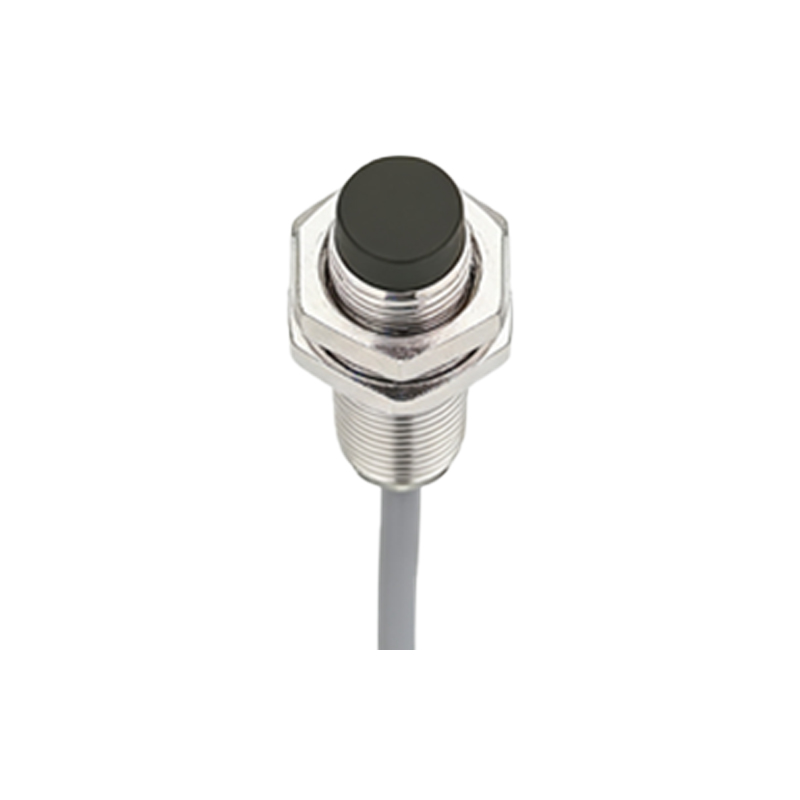
Inductive sensors are the workhorses of metal detection. Their operation is based on the principle of electromagnetic induction. The sensor generates an oscillating electromagnetic field from its active face. When a metallic object (ferrous or non-ferrous) enters this field, eddy currents are induced on the surface of the metal. This causes a change in the oscillation amplitude or frequency within the sensor's coil. An internal circuit detects this change and triggers a switching output. Inductive sensors are highly robust, immune to environmental factors like dust, oil, or moisture (provided they have appropriate IP ratings), and offer excellent repeatability. They are ideal for detecting metal parts in machinery, counting metallic objects, or as position limit switches. However, their key limitation is that they only detect metals, and their sensing range is relatively short, typically a few millimeters to several tens of millimeters, influenced by the target metal type and size.
Capacitive Proximity Sensors
Capacitive sensors operate by detecting changes in capacitance. The sensor face acts as one plate of a capacitor, with the target object acting as the other plate, and the intervening space as the dielectric. The sensor generates an electrostatic field. When any material—metal, plastic, wood, liquid, or granular substance—enters this field, it alters the dielectric constant and thus the capacitance of the system. The sensor's circuitry measures this capacitance change and activates the output. This makes capacitive sensors incredibly versatile for detecting non-metallic materials. Common applications include level detection for liquids or powders, presence detection of plastic or glass containers, and touch-sensitive controls. They can also sense through certain non-metallic walls. A notable consideration is their sensitivity to environmental changes like humidity or temperature, which can affect the dielectric constant of air and require careful calibration.

Ultrasonic Proximity Sensors
These sensors utilize sound waves beyond the human hearing range (typically >20 kHz). They operate on the time-of-flight principle. The sensor emits a burst of ultrasonic pulses and then listens for the echo reflected from a target object. By precisely measuring the time interval between the emission and the reception of the echo, the sensor can calculate the distance to the object. Ultrasonic sensors excel at detecting objects regardless of their material, color, or transparency. They offer relatively long sensing ranges (from centimeters to several meters) and can provide analog distance information, not just a simple on/off switch. Applications are found in parking assistance systems, liquid level sensing in tanks, object profiling, and pallet detection in logistics. Limitations include potential interference from soft materials that absorb sound, turbulent air, and temperature variations that affect the speed of sound.
Photoelectric Sensors
Photoelectric or optical proximity sensors use light beams for detection. They consist of a light emitter (usually an LED—infrared, red, or laser) and a receiver. Detection occurs when the target object interrupts or reflects the light beam. There are three main operational modes: Through-beam (separate emitter and receiver; object breaks the beam), Retro-reflective (emitter and receiver in one unit with a reflector; object breaks the beam to reflector), and Diffuse (emitter and receiver in one unit; object reflects light back to the receiver). Diffuse mode is the true "proximity" style. Photoelectric sensors offer very long ranges, especially through-beam types, and can detect extremely small objects. They are sensitive to color, reflectivity, and surface texture. Applications are vast, including bottle counting on conveyors, web break detection, and door safety curtains. Their performance can be adversely affected by ambient light, dust, fog, or dirt on the lenses.
Selection and Application Considerations
Choosing the correct detection method is critical. Engineers must evaluate:
Target Material: Metal, non-metal, liquid?
Sensing Distance: Required range from the sensor face.
Environmental Conditions: Presence of dust, moisture, oil, temperature extremes, or electrical noise.
Output Requirements: Discrete (PNP/NPN) switch, analog (4-20mA, 0-10V),