In industrial automation and control systems, proximity sensors play a critical role in detecting the presence or absence of objects without physical contact. One of the most fundamental parameters defining their performance is the minimum sensing distance, often referred to as the "minimum detectable distance" or "minimum approach distance." This metric determines how close an object must be to the sensor's active surface to reliably trigger a detection signal. Understanding this parameter is essential for proper sensor selection, installation, and system design to avoid operational failures, false triggers, or physical damage.
The minimum sensing distance is primarily influenced by the sensor's underlying technology. Inductive proximity sensors, commonly used for detecting metallic objects, generate an electromagnetic field. When a metal target enters this field, eddy currents are induced, causing a change in the sensor's oscillation amplitude, which is then converted into an output signal. For these sensors, the minimum sensing distance is typically very small, often less than 1 millimeter, as the electromagnetic field strength diminishes rapidly with distance. However, it is crucial to note that bringing a target too close—especially ferrous metals—can sometimes saturate the sensor's core, leading to unreliable operation or hysteresis effects. Capacitive proximity sensors, capable of detecting both metallic and non-metallic materials, operate by sensing changes in capacitance between the sensor and the target. Their minimum sensing distance can vary more widely based on the dielectric constant of the target material but generally remains in the sub-millimeter to few-millimeter range. Ultrasonic and photoelectric sensors, which rely on wave reflection, have different characteristics; their minimum distance is often defined by the sensor's blind zone—a short range immediately in front of the sensor where reflections are too rapid to process accurately.
Several factors beyond technology affect the minimum sensing distance. Sensor size and design are significant; larger sensing coils or surfaces may have slightly larger minimum distances due to field distribution. The target material's properties, such as conductivity, permeability, and size relative to the sensor, also play a role. For instance, with inductive sensors, steel targets can be detected at slightly greater minimum distances compared to aluminum, but the minimum approach distance might need adjustment to account for material-specific response curves. Environmental conditions like temperature, humidity, and the presence of contaminants (e.g., oil, dust) can alter sensor sensitivity, indirectly impacting the minimum distance by requiring calibration or threshold adjustments. Additionally, electrical characteristics, including supply voltage stability and output load, can influence the sensor's switching behavior at close ranges.
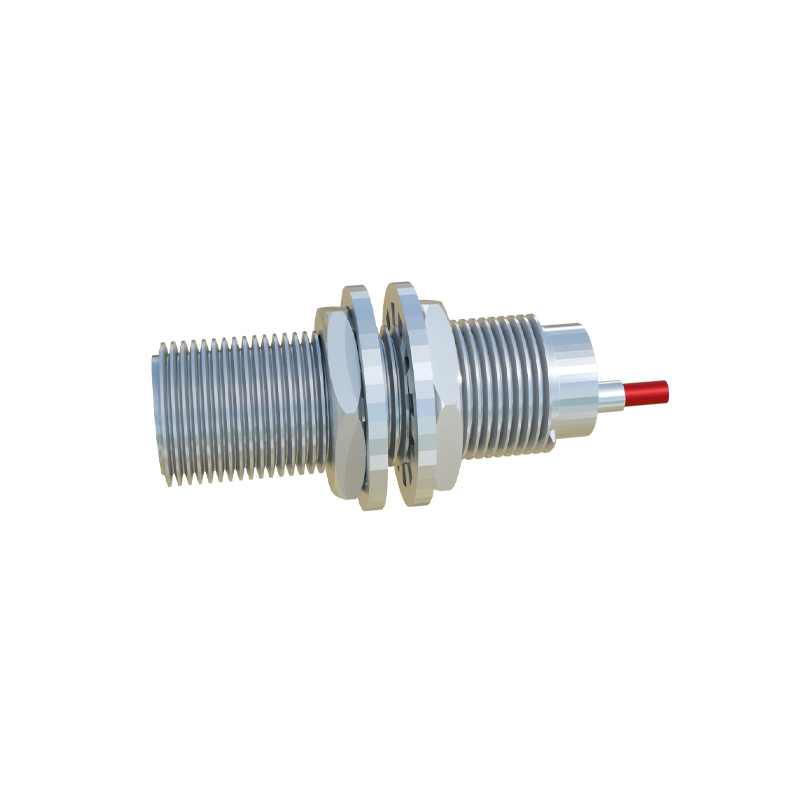
In practical applications, ignoring the minimum sensing distance can lead to issues. For example, in high-speed packaging machinery, if a sensor is mounted too close to a moving product, it might fail to detect items passing rapidly, causing jams or missed counts. In robotic assembly, insufficient clearance between a sensor and a metal fixture could result in continuous activation, disrupting positional accuracy. To mitigate such problems, engineers must consult manufacturer datasheets, which specify nominal sensing distances (Sn) and often include graphs or values for minimum distances under standardized conditions. Installation guidelines typically recommend maintaining a clearance of at least 10–20% of the nominal sensing distance to ensure reliable operation, though this can vary by sensor type. Regular maintenance, including cleaning of sensor faces and verification of alignment, helps preserve optimal performance near minimum distances.
Advancements in sensor technology are continuously refining minimum distance capabilities. Miniaturized sensors with enhanced shielding reduce interference and allow for tighter placements in compact machinery. Digital signal processing in modern sensors enables better discrimination at close ranges, minimizing false triggers. For critical applications, such as semiconductor manufacturing or precision robotics, specialized sensors with calibrated minimum distances down to micrometers are available, though they often come at a higher cost. When selecting a proximity sensor, engineers should balance minimum distance requirements with other factors like response time, environmental robustness, and cost. Testing under real operating conditions is always advisable to validate performance.
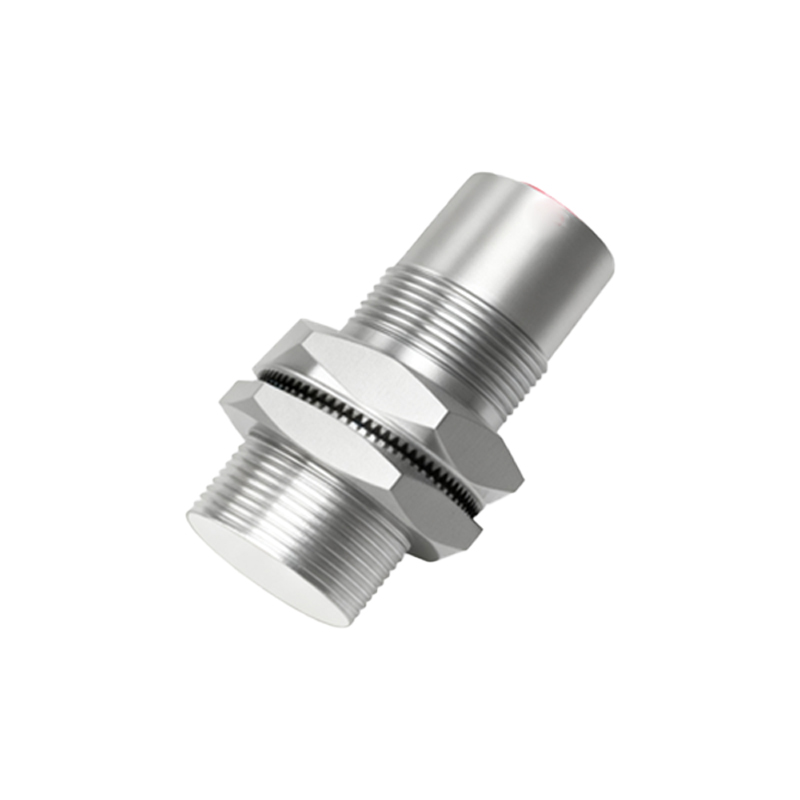
In summary, the minimum sensing distance is a vital specification that dictates how closely a target can approach a proximity sensor while maintaining reliable detection. By considering sensor technology, target properties, environmental factors, and application needs, engineers can optimize system design for efficiency and reliability. As automation evolves, a thorough grasp of this parameter will remain key to leveraging proximity sensors effectively in diverse industrial settings.
