In the realm of industrial automation and process control, the ability to detect the presence, absence, or position of an object without physical contact is paramount. Among the various technologies enabling this capability, non-contact analog proximity sensors stand out for their versatility and precision. Unlike their digital counterparts that provide a simple on/off signal, analog proximity sensors output a continuous signal that varies in proportion to the distance between the sensor and the target object. This nuanced output unlocks a higher level of control and monitoring in sophisticated applications.
The core operating principle of these sensors typically involves electromagnetic or capacitive fields. Inductive analog proximity sensors are the most common for metallic target detection. They generate an oscillating electromagnetic field from a coil in the sensing face. When a conductive metal target enters this field, eddy currents are induced within the target, which dampens the oscillation amplitude of the sensor's internal circuit. This damping effect is proportional to the distance to the target. The sensor's electronics then convert this change into a standardized, continuously variable analog output signal, such as 0-10V DC or 4-20mA.
Capacitive analog sensors operate on a similar principle but can detect both metallic and non-metallic materials (plastics, wood, liquids, etc.). They generate an electrostatic field. The presence of any material with a dielectric constant different from air alters the capacitance of this field. This change, again proportional to distance, is translated into an analog output. This makes capacitive sensors invaluable in applications involving material level detection, thickness monitoring, or presence sensing of non-conductive objects.
The advantages of employing analog over digital proximity sensors are significant in many scenarios. The continuous output allows for precise distance measurement, not just detection. This is crucial in applications like monitoring the thickness of a material on a production line, controlling the precise gap in a robotic gripper, or gauging the wear on a machine tool. It enables smooth, proportional control systems rather than simple binary actions. Furthermore, the analog signal can provide early warning signs; a gradually changing signal might indicate a target is drifting out of alignment long before it would be missed by a digital switch, facilitating predictive maintenance.
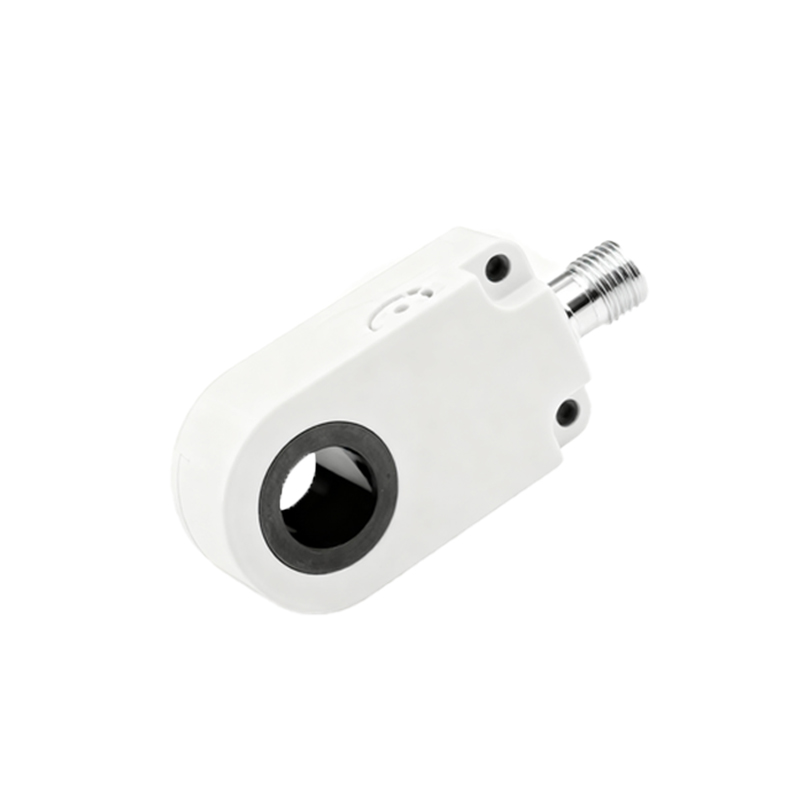
Selecting the right analog proximity sensor requires careful consideration of several parameters. The sensing range is fundamental, but with analog sensors, the linearity within that range is equally critical. High linearity ensures the output signal accurately represents the distance change. The target material dictates the choice between inductive and capacitive types. Environmental factors like temperature extremes, presence of chemicals, or washdown requirements (IP ratings) must be accounted for. Finally, the output type must be compatible with the controller or PLC input—voltage outputs are common for shorter distances within control cabinets, while current loops (4-20mA) are preferred for longer runs due to their inherent noise immunity.
Typical applications span numerous industries. In automotive manufacturing, they precisely control robot arm positions for welding or assembly. In packaging, they monitor film thickness or control the fill level in containers. In metalworking, they measure runout or vibration on rotating shafts. In wood processing, capacitive sensors detect the presence of boards or monitor material levels in silos. The continuous feedback they provide is integral to closed-loop control systems, enhancing quality, efficiency, and safety.
Installation and calibration are key to optimal performance. Sensors must be mounted securely to avoid vibration-induced signal noise. The sensing field characteristics must be understood to prevent false triggers from adjacent machinery or the background (a concern known as "shielding" or "non-shielding" design). Regular calibration against known distance standards may be necessary in high-precision applications to compensate for any drift over time. Understanding the sensor's datasheet, particularly its linear range and temperature compensation specifications, is essential for reliable integration.
In conclusion, non-contact analog proximity sensors are powerful tools that bridge the gap between simple presence detection and precise metrology. By providing a continuous electrical signal proportional to distance, they empower engineers to build more intelligent, responsive, and efficient automated systems. Their selection and application, grounded in a solid understanding of their operating principles and specifications, are critical skills for advancing modern industrial automation.