In the realm of industrial automation and electrical engineering, proximity sensors are indispensable components. They detect the presence or absence of an object without physical contact, enabling precise control, safety, and efficiency in countless applications. Understanding the different types of proximity sensors, their operating principles, and ideal use cases is crucial for selecting the right sensor for any given task. This guide provides a detailed overview of the primary categories.
The most fundamental categorization is based on the detection method. The four main types are Inductive, Capacitive, Ultrasonic, and Photoelectric (Optical) sensors.
Inductive Proximity Sensors
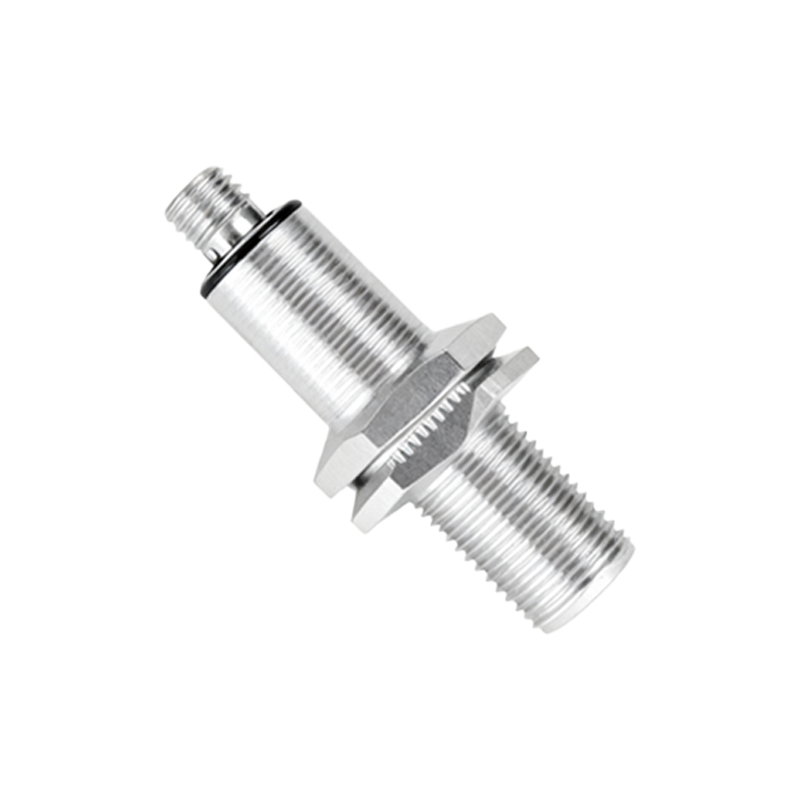
Inductive sensors are workhorses in industrial settings, specifically designed to detect metallic objects. Their operation relies on electromagnetic induction. The sensor generates an oscillating electromagnetic field from its active face. When a ferrous or non-ferrous metal object enters this field, eddy currents are induced on the object's surface. This causes a change in the oscillation amplitude within the sensor's coil, which is detected by the internal circuitry, triggering a solid-state output switch. Key advantages include high switching frequency, robustness against environmental factors like dust, oil, and moisture, and exceptional longevity due to the absence of moving parts. They are ideal for applications like position sensing of metal parts, counting metallic objects, and limit switching in machine tools. A limitation is their inability to detect non-metallic materials.
Capacitive Proximity Sensors
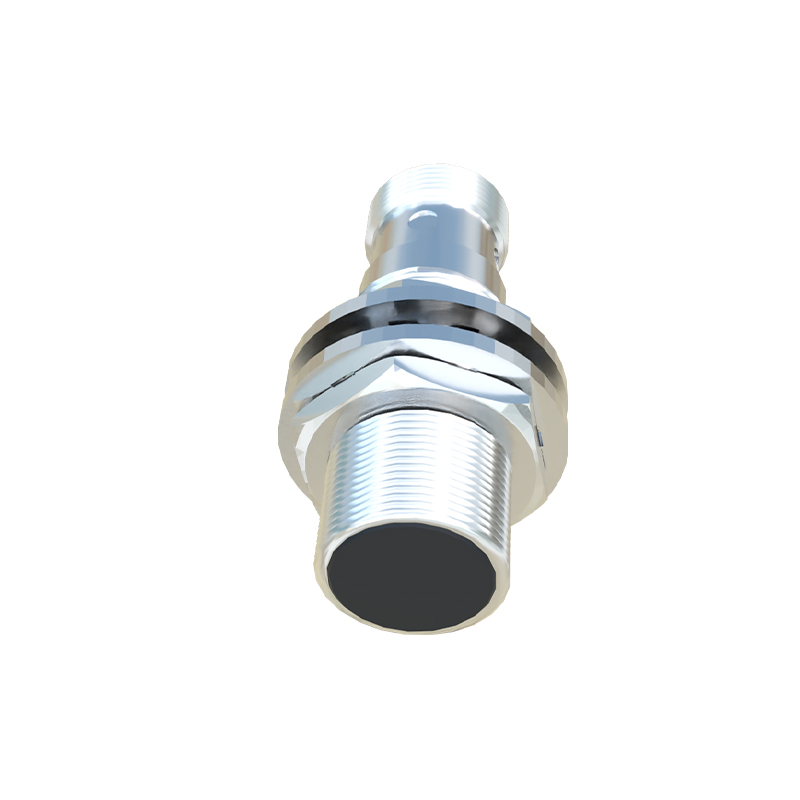
Capacitive sensors can detect both metallic and non-metallic materials, including liquids, powders, plastics, and wood. They function by generating an electrostatic field. The sensor and the target act as two plates of a capacitor. As a target enters the sensing field, it alters the dielectric constant and thus the capacitance of the system. The sensor's circuit monitors this change and triggers an output when a predetermined threshold is reached. These sensors are particularly useful for level detection of liquids or granular materials through container walls (if non-metallic), presence detection of paper, glass, or wood, and touch interfaces. They can be sensitive to environmental changes like humidity and require careful calibration to avoid false triggers from non-target materials.
Ultrasonic Proximity Sensors
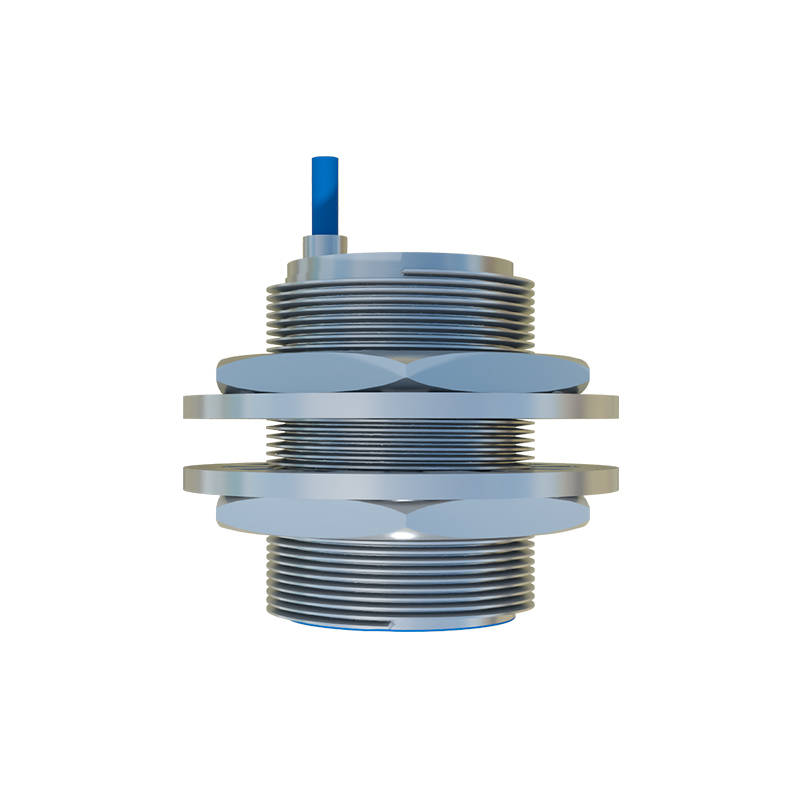
Ultrasonic sensors utilize sound waves beyond the human hearing range (typically >20 kHz). They operate on the time-of-flight principle. The sensor emits a burst of ultrasonic pulses and then listens for the echo reflected from a target object. By calculating the time interval between emission and reception, the sensor can determine the distance to the object. They are excellent for precise distance measurement, level sensing of bulk materials, and detecting objects with complex surfaces or colors that photoelectric sensors might struggle with. They are largely unaffected by target color, transparency, or material (though sound-absorbing materials can be challenging). However, environmental factors like temperature variations (which affect sound speed), wind, and acoustic noise can influence their accuracy. They also have a relatively slower response time compared to inductive or photoelectric sensors.
Photoelectric Sensors
Photoelectric, or optical, sensors use a light beam to detect objects. They are highly versatile and come in several sub-types based on the light source (usually LED or laser) and operating mode. The three primary configurations are:
1. Through-Beam (Opposed): Consists of separate transmitter and receiver units facing each other. An object is detected when it interrupts the light beam. This mode offers the longest sensing range and highest reliability.
2. Retroreflective: Uses a single unit that houses both the emitter and receiver. It projects light onto a reflector, which bounces the beam back. Detection occurs when an object breaks this reflected beam.
3. Diffuse (Proximity) Mode: The emitter and receiver are in the same housing. The sensor detects light reflected directly off the target object itself. Sensing distance depends on the target's color, reflectivity, and surface texture.
Photoelectric sensors can detect virtually any material, provided it interrupts or reflects the light beam sufficiently. They are perfect for long-range detection, small object sensing, and applications involving transparent or opaque materials. Their performance can be affected by ambient light, dust, fog, and the reflectivity of the target.
Selection Criteria
Choosing the correct proximity sensor involves evaluating several parameters:
Target Material: Metal, plastic, liquid, etc.
Sensing Distance: Required range from the sensor to the target.
Output Type: PNP/NPN transistor, analog (4-20mA, 0-10V), or IO-Link for digital communication.
Environmental Conditions: Exposure to temperature extremes, moisture, chemicals, or washdowns.
Response Time and Switching Frequency: How fast the sensor must react and how many operations per second are required.
Mounting and Size: