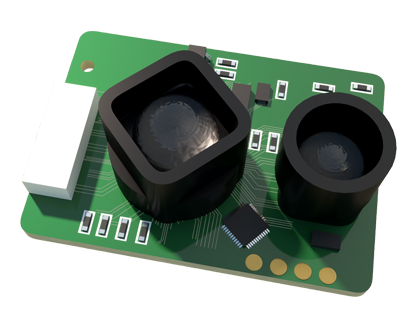
In today's rapidly evolving industrial landscape, laser sensors have become indispensable tools for precision measurement, detection, and automation. Their ability to deliver high accuracy, reliability, and speed makes them a preferred choice across various sectors, including manufacturing, automotive, logistics, and robotics. This article provides expert recommendations for laser sensors, focusing on key features, applications, and leading models to help engineers and decision-makers select the optimal solution for their specific needs.
First, understanding the fundamental types of laser sensors is crucial. The most common categories include laser distance sensors, laser displacement sensors, laser profile sensors, and laser triangulation sensors. Each type serves distinct purposes: distance sensors measure the interval between the sensor and a target, displacement sensors detect minute changes in position, profile sensors capture 2D or 3D contours, and triangulation sensors excel in high-precision surface inspection. For instance, in automotive assembly lines, laser displacement sensors are often used to ensure component alignment, while in warehouse automation, laser distance sensors facilitate inventory management by measuring object dimensions.
When selecting a laser sensor, several technical parameters must be considered. Resolution, which refers to the smallest detectable change, is vital for applications requiring micron-level accuracy, such as semiconductor manufacturing. Measurement range defines the distance over which the sensor operates effectively; longer ranges are suitable for large-scale environments like construction sites. Response time impacts system speed, with faster sensors enhancing throughput in high-speed production lines. Environmental factors like ambient light, dust, and temperature fluctuations also play a role—industrial-grade sensors with IP67 ratings or higher are recommended for harsh conditions. Additionally, connectivity options (e.g., Ethernet, IO-Link) and software compatibility should align with existing automation frameworks.
Based on industry performance and reliability, here are top laser sensor recommendations. The Keyence IL Series is renowned for its ultra-high precision and stability, ideal for quality control in electronics manufacturing. Its advanced algorithms compensate for surface variations, ensuring consistent readings even on reflective or dark materials. For long-range applications, the SICK DT35 Series offers robust performance with ranges up to 300 meters, making it perfect for logistics and material handling. The Omron ZX-L Series stands out for its versatility, featuring multiple measurement modes and easy integration with PLC systems, suitable for packaging and pharmaceutical industries. Another notable model is the Banner Q4X Series, which combines laser technology with durable housing for challenging environments like mining or food processing. These sensors are backed by strong technical support and warranty services, reducing downtime risks.

In practice, successful implementation hinges on proper installation and calibration. Mounting the sensor at an appropriate angle and distance minimizes interference from external light or vibrations. Regular maintenance, such as lens cleaning and firmware updates, extends sensor lifespan. Case studies highlight benefits: a manufacturing plant using laser profile sensors reduced defect rates by 30% through real-time surface inspection, while a robotic system equipped with laser triangulation sensors improved pick-and-place accuracy by 25%. Emerging trends, including the integration of AI for predictive analytics and the development of compact, energy-efficient models, are shaping the future of laser sensing technology.
To conclude, investing in the right laser sensor enhances operational efficiency, product quality, and safety. By evaluating specific requirements—such as precision needs, environmental conditions, and budget—engineers can leverage these recommendations to optimize their automation processes. As industries continue to embrace Industry 4.0, laser sensors will remain at the forefront of innovation, driving smarter and more responsive systems.