In the realm of industrial automation, photoelectric proximity sensors are indispensable components, renowned for their non-contact detection, long sensing ranges, and versatility. However, even the most reliable systems can be compromised by a persistent challenge: false triggers or false positives. These erroneous signals, where a sensor indicates the presence of an object when none exists or fails to detect an existing one, can lead to production line stoppages, quality control issues, and significant operational downtime. Understanding the root causes and implementing robust mitigation strategies is crucial for maintaining system integrity.
The primary operating principle of photoelectric sensors involves emitting a beam of light (visible, infrared, or laser) and detecting changes in the received light intensity. A false trigger occurs when this received signal is altered by factors other than the intended target. The culprits are often environmental and application-specific.
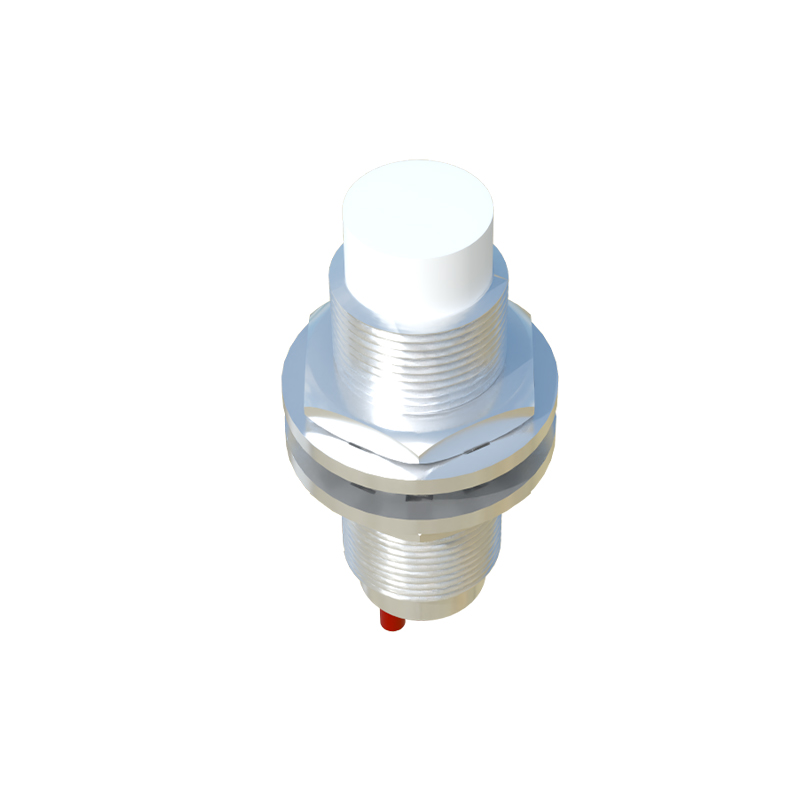
Common Causes of False Triggers:
1. Ambient Light Interference: This is a predominant cause, especially for sensors operating in the visible or near-infrared spectrum. Sudden flashes from welding arcs, strobe lights, or direct sunlight can saturate the receiver, mimicking a "beam broken" or "beam received" signal, depending on the sensor's mode (through-beam, retro-reflective, or diffuse).
2. Optical Contamination: Dust, oil mist, condensation, or debris accumulating on the sensor's lens or reflector can attenuate the light beam. This gradual buildup can cause a through-beam or retro-reflective sensor to eventually signal a "break" even when the path is clear. Conversely, in a diffuse sensor, a highly reflective contaminant might scatter enough light back to the receiver, causing a false detection.
3. Acoustic Noise and Vibration: In environments with heavy machinery, intense vibration can cause momentary misalignment of the sensor or its reflector. For precise, focused beams like those from laser sensors, even a minor shift can move the detection spot, leading to missed detections or false readings from background surfaces.
4. Unintended Reflectors: Diffuse (proximity-mode) sensors detect objects by measuring the light scattered back from the target's surface. A highly reflective background, such as polished metal or a white wall behind the detection zone, can reflect sufficient light to trigger the sensor without the target object being present. Similarly, shiny objects passing at an angle might reflect the beam away from the receiver, causing a missed detection.
5. Electrical Noise: Electromagnetic interference (EMI) from variable frequency drives (VFDs), solenoids, radio transmitters, or power lines can induce spurious signals in the sensor's circuitry or cabling, leading to erratic output switching.
6. Incorrect Sensor Selection or Configuration: Using a sensor with an inappropriate sensing range, beam pattern, or response time for the application is a fundamental setup error. A response time that is too fast might pick up signal noise, while one that is too slow could miss fast-moving objects.
Strategies for Mitigation and Prevention:
Addressing false triggers requires a systematic approach, from initial design to ongoing maintenance.
Select the Right Technology: For environments with high ambient light, choose sensors with modulated LED pulses and synchronous detection. These sensors ignore constant or unmodulated light (like sunlight) and only respond to their own coded pulse, offering excellent immunity. For dusty or foggy conditions, polarized filters in retro-reflective sensors can help distinguish the genuine reflector from reflective particles.
Optimize Mechanical Installation: Shield sensors from direct ambient light using physical hoods or tubes. Ensure rigid mounting to dampen vibrations. Carefully angle diffuse sensors to avoid reflections from background surfaces. For through-beam systems, ensure precise and stable alignment.
Implement Electrical Best Practices: Use shielded cables, grounded properly at the controller end, to minimize EMI. Separate sensor cables from power lines and noise sources. Employ surge protectors in areas with inductive loads.
Leverage Sensor Features: Modern sensors offer programmable functions like response delay timers (on-delay/off-delay), which can filter out brief, spurious signals. Window mode or teaching functions allow you to set upper and lower detection thresholds, useful for ignoring background reflections or ensuring only objects within a specific reflectivity range are detected.
Establish a Rigorous Maintenance Schedule: Regular cleaning of lenses and reflectors is non-negotiable in dirty environments. Implement preventive maintenance checks to verify sensor alignment, mounting stability, and cable integrity.
Consider Redundant Systems: For critical applications, a dual-sensor setup in a voting logic configuration (e.g., two sensors must agree) can drastically improve reliability, though it increases cost and complexity.
In conclusion, false triggers in photoelectric sensors are not an inherent flaw but a solvable engineering challenge. They stem from