In the realm of industrial automation, proximity sensors are indispensable components, providing non-contact detection of metallic or non-metallic objects. A critical, yet often scrutinized, parameter in their specification sheet is the operating current. This article delves into the intricacies of operating current, its relationship with other electrical characteristics, and its practical implications for system design and reliability.
Fundamentally, the operating current of a proximity sensor refers to the current it draws from the power supply during normal detection operation when the output switching element (typically a transistor) is in its "on" state. It is distinct from the leakage current (the minimal current when the output is "off") and the inrush current (a momentary surge during power-up). For DC-powered sensors, this is a direct current value, usually specified in milliamperes (mA). For instance, a common 3-wire DC sensor might have an operating current of 200mA at its rated voltage, say 24V DC.
The value is intrinsically linked to the sensor's output type and load. Sensors with a PNP (sourcing) output configuration supply current to the load, while NPN (sinking) configurations sink current from the load to ground. The operating current specification must account for the current required to drive the connected load, such as a PLC input module, a relay coil, or an indicator lamp. Exceeding the maximum current rating of the sensor's output transistor is a primary cause of premature failure. Therefore, engineers must perform a simple but vital calculation: ensure the load current (plus any residual current from the sensor's own circuitry) is within the sensor's rated continuous output current.
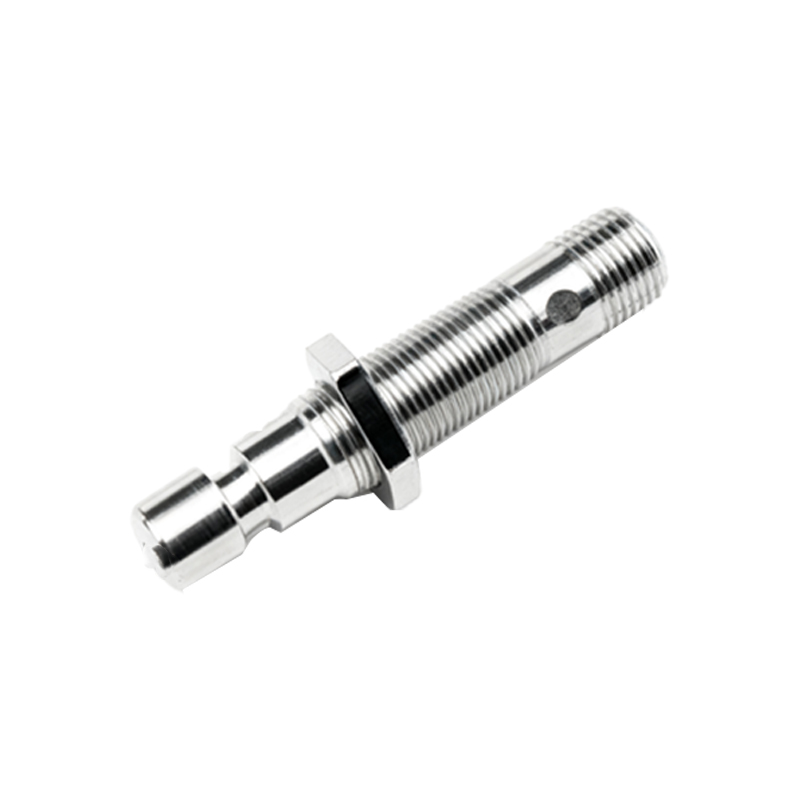
Another key relationship is with the supply voltage. Operating current is not a fixed absolute number; it often varies with the applied voltage. A sensor rated for 10-30V DC will typically draw a higher current at 10V than at 30V to deliver the same output power, due to the internal voltage regulation and circuitry. Always consult the manufacturer's datasheet for graphs showing the current vs. voltage characteristic. Ignoring this can lead to underestimating the current draw at the lower end of the voltage range, potentially overloading the power supply.
From a system design perspective, understanding the total operating current is crucial for proper power supply sizing. In a control panel with dozens of sensors, the cumulative operating current can be substantial. A power supply must be selected with a capacity that exceeds the sum of all operating currents, plus a safety margin (often 20-30%). This prevents voltage droop, which can cause sensors to behave erratically or drop out entirely. Furthermore, the voltage drop across long cable runs must be considered, as it reduces the voltage at the sensor, which can affect its current draw and operational reliability.

The choice of sensor technology also influences operating current. Inductive sensors (for metals) and capacitive sensors (for various materials) have different internal oscillator and amplifier circuits, leading to different baseline current consumptions. Modern sensors with advanced diagnostics or IO-Link communication functionality may have a slightly higher quiescent current but offer significant benefits in predictive maintenance. However, their operating current during switching remains governed by the output stage's capability.
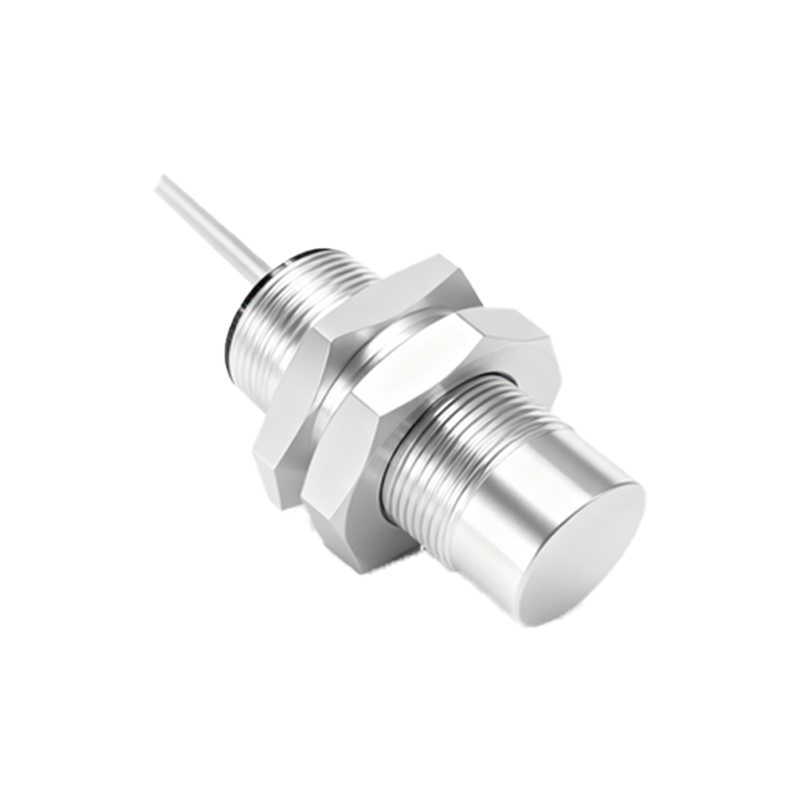
In practice, a low operating current is often desirable for energy efficiency and reducing thermal stress on the output transistor. However, a higher current rating generally indicates a more robust output stage capable of driving heavier loads directly, such as pilot-duty relays. The trade-off is between efficiency and drive capability. For connecting to modern PLCs, which have high-impedance inputs requiring only a few mA, a sensor with a standard 100-200mA rating is more than sufficient and operates coolly.
Finally, for ensuring long-term stability, consider the environmental temperature. The rated operating current is usually specified at room temperature (20-25°C). As ambient temperature rises, the semiconductor's ability to handle current diminishes—a factor known as derating. A sensor rated for 200mA at 25°C might only be safe for 150mA at 60°C. Datasheets provide derating curves, and adherence to them is non-negotiable for applications in hot environments like near ovens or inside sealed enclosures.
In summary, the operating current is a pivotal specification that sits at the intersection of electrical safety, system reliability, and functional design. It demands careful consideration during sensor selection, load matching, power budgeting, and environmental assessment. A meticulous approach to this parameter prevents field failures, ensures stable machine operation, and extends the service life of both the sensor and the overall control system.