In the realm of industrial automation and control systems, proximity sensors are indispensable components for non-contact detection. Among the various types, inductive proximity sensors, often referred to as proximity inductive magnetic sensors, stand out for their reliability, durability, and precise operation in detecting metallic objects. This article delves into the fundamental operating principles of these sensors, exploring the underlying physics and their practical implications in engineering applications.
At its core, an inductive proximity sensor operates on the principle of electromagnetic induction, discovered by Michael Faraday. The primary component of the sensor is a coil wound around a ferrite core, which forms part of an oscillator circuit. When an alternating current is passed through this coil, it generates an oscillating electromagnetic field at the sensor's active face. This field radiates outward into the surrounding environment.
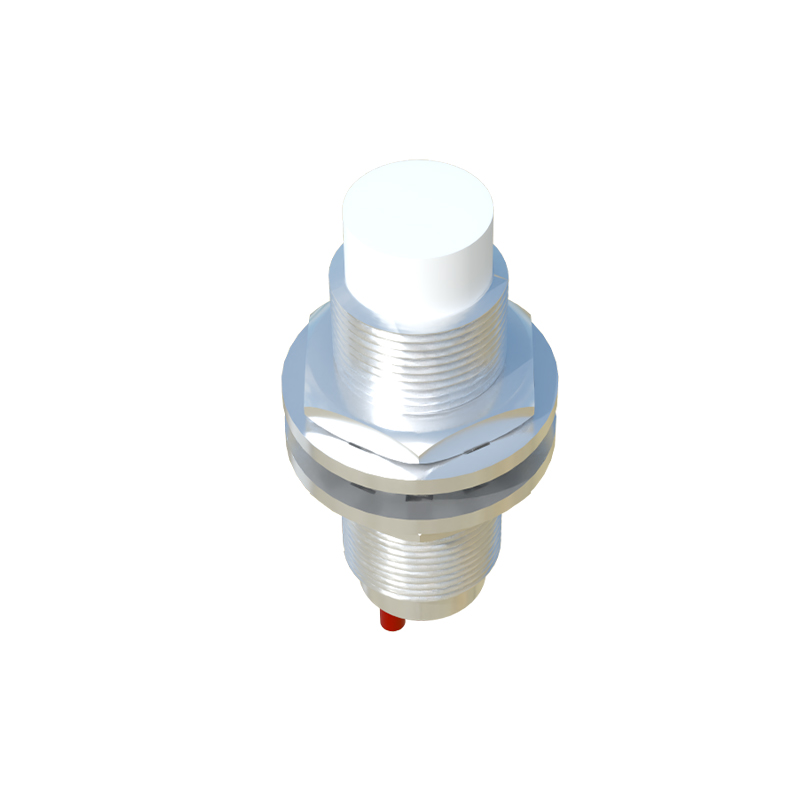
In the absence of a metallic target within its sensing range, the oscillator operates at a specific, stable frequency. The system's design maintains this oscillation. The critical change occurs when a conductive metal object enters this alternating electromagnetic field. According to Faraday's law of induction, the changing magnetic field induces eddy currents on the surface of the conductive target. These eddy currents are circular electric currents that flow within the conductor and, by Lenz's law, generate their own opposing magnetic field. This opposing field interacts with the original field produced by the sensor's coil.
The interaction of these magnetic fields results in a net effect of energy loss or "loading" of the oscillator circuit. This energy loss manifests as a change in the amplitude of the oscillation. The oscillator's energy is effectively absorbed by the eddy currents dissipated as heat in the target metal. As the target moves closer to the sensor's active face, the strength of the induced eddy currents increases, leading to a greater amplitude reduction. A monitoring circuit within the sensor, typically a threshold detector or a Schmitt trigger, continuously evaluates the oscillator's amplitude.
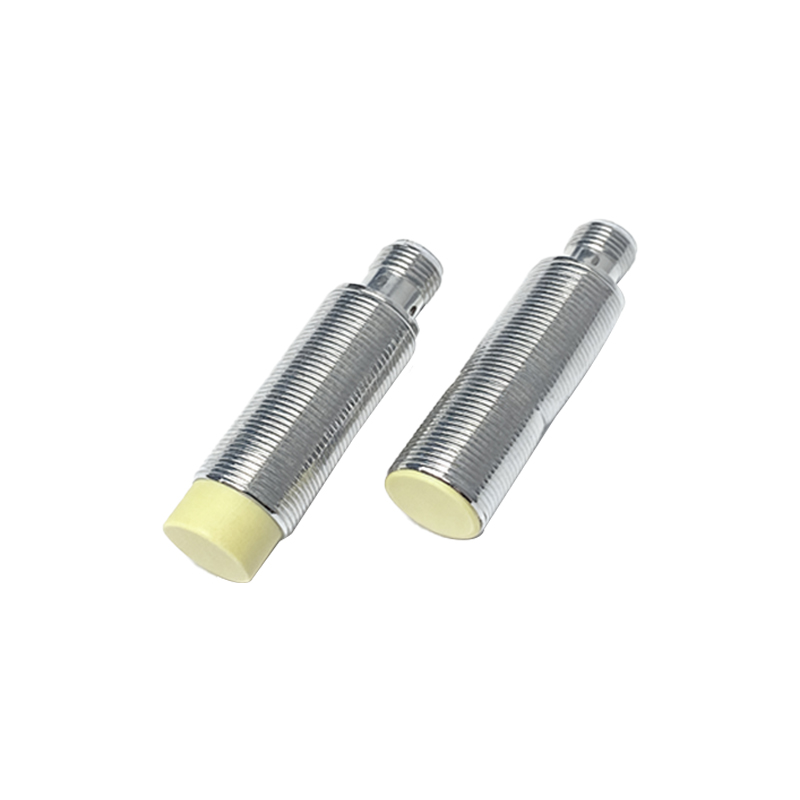
Once the amplitude drops below a predefined threshold—indicating the presence of a target within the nominal sensing distance—the sensor's output state changes. For a standard normally-open (NO) sensor, the output switches from "off" to "on." This output can be in the form of a solid-state switch (PNP or NPN transistor) or a relay contact, providing a signal to a programmable logic controller (PLC), counter, or other control device. When the target moves away, the oscillator amplitude recovers, and the output returns to its original state.
Several key factors influence the performance and sensing distance of an inductive proximity sensor. The first is the target material's properties. Ferrous metals (like iron and steel) are most easily detected because they have both conductive and permeable properties. The permeability allows the magnetic field to penetrate more easily, enhancing the eddy current effect. Non-ferrous metals (like aluminum, copper, or brass) are also detectable but typically at a reduced sensing range, often specified as a correction factor (e.g., 0.4x for aluminum) relative to mild steel. The target size and shape also matter; ideally, the target should be at least as large as the sensor's active face to ensure reliable switching.
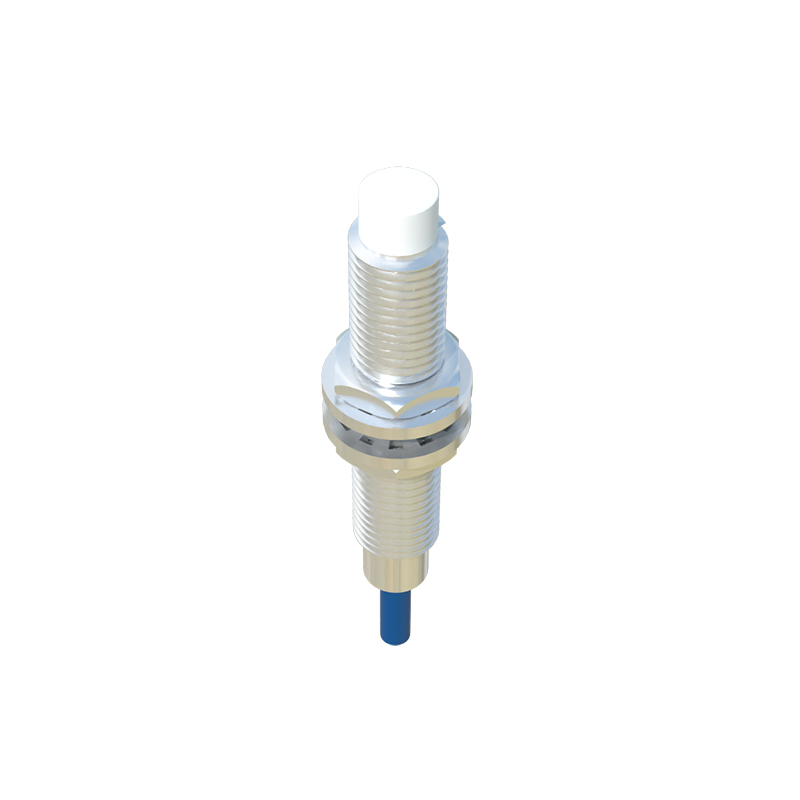
Another crucial aspect is the sensor's frequency of operation. Modern sensors are designed to operate at specific frequencies to minimize mutual interference when installed adjacent to one another. Shielding is a vital design feature; shielded (or embeddable) sensors have a metal ring surrounding the coil, concentrating the electromagnetic field axially forward. This allows them to be flush-mounted in metal without triggering on the surrounding material. Unshielded sensors have a more extended lateral field and cannot be flush-mounted in metal.
The advantages of inductive proximity sensors are numerous. They are entirely solid-state with no moving parts, leading to exceptionally long operational life and high resistance to shock and vibration. They are immune to ambient light, dust, oil, and moisture (given appropriate IP ratings), making them ideal for harsh industrial environments. Their switching frequency can be very high, allowing for detection of rapidly moving objects on production lines.
In conclusion, the operation of a proximity inductive magnetic sensor is a elegant application of electromagnetic theory. By harnessing the principles of induction and eddy currents, these sensors provide a robust, non-contact method for detecting metallic objects. Understanding the interplay between the oscillator, the electromagnetic field, and the target material is essential for engineers to select the correct sensor type, specify the appropriate sensing distance, and integrate them effectively into complex automation systems, ensuring precision, efficiency, and reliability in countless industrial processes.