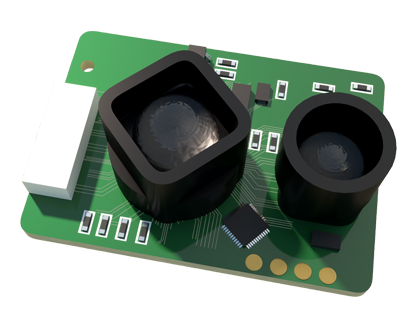
In the rapidly evolving landscape of industrial automation and precision measurement, ULS (Ultra-Long-Standoff) laser distance sensors have emerged as a cornerstone technology. These advanced sensors utilize laser triangulation or time-of-flight principles to deliver non-contact, high-accuracy distance measurements over extended ranges, often exceeding hundreds of meters. Their core operation involves emitting a focused laser beam toward a target; the reflected light is then captured by a receiver. By analyzing the beam's properties—such as the phase shift, time delay, or angle of reflection—the sensor's internal processor calculates the precise distance to the object. This fundamental capability makes ULS sensors indispensable in environments where traditional contact methods are impractical or where extreme precision is non-negotiable.
The industrial applications of ULS laser sensors are vast and transformative. In manufacturing and robotics, they are pivotal for tasks like automated guided vehicle (AGV) navigation, ensuring safe and efficient movement within dynamic warehouses. They provide critical feedback for positioning and alignment in assembly lines, where millimeter-level accuracy can dictate product quality. In the construction and civil engineering sectors, these sensors facilitate large-scale monitoring, such as tracking structural deformations of bridges, dams, and buildings over time, enabling predictive maintenance and enhancing safety protocols. Furthermore, in logistics and material handling, ULS sensors accurately measure inventory levels in silos or storage bays, optimizing supply chain management. Their robustness against harsh conditions—including dust, vibration, and variable lighting—ensures reliable performance in outdoor settings, from mining operations to port crane automation.
When selecting a ULS laser distance sensor for a specific application, several technical parameters demand careful consideration. Measurement range and accuracy are paramount; while some sensors specialize in very long distances with slightly reduced precision, others offer sub-millimeter accuracy over shorter spans. The choice between time-of-flight sensors (ideal for very long ranges) and triangulation-based sensors (suited for high precision at moderate distances) depends on the primary requirement. Response time is another critical factor, especially in high-speed automation processes where real-time data acquisition is essential. Environmental ratings, such as IP (Ingress Protection) codes for dust and water resistance, and operating temperature ranges, determine suitability for challenging industrial settings. Additionally, output interfaces—including analog voltage/current, digital protocols like IO-Link, RS-232, or Ethernet/IP—must align with the existing control system architecture for seamless integration.
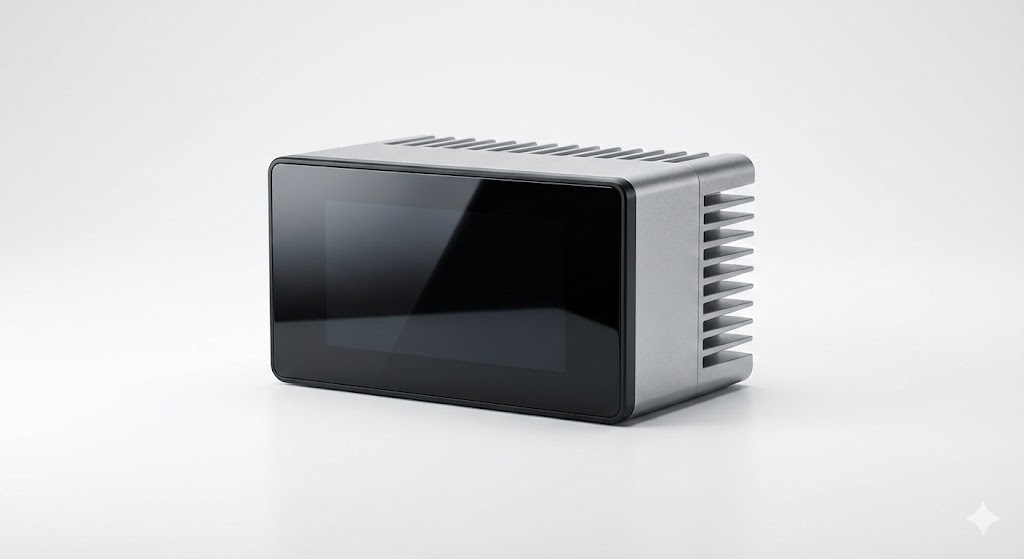
The integration of ULS sensors into the Industrial Internet of Things (IIoT) framework represents a significant leap forward. Modern sensors often come equipped with smart features like onboard diagnostics, data logging, and Ethernet connectivity. This allows for continuous condition monitoring, where sensor health and performance data can be analyzed to predict failures before they occur, minimizing downtime. The data collected can be fed into centralized control systems or cloud platforms, enabling advanced analytics for process optimization, trend analysis, and improved decision-making. This connectivity transforms the sensor from a simple measurement device into a intelligent node within a networked ecosystem, contributing to smarter, more adaptive, and efficient industrial operations.
Despite their advantages, implementing ULS laser sensors is not without challenges. Highly reflective, transparent, or absorbent surfaces can interfere with laser reflection, leading to measurement errors or signal loss. Sophisticated sensors often incorporate advanced algorithms and multiple echo processing to filter out such interference. Regular maintenance, such as lens cleaning, is necessary to ensure optimal performance, though many models are designed for minimal upkeep. As technology progresses, we are witnessing trends toward even greater miniaturization, enhanced accuracy through novel algorithms, and the integration of additional sensing modalities like ambient light compensation. These advancements promise to further expand the role of ULS laser distance sensors, solidifying their position as a critical enabler of precision, safety, and intelligence in the automated industries of today and tomorrow.