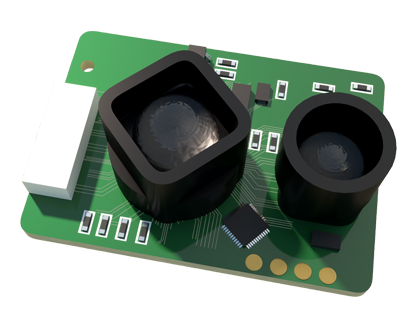
In the realm of industrial automation and process control, the ability to detect objects, measure distances, and ensure precise positioning is paramount. Among the myriad of sensing technologies available, laser photoelectric sensors have emerged as a critical component, offering unparalleled accuracy, speed, and reliability. This article delves into the operational principles, diverse applications, and key considerations for selecting and implementing these sophisticated devices.
At its core, a laser photoelectric sensor operates by emitting a focused beam of coherent light—typically from a laser diode—towards a target. The sensor then detects the properties of the light that is either reflected back from the target or interrupted by it. There are three primary sensing modes: through-beam, retro-reflective, and diffuse-reflective. Through-beam sensors consist of separate emitter and receiver units; detection occurs when the target breaks the beam. This mode offers the longest sensing range and highest reliability, as it is largely immune to target color or surface finish. Retro-reflective sensors house both emitter and receiver in a single unit, using a reflector to bounce the beam back. Detection happens when the target obstructs this return path. Diffuse-reflective sensors, also single-unit, detect light scattered directly back from the target's surface, making them simpler to install but more sensitive to the target's optical properties.
The advantages of laser light over standard LED-based photoelectric sensors are significant. The highly collimated beam allows for precise detection of very small objects and enables exact positioning. It provides a much longer sensing range within a compact housing and creates a clearly visible beam for easier alignment during setup. Furthermore, the small, focused spot size minimizes background interference, allowing for reliable detection even when targets are in close proximity to other objects.
Applications for laser photoelectric sensors span virtually every industry. In material handling and logistics, they are used for precise object counting, edge detection on conveyors, and height control. In semiconductor and electronics manufacturing, their accuracy is crucial for wafer handling, component placement, and lead inspection. The automotive industry relies on them for robot guidance, part presence verification, and gap measurement during assembly. Packaging machinery utilizes these sensors for label detection, fill level control, and ensuring correct package orientation. They are also indispensable in safety systems, such as creating light curtains for hazardous area access control.
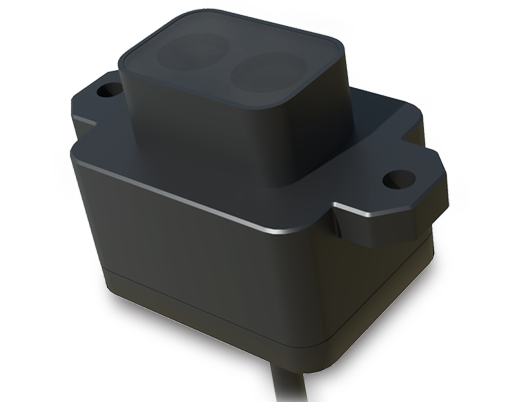
Selecting the appropriate laser photoelectric sensor requires careful analysis of the application parameters. Key factors include sensing range, required spot size, target characteristics (size, color, material, surface texture), environmental conditions (presence of dust, moisture, ambient light, or temperature extremes), and required response speed. Output type (e.g., NPN/PNP transistor, analog, or IO-Link) and housing design (cylindrical, rectangular, with or without specific ingress protection ratings) must also align with the control system and installation environment.
Installation and maintenance are straightforward but demand attention to detail. Proper alignment is critical, especially for through-beam and retro-reflective types. The sensor should be mounted securely to prevent vibration-induced misalignment. Regular cleaning of lenses is necessary in dirty environments to maintain performance. Modern sensors often feature built-in diagnostics, such as stability indicators or teach-in functions, which simplify setup and troubleshooting.
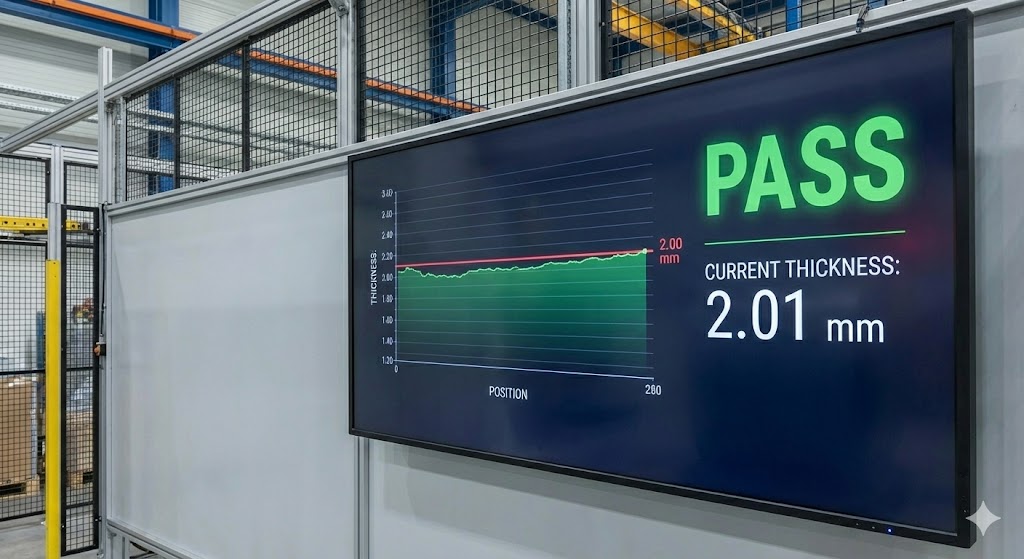
Looking ahead, the integration of advanced functionalities is shaping the next generation of laser photoelectric sensors. Features like background suppression (BGS) for precise detection independent of color, adjustable focus for flexible spot sizing, and connectivity via Industrial Ethernet or IO-Link for smart factory integration are becoming standard. These advancements are pushing the boundaries of precision, enabling more complex and automated processes.
In conclusion, laser photoelectric sensors are a foundational technology in modern industrial automation. Their combination of precision, long range, and versatility makes them an optimal solution for demanding detection and measurement tasks. By understanding their operating principles and carefully matching sensor specifications to application needs, engineers and system integrators can significantly enhance the efficiency, quality, and reliability of automated systems.