Sphere laser sensors represent a significant advancement in precision measurement technology, widely adopted across various industrial sectors for their accuracy, reliability, and versatility. These sensors operate on the principle of laser triangulation, where a laser beam is projected onto a spherical target surface, and the reflected light is captured by a detector to calculate distance or position with high resolution. Unlike traditional linear or point-based sensors, sphere laser sensors are specifically designed to measure curved or spherical objects, making them ideal for applications in automotive manufacturing, aerospace engineering, robotics, and quality control processes.
The core mechanism involves emitting a focused laser diode beam that strikes the spherical surface. Due to the curvature, the reflection angle varies, allowing the sensor's receiver—typically a CCD or CMOS array—to capture the scattered light pattern. Advanced algorithms then analyze this pattern to determine precise coordinates, such as the center point, diameter, or surface defects of the sphere. This non-contact measurement method minimizes wear and tear, ensuring long-term stability and reducing maintenance costs. Key features include high-speed data acquisition, often exceeding several thousand measurements per second, and sub-micron accuracy, which is critical for industries requiring tight tolerances, like semiconductor fabrication or medical device production.
In practical applications, sphere laser sensors are utilized for tasks such as alignment of ball joints in automotive assemblies, inspection of bearing components for roundness deviations, and monitoring robotic arm movements in automated systems. They also play a vital role in 3D scanning and metrology, enabling real-time feedback for adaptive manufacturing processes. Environmental factors, such as ambient light or surface reflectivity, can impact performance, but modern sensors incorporate filters and adaptive calibration to mitigate these issues. For instance, in harsh industrial environments with dust or vibrations, sealed housings and shock-resistant designs ensure consistent operation.
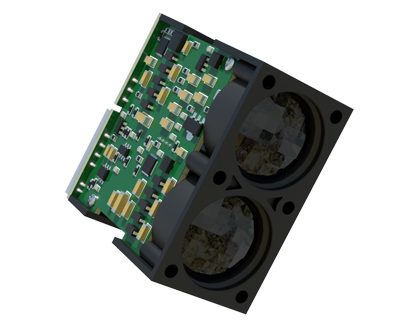
The integration of sphere laser sensors with IoT and Industry 4.0 platforms has further enhanced their utility. By connecting to networked systems, these sensors facilitate predictive maintenance and data analytics, allowing engineers to optimize production lines and reduce downtime. As technology evolves, trends like miniaturization and enhanced AI-driven analysis are expanding their use in emerging fields, such as virtual reality motion tracking or biomedical imaging. Overall, sphere laser sensors offer a robust solution for precision measurement challenges, driving efficiency and innovation in modern industrial landscapes. Their adoption continues to grow, supported by ongoing research into improved laser sources and detection methods, promising even greater accuracy and application scope in the future.