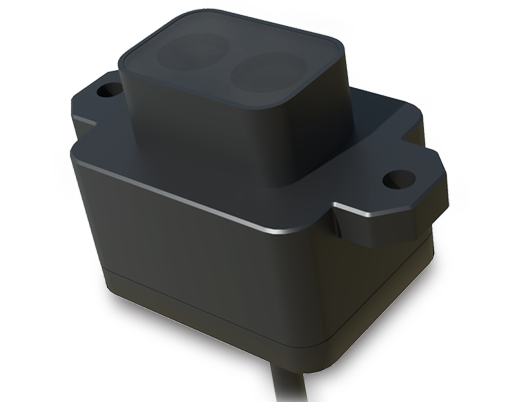
In modern industrial automation, laser sensors play a pivotal role in precision measurement, object detection, and quality control. The series connection of laser sensors, a configuration where multiple sensors are linked sequentially to a single control unit or network, offers significant advantages in complex monitoring systems. This article delves into the technical principles, implementation strategies, and practical benefits of connecting laser sensors in series, tailored for electrical engineers and industry professionals.
Laser sensors operate by emitting a focused beam of light and analyzing the reflected signal to determine distance, presence, or characteristics of a target. When connected in series, these sensors share a common communication line, such as a digital bus (e.g., RS-485, Ethernet/IP, or PROFINET), allowing centralized data acquisition and control. This setup reduces wiring complexity and hardware costs compared to parallel connections, where each sensor requires individual cabling to the controller. For instance, in a conveyor belt system, multiple laser sensors can be series-connected to monitor object dimensions at different points, transmitting data sequentially to a programmable logic controller (PLC) for real-time analysis.
The implementation of a series connection involves careful consideration of electrical compatibility and network protocols. Each laser sensor must support daisy-chaining, meaning it has input and output ports to pass signals along the chain. Engineers should verify voltage ratings, signal types (e.g., analog or digital), and communication standards to ensure seamless integration. Additionally, addressing schemes, such as assigning unique identifiers to each sensor, are crucial to avoid data collisions and enable accurate monitoring. For example, in automotive assembly lines, series-connected laser sensors inspect weld quality on chassis components, with each sensor programmed to report specific metrics like seam width or depth to a central server.
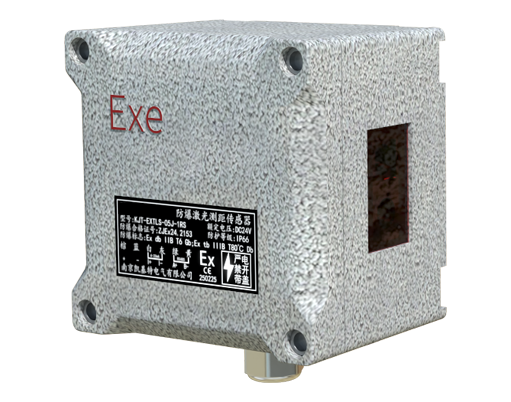
One key benefit of series connections is enhanced scalability. As production needs evolve, additional laser sensors can be integrated into the existing chain without major infrastructure changes, minimizing downtime and costs. This flexibility is vital in industries like electronics manufacturing, where rapid reconfiguration is common. Moreover, series configurations improve reliability by simplifying troubleshooting; faults can be isolated to specific segments of the chain using diagnostic tools, reducing maintenance efforts. However, potential drawbacks include signal degradation over long chains, which may require repeaters or signal boosters, and dependency on the network—if one sensor fails, it could disrupt communication downstream. Mitigation strategies involve using robust protocols with error-checking mechanisms and incorporating redundancy, such as backup sensors in critical applications.
In practice, series-connected laser sensors excel in environments demanding high precision and efficiency. In logistics warehouses, they enable automated sorting by detecting package sizes on conveyor systems, while in pharmaceutical plants, they verify fill levels in vials with micron-level accuracy. Case studies show that companies adopting this approach report up to 30% reductions in installation time and 20% lower cable costs, alongside improved data consistency. To optimize performance, engineers should conduct thorough testing under operational conditions, calibrate sensors regularly, and adhere to industry standards like IEC 61131 for programming and ISO 13849 for safety.
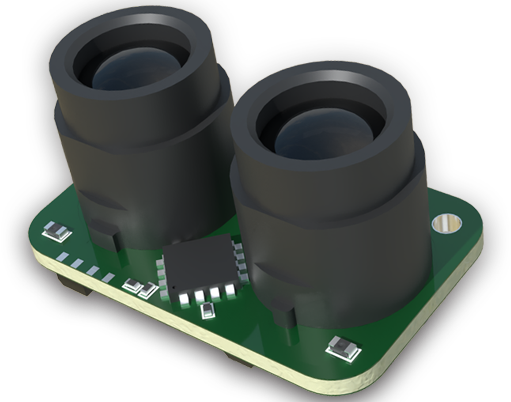
Looking ahead, advancements in IoT and Industry 4.0 are driving the adoption of smart laser sensors with built-in connectivity for series networks. These sensors can self-diagnose and transmit predictive maintenance alerts, further boosting system uptime. As industries strive for greater automation, mastering series connections of laser sensors will remain a valuable skill for electrical professionals, enabling innovative solutions in measurement and control. By leveraging this technology, businesses can achieve higher productivity, reduced operational costs, and enhanced quality assurance in diverse applications.