In the world of automation, robotics, and smart devices, the ability to detect the presence or absence of an object and measure its exact distance is fundamental. Two critical technologies enabling this are proximity sensors and distance sensors. While the terms are sometimes used interchangeably, they serve distinct purposes and operate on different principles. Understanding their differences, applications, and how they work is essential for engineers, developers, and technology enthusiasts.
Understanding Proximity Sensors
A proximity sensor is a device that detects the presence or absence of an object within a specific range without physical contact. Its primary function is to answer a simple question: "Is an object nearby?" It typically provides a binary output—on or off, yes or no. These sensors are designed for close-range detection, often from a few millimeters up to about 80 millimeters, though some specialized types can reach further.
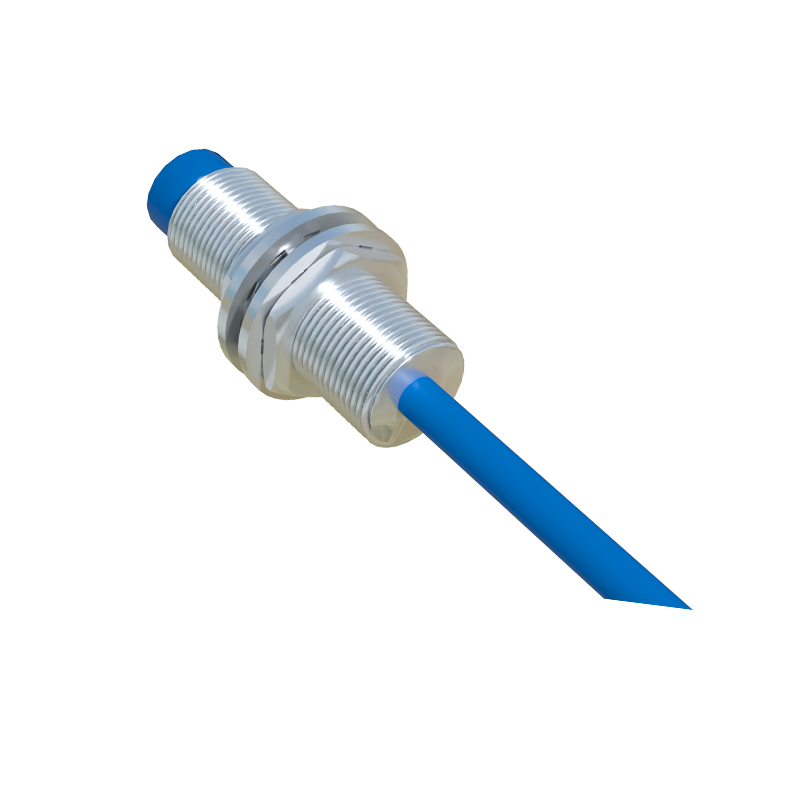
Common types of proximity sensors include:
Inductive Proximity Sensors: These detect metallic objects by generating an electromagnetic field. When a metal object enters this field, it induces eddy currents, which are detected by the sensor. They are highly reliable, resistant to environmental factors like dust and oil, and are staples in industrial automation for counting metal parts or determining machine positions.
Capacitive Proximity Sensors: These can detect both metallic and non-metallic objects (like plastic, wood, or liquids) by sensing changes in capacitance. They work by generating an electrostatic field. The presence of any material with a different dielectric constant than air alters this field, triggering detection. They are used in level detection for liquids or granular materials and touch-sensitive interfaces.
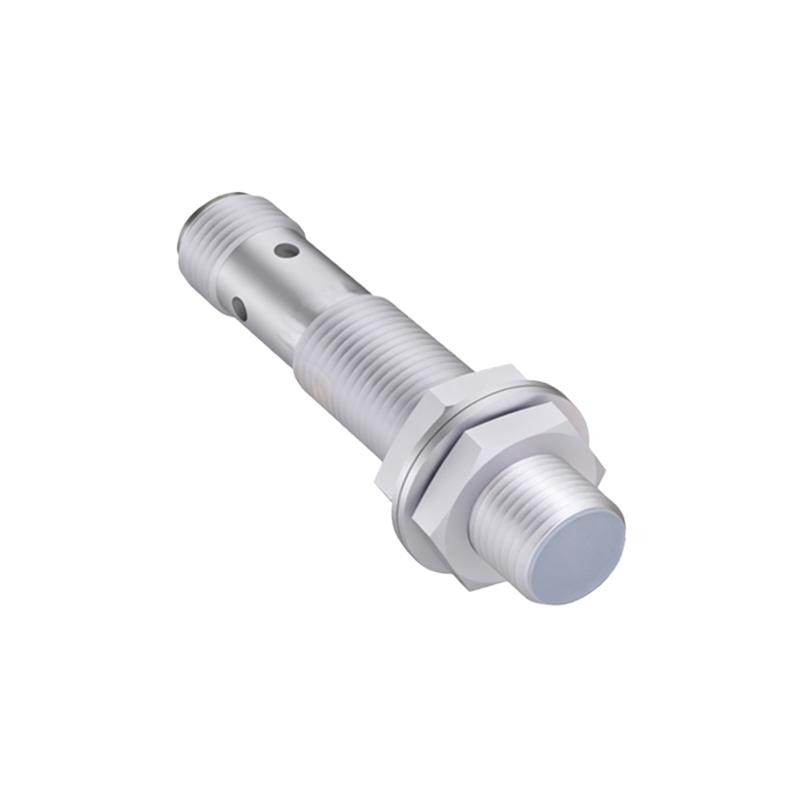
Photoelectric Sensors: These use a light emitter (usually LED) and a receiver. They detect an object when it interrupts (breaks) or reflects the light beam. While they can sometimes measure distance, their most common use in proximity sensing is for object detection over longer ranges than inductive or capacitive sensors, useful in packaging or material handling.
Understanding Distance Sensors
A distance sensor, often called a ranging sensor, goes a step further. It not only detects an object but also precisely measures the gap between the sensor and the target. Its output is typically an analog signal or a digital value representing the exact distance in millimeters, centimeters, or meters.
Key technologies for distance measurement include:
Ultrasonic Sensors: These work by emitting high-frequency sound waves and calculating the time it takes for the echo to return. The time-of-flight (ToF) is directly proportional to the distance. They are excellent for detecting objects of various materials, colors, and transparency levels and are used in parking assist systems, tank level monitoring, and robotics for obstacle avoidance.
Laser Rangefinders (LiDAR in some forms): These use a focused laser beam to measure distance with very high accuracy, often based on the time-of-flight or phase-shift principle. They are common in surveying, advanced robotics, and autonomous vehicles for creating precise 3D maps of the environment.
Infrared (IR) Distance Sensors: Many of these operate on the principle of triangulation. An IR LED projects a spot of light onto the target. The reflected light falls on a position-sensitive detector (like a PSD or camera). The position of the light spot on the detector changes with the object's distance, allowing for calculation. They are compact and found in many consumer devices.
Key Differences and Choosing the Right Sensor
The core distinction lies in their output. A proximity sensor is a switch; a distance sensor is a meter. Selection depends entirely on the application's requirements:
Choose a Proximity Sensor when: You need a simple, cost-effective, and reliable solution for detecting if an object is present/absent at a specific point. Examples include detecting a door closure, counting items on a conveyor belt, or activating a machine when a part is in position.
Choose a Distance Sensor when: You require precise, continuous measurement of how far away an object is. Examples include robotic arms needing to gauge pick-up height, drones maintaining altitude, or interactive kiosks that respond to hand gestures at specific ranges.
Applications Across Industries
These sensors are ubiquitous. In smartphones, a proximity sensor turns off the screen during a call to save power and prevent accidental touches. In automotive manufacturing, inductive sensors verify the presence of engine components. Distance sensors enable robot vacuum cleaners to navigate rooms and avoid furniture. In smart agriculture, ultrasonic sensors monitor water levels in silos. The convergence of these technologies with IoT and AI is creating even smarter systems, such as predictive maintenance where vibration and proximity data predict machine failure.
In conclusion, both proximity and distance sensors are pillars of modern sensing technology. Proximity sensors offer robust, simple presence detection, while distance sensors provide the nuanced data needed for precise control and navigation. By