In the seamless operation of countless devices we interact with daily, from smartphones to industrial robots, lies a silent and often overlooked hero: the proximity sensor. These compact electronic components function as the "eyes" of machines, detecting the presence or absence of nearby objects without any physical contact. Their ability to perceive the immediate environment enables a world of automation, safety, and intuitive user interaction that defines modern technological convenience.
At its core, a proximity sensor works by emitting a field or a beam of electromagnetic radiation, such as infrared light, an inductive electromagnetic field, or ultrasonic sound waves. It then looks for changes in the return signal or the field. The specific technology employed defines its capabilities and ideal applications. Inductive sensors, for instance, detect metallic objects by generating an oscillating electromagnetic field. When a metal object enters this field, it induces eddy currents within the metal, which the sensor detects. These are workhorses in factory automation, counting metal parts on a conveyor belt or ensuring a robotic arm is correctly positioned.
Capacitive sensors, on the other hand, can detect both metallic and non-metallic materials like liquids, wood, or plastics. They function by measuring changes in capacitance—the ability to store an electrical charge—between the sensor and the target object. This makes them perfect for applications like liquid level detection in tanks or touch-sensitive buttons that work even through a protective glass layer. Photoelectric sensors use light, typically infrared, to detect objects. They can be configured in through-beam, retro-reflective, or diffuse reflection modes, offering versatility for different ranges and object properties, commonly seen in automatic doors or packaging machinery.

Perhaps the most familiar application for the average person is in smartphones. The small black dot near the earpiece on most phones houses an infrared proximity sensor. During a call, it detects when the phone is held to your ear and automatically turns off the touchscreen display. This prevents accidental cheek-presses (like muting the call or dialing extra numbers) and conserves battery power. This simple function, enabled by a sensor costing mere cents, dramatically improves the user experience.
The industrial realm, however, is where proximity sensors truly showcase their robustness and reliability. In harsh manufacturing environments, they perform critical tasks with precision and speed. They provide position feedback for machine tools, ensure safety by monitoring guard doors, control robotic pick-and-place operations, and verify part presence in assembly lines. Their non-contact nature means no wear and tear from physical interaction, leading to minimal maintenance and long operational life even amidst dust, oil, and vibration.
Beyond consumer electronics and heavy industry, these sensors are integral to automotive safety systems. They are key components in parking assist systems, alerting drivers to obstacles. Advanced driver-assistance systems (ADAS) use arrays of sensors, including radar (a form of proximity sensing), for adaptive cruise control and collision avoidance. In the emerging world of the Internet of Things (IoT) and smart homes, proximity sensors enable energy-saving features like automatic lighting in rooms and touchless faucets, promoting both convenience and hygiene.
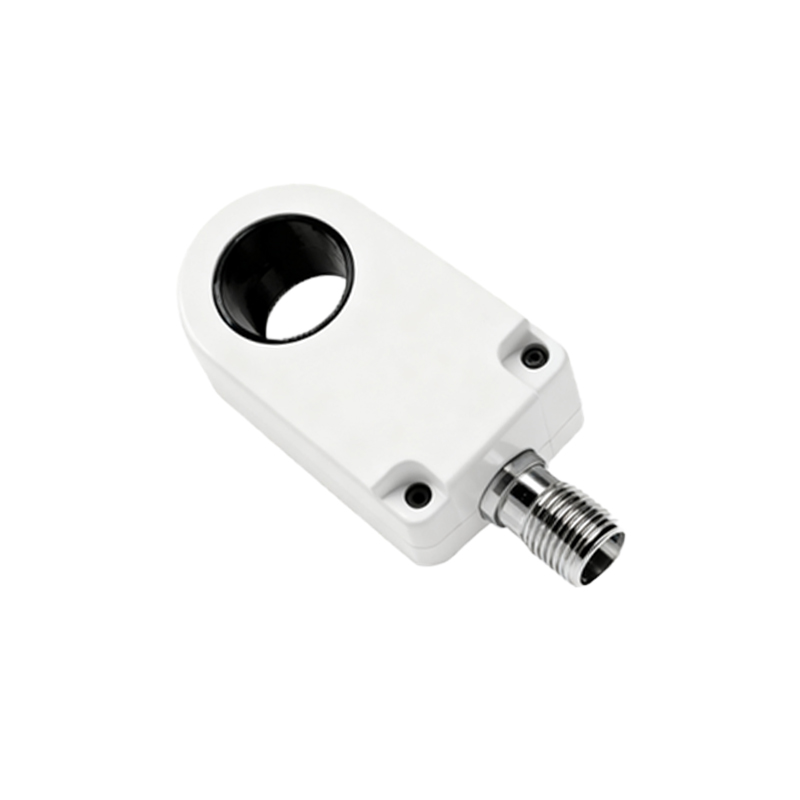
Selecting the right proximity sensor involves careful consideration of several factors. The sensing range, the material of the target object, the required response speed, and the environmental conditions (temperature, potential contaminants) all dictate the optimal choice. Engineers must balance cost, performance, and durability. For example, an ultrasonic sensor might be chosen for long-range detection of irregularly shaped objects, while a rugged inductive sensor would be specified for a dirty metal-stamping press.
Looking ahead, the evolution of proximity sensing is geared towards greater miniaturization, intelligence, and integration. Sensors are becoming smaller yet more powerful, with built-in microprocessors that allow for programmability and self-diagnosis. The fusion of data from multiple sensor types—a concept known as sensor fusion—is creating more perceptive and context-aware systems for autonomous vehicles and advanced robotics. As technology pushes further into realms like augmented reality and sophisticated human-machine interfaces, the demand for faster, more accurate, and more versatile proximity detection will only grow.
In essence, proximity sensors are fundamental enablers. They bridge the gap between the physical world and digital control systems, providing the essential data that allows machines to act intelligently and interact safely with their surroundings. Their silent, continuous operation underpins efficiency, safety, and innovation across every sector, truly making them the invisible guardians upon which our automated world depends.