In the realm of industrial automation and advanced machinery, speed sensors and proximity sensors stand as fundamental components that drive efficiency, safety, and precision. These sensors, though distinct in function, often work in tandem to monitor and control dynamic processes. Understanding their principles, applications, and selection criteria is essential for engineers and technicians aiming to optimize system performance.
Speed sensors, as the name implies, are designed to measure the rotational or linear velocity of an object. Common types include magnetic encoders, optical encoders, and Hall-effect sensors. Magnetic encoders detect changes in magnetic fields generated by a rotating gear or wheel, converting these variations into electrical signals that correspond to speed. Optical encoders use a light source and a photodetector to read patterns on a disc, offering high resolution and accuracy. Hall-effect sensors rely on the Hall effect, generating a voltage proportional to the magnetic field strength from a moving target. These sensors are vital in applications such as automotive systems (e.g., anti-lock braking systems and engine control), conveyor belts, and robotics, where real-time speed data ensures smooth operation and prevents malfunctions.
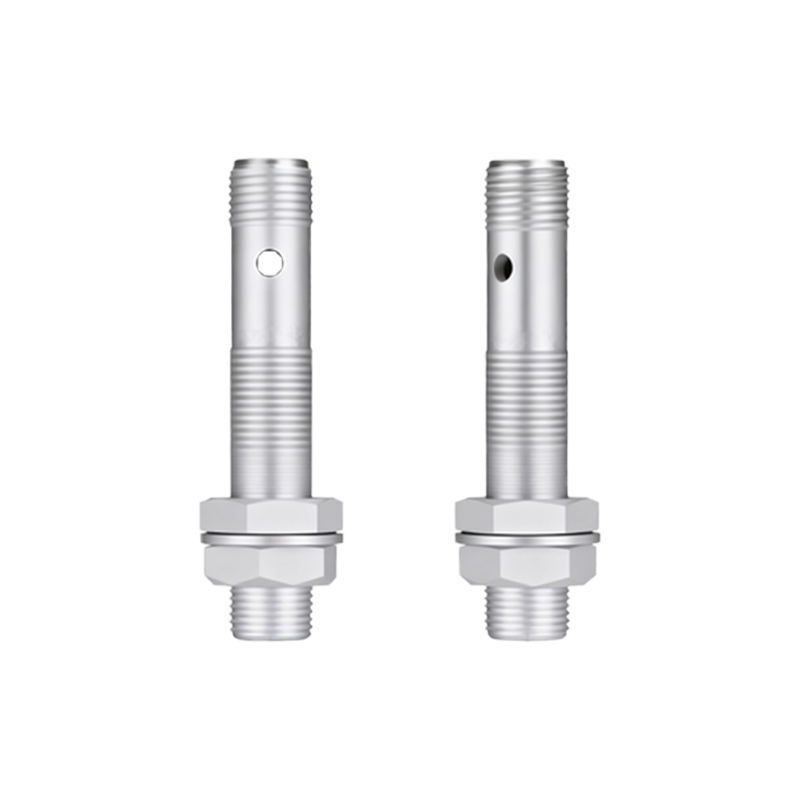
Proximity sensors, on the other hand, detect the presence or absence of an object within a specific range without physical contact. They are categorized based on their sensing technology: inductive, capacitive, ultrasonic, and magnetic. Inductive proximity sensors are ideal for detecting metallic objects by generating an electromagnetic field; when a metal target enters this field, it induces eddy currents that alter the sensor's output. Capacitive sensors can detect both metallic and non-metallic materials by measuring changes in capacitance caused by the target's dielectric properties. Ultrasonic sensors emit sound waves and calculate distance based on the time taken for echoes to return, making them suitable for liquid level detection or object positioning in harsh environments. Magnetic proximity sensors use reed switches or Hall-effect elements to sense magnetic fields, often applied in safety interlocks or position sensing. These sensors are widely used in manufacturing lines, packaging machinery, and automotive assembly to enable non-contact switching, reduce wear, and enhance reliability.
The synergy between speed and proximity sensors is evident in complex systems. For instance, in automated production lines, proximity sensors may detect the arrival of a component, triggering speed sensors to monitor the conveyor's velocity for synchronized handling. In automotive applications, proximity sensors assist in parking assistance systems, while speed sensors regulate transmission and braking. This integration supports predictive maintenance, as abnormal speed readings or unexpected object detection can signal potential failures, allowing for timely interventions.
When selecting these sensors, several factors must be considered. For speed sensors, key parameters include measurement range, accuracy, response time, and environmental resilience (e.g., temperature, vibration, and dust). Proximity sensors require evaluation of sensing distance, material compatibility, output type (digital or analog), and immunity to electrical noise. In both cases, compatibility with control systems—such as PLCs (Programmable Logic Controllers) or IoT (Internet of Things) networks—is crucial for seamless data integration. Modern advancements have led to smart sensors with embedded diagnostics and communication protocols like IO-Link, enabling remote monitoring and configuration.
Despite their robustness, challenges persist. Speed sensors may face issues with signal interference or mechanical wear in high-speed applications, necessitating regular calibration. Proximity sensors can be affected by environmental factors like humidity or material coatings, requiring careful installation and shielding. Ongoing research focuses on enhancing durability, miniaturization, and energy efficiency, with trends toward wireless and self-powered sensors gaining traction.
In summary, speed sensors and proximity sensors are indispensable in today's automated world. By providing critical data on motion and presence, they empower industries to achieve higher productivity, safety, and innovation. As technology evolves, these sensors will continue to adapt, offering smarter solutions for an increasingly connected industrial landscape.