Proximity sensors are indispensable components in modern industrial automation, offering non-contact detection of objects within a specific range. Their robust design and reliable performance make them suitable for diverse environments, from manufacturing assembly lines to automotive systems. Understanding the internal composition of these sensors is crucial for engineers to select, implement, and maintain them effectively.
A standard proximity sensor primarily consists of four core sections: the sensing element, oscillator circuit, signal processing unit, and output stage. The sensing element, often a coil in inductive sensors or a capacitive plate in capacitive types, is responsible for generating an electromagnetic or electrostatic field. When a target object enters this field, it causes a detectable change, such as eddy current loss in metallic objects or dielectric variation in non-metallic materials.
The oscillator circuit generates a high-frequency electromagnetic field around the sensing element. In inductive proximity sensors, this circuit typically uses a Colpitts or Hartley oscillator to produce oscillations. The presence of a target dampens these oscillations, altering the amplitude or frequency. This change is then fed into the signal processing unit, which comprises amplifiers, comparators, and threshold detectors. This unit filters out noise, amplifies the weak signal, and compares it to a predefined reference level to determine the target's presence.

Following signal processing, the output stage converts the decision into a usable electrical signal. Common output types include transistor-based (NPN or PNP), analog voltage (0-10V), or current loop (4-20mA). Some advanced models integrate digital interfaces like IO-Link for parameter configuration and diagnostics. The housing, usually made of stainless steel, nickel-plated brass, or PBT plastic, provides mechanical strength, environmental sealing (often IP67 or IP69K rated), and protection against factors like coolant, vibration, and temperature extremes.
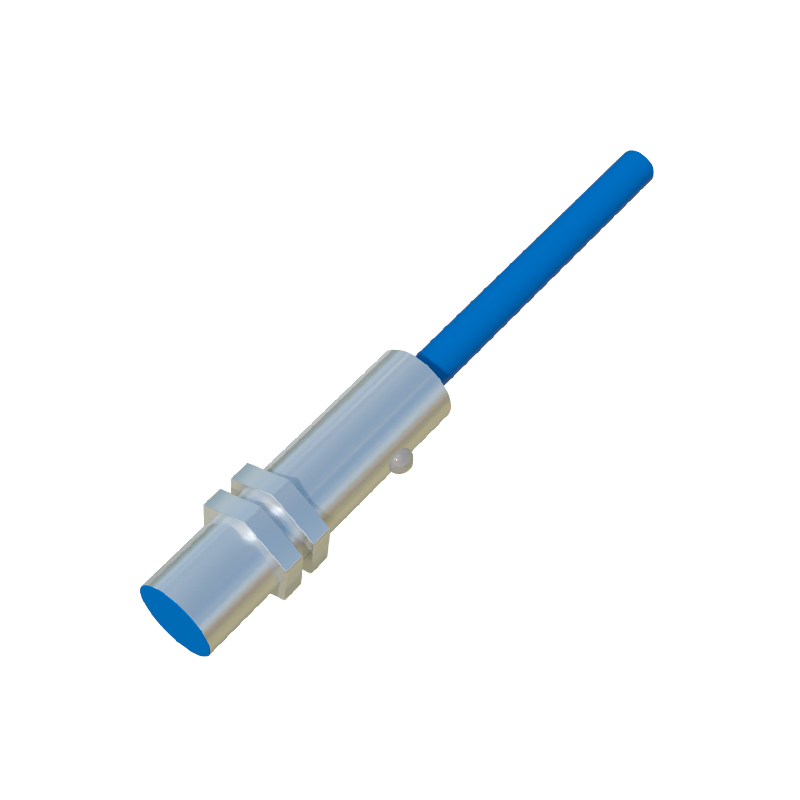
Additional components enhance functionality. A built-in LED indicator offers visual status feedback, while temperature compensation circuits maintain accuracy across operating ranges. Shielding designs prevent electromagnetic interference from adjacent sensors or motors. For capacitive sensors, a sensitivity adjustment potentiometer allows calibration for different material types.
In application, the synergy of these components enables precise detection of metals, plastics, liquids, or even granular materials without physical contact. Inductive sensors excel in detecting ferrous and non-ferrous metals, typically within ranges up to 60mm. Capacitive sensors handle non-metallic targets, with sensing distances influenced by the material's dielectric constant. Ultrasonic and photoelectric proximity sensors employ different principles but share similar structural segmentation: transducer/emitter, receiver, and control circuitry.
Selection criteria involve considering the sensing distance, target material, response frequency, and environmental conditions. For instance, in high-speed packaging lines, sensors with fast switching frequencies (up to 5kHz) and minimal hysteresis are preferred. In washdown areas, corrosion-resistant housings and sealed connectors are mandatory. Regular maintenance involves checking for physical damage, contamination buildup, and output signal integrity.
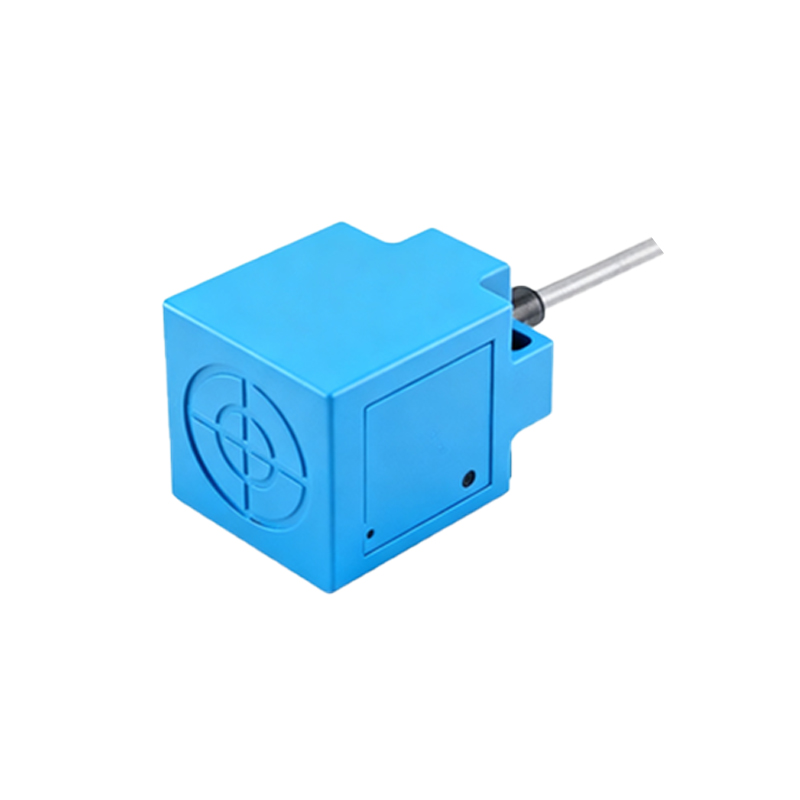
Technological advancements continue to refine proximity sensor architecture. Miniaturization allows embedding into tight spaces, while smart sensors with self-monitoring capabilities predict failures by tracking parameters like switch cycles or temperature drift. Integration with Industrial IoT platforms enables real-time data collection for predictive maintenance, reducing downtime.
In summary, the effectiveness of a proximity sensor stems from the coordinated operation of its internal components. From field generation to signal output, each part plays a vital role in ensuring accurate, reliable object detection. Engineers must appreciate this composition to leverage sensors fully in enhancing automation safety, efficiency, and productivity across industries like automotive, food processing, and material handling.