In the realm of industrial automation, precision measurement and non-contact sensing are paramount. At the heart of many advanced systems lies the laser sensor, a device whose accuracy and reliability are fundamentally governed by its control board, or main controller. This article delves into the intricacies of laser sensor main control units, exploring their design principles, integration challenges, and the technological trends shaping their future.
The primary function of a laser sensor main control board is to orchestrate the entire sensing operation. It generates the precise electrical pulses that drive the laser diode, initiating the emission of a coherent light beam. Simultaneously, it manages the receiver circuitry that captures the reflected or scattered light. The core challenge lies in processing this received optical signal, which is often weak and noisy, into a clean, accurate digital measurement of distance, displacement, or presence. Modern control boards achieve this through sophisticated analog front-ends (AFEs) featuring high-gain amplifiers and filters, coupled with powerful microcontrollers (MCUs) or digital signal processors (DSPs). These processors execute complex algorithms for time-of-flight (ToF) calculation, triangulation, or phase-shift analysis, depending on the sensor's operating principle.
Design considerations for these boards are rigorous. Component selection focuses on speed, stability, and thermal management. High-speed ADCs (Analog-to-Digital Converters) are crucial for capturing rapid signal changes, while low-noise operational amplifiers are essential for signal integrity. Power management is another critical aspect, as laser diodes require stable, clean current sources to maintain consistent output wavelength and power, which directly impacts measurement stability. Furthermore, the board's layout is a exercise in minimizing electromagnetic interference (EMI), as high-frequency switching for the laser and sensitive analog measurement circuits must coexist without cross-talk.
Integration into broader systems presents its own set of challenges. The control board must communicate measurement data reliably and swiftly. This is facilitated through standard industrial communication interfaces such as IO-Link, PROFINET, EtherCAT, or simple analog voltage/current outputs. The choice depends on the required data rate, network architecture, and need for bidirectional communication for parameter configuration. Robust firmware is equally important, providing not just core measurement functions but also features like programmable switching thresholds, temperature compensation, and comprehensive diagnostics. Advanced sensors incorporate self-monitoring to alert users to lens contamination or gradual laser diode degradation.
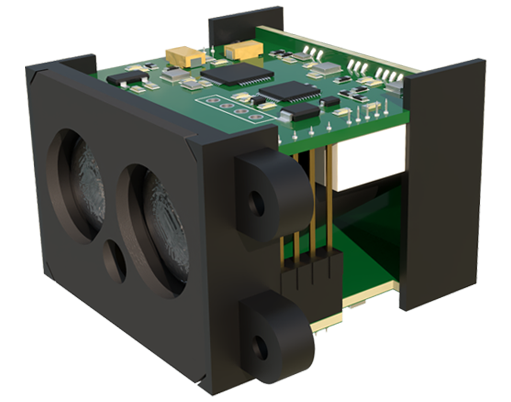
Looking ahead, several key trends are defining the evolution of laser sensor control electronics. The integration of Artificial Intelligence (AI) at the edge is a significant leap. Modern MCUs with sufficient processing power can now run lightweight machine learning models directly on the control board. This enables advanced functionalities like object classification, pattern recognition, and predictive maintenance analytics without relying on a central PLC. For instance, a sensor can distinguish between different types of objects on a conveyor belt, not just detect their presence.
Another major trend is miniaturization and increased functional density. Advances in semiconductor technology allow for more powerful processors and specialized application-specific integrated circuits (ASICs) to be packed onto smaller boards. This enables the development of incredibly compact laser sensors for space-constrained applications without sacrificing performance. Additionally, the push for enhanced connectivity continues, with a growing emphasis on wireless protocols and seamless integration into Industrial Internet of Things (IIoT) ecosystems. This transforms the sensor from a simple data point into a smart node in a networked factory.
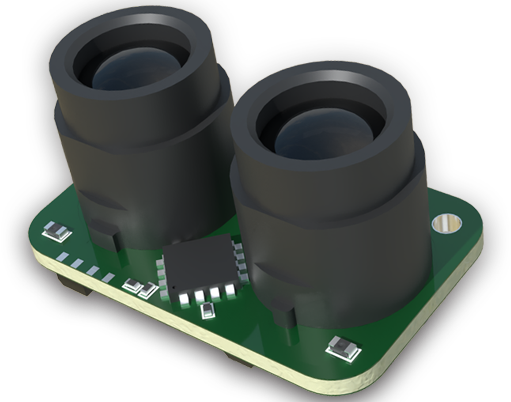
Furthermore, design for resilience is becoming standard. Control boards are increasingly being built to withstand harsh industrial environments—resistant to vibration, wide temperature fluctuations, and electrical noise. Enhanced cybersecurity features are also being embedded into the communication stacks of these boards to protect sensitive operational data as sensors become more connected.
In conclusion, the main control board is the intelligent core of a laser sensor, translating raw optical phenomena into actionable industrial data. Its design blends high-speed electronics, precision analog engineering, and robust software. As industries demand smarter, faster, and more connected sensing solutions, the innovation within these unassuming circuit boards will continue to be a critical driver, enabling new levels of automation precision and operational insight. The future points towards even greater intelligence at the sensor level, deeper system integration, and unwavering reliability, all orchestrated by the evolving capabilities of the main control unit.