Laser sensors are indispensable components in modern industrial automation, providing high-precision, non-contact measurement for tasks ranging from object detection and positioning to distance measurement and profile scanning. Their reliability is paramount for ensuring continuous production flow and maintaining product quality. However, like any sophisticated electro-optical device, laser sensors are susceptible to various anomalies that can compromise their performance. Understanding the root causes, symptoms, and corrective actions for these anomalies is crucial for maintenance engineers and system integrators.
A primary category of laser sensor anomalies stems from environmental interference. Industrial settings often present harsh conditions that can severely impact sensor operation. Contamination, such as dust, oil mist, or coolant spray accumulating on the sensor's lens, is a frequent culprit. This buildup attenuates or scatters the emitted laser beam, leading to unreliable readings, missed detections, or erratic output signals. Similarly, airborne particulates or steam in the sensing path can cause signal noise or complete beam blockage. Another significant environmental factor is ambient light interference. High-intensity light sources, including direct sunlight, welding arcs, or other process lasers, can saturate the sensor's receiver, causing false triggers or a complete loss of signal. Electromagnetic interference (EMI) from nearby high-power equipment like variable frequency drives (VFDs), motors, or radio transmitters can also induce electrical noise in the sensor's circuitry or signal cables, manifesting as unstable output.
Intrinsic factors related to the sensor itself or its installation constitute another major source of problems. Improper alignment is a common installation error. Even a slight misalignment between the sensor and its target can lead to the laser spot falling outside the designated sensing area or the reflected beam missing the receiver entirely, resulting in measurement inaccuracies or failure. Mechanical vibration can exacerbate alignment issues over time, gradually shifting the sensor from its optimal position. Power supply irregularities, such as voltage spikes, sags, or excessive ripple, can cause the sensor to reset, behave unpredictably, or suffer permanent damage to its internal components. Furthermore, the inherent limitations of the sensor must be considered. Operating outside its specified sensing range, on surfaces with challenging optical properties (e.g., highly reflective, transparent, or absorbent materials), or at temperatures beyond its rated operating window will inevitably lead to performance degradation and anomalous readings.
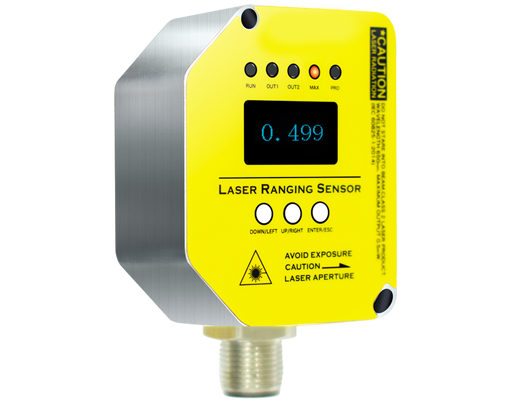
The manifestation of these anomalies can vary. Common symptoms include intermittent operation, where the sensor output flickers or drops out randomly; consistent false positives or false negatives, where objects are detected when absent or missed when present; drifting measurements, where the output value changes without a corresponding change in the target; and complete communication failure, where the sensor becomes unresponsive. A systematic troubleshooting approach is essential for diagnosis. Begin with a visual inspection for obvious issues like physical damage, dirt on the lens, or loose connections. Verify the installation parameters: ensure correct alignment, check that the target is within the specified range and suitable for the sensor type, and confirm the stability of the mounting. Next, assess the electrical environment. Use a multimeter to check the power supply voltage for stability and compliance with specifications. Inspect cabling for damage, ensure proper shielding and grounding, and reroute cables away from potential sources of EMI if necessary.
For environmental light issues, consider employing sensors with modulated laser light or background suppression technology, which are designed to discriminate against ambient light. Installing physical barriers or shrouds around the sensor can protect it from contaminants and stray light. For persistent contamination, sensors with built-in air purge fittings or specialized protective housings (IP67/IP69K rated) are recommended. Regular preventive maintenance, including scheduled lens cleaning and verification of alignment and output, is critical to prevent anomalies from occurring. Firmware should be kept up to date, as manufacturers often release updates to improve stability and performance.
When intrinsic failure is suspected, consult the sensor's diagnostic indicators, if available, such as status LEDs or digital error codes accessible via software. Parameter restoration to factory defaults can sometimes resolve issues caused by accidental configuration changes. Ultimately, if the anomaly persists after exhaustive environmental and configuration checks, the sensor element or internal circuitry may have degraded, necessitating repair or replacement. By adopting a methodical approach—addressing environmental factors first, then installation parameters, followed by electrical integrity, and finally considering device-specific failures—engineers can efficiently diagnose and rectify laser sensor anomalies, minimizing downtime and ensuring the resilience of automated systems.