The Samsung Galaxy S21 Ultra represents a significant leap in mobile photography, largely due to its sophisticated laser autofocus (AF) sensor system. This technology, often marketed simply as "Laser AF," is a critical component that works in tandem with the device's advanced camera array to deliver remarkably fast and accurate focus, even in challenging lighting conditions. Unlike traditional contrast-detection or phase-detection autofocus systems that rely solely on analyzing image data from the main sensor, the laser AF module operates as an independent, active distance-measuring tool.
At its core, the laser autofocus sensor in the S21 Ultra is a time-of-flight (ToF) system. It emits a low-power, invisible infrared laser beam towards the subject. A dedicated sensor then measures the time it takes for the reflected beam to return. Since the speed of light is a known constant, the system can calculate the precise distance to the subject with exceptional accuracy. This distance data is instantly relayed to the camera's focus motors, allowing for near-instantaneous lens adjustment. This process is completed in milliseconds, far faster than methods that require the camera to "hunt" for focus by analyzing blur and contrast.
The primary advantage of this technology is its performance in low-light scenarios. In dim environments, contrast-detection AF systems struggle because the lack of light results in low contrast, making it difficult for the algorithm to determine the point of sharpest focus. The laser AF sensor, however, is largely unaffected by ambient light levels. It creates its own light source (the laser) to take a measurement, enabling the S21 Ultra to lock focus quickly in near darkness, a common pain point for smartphone photography.
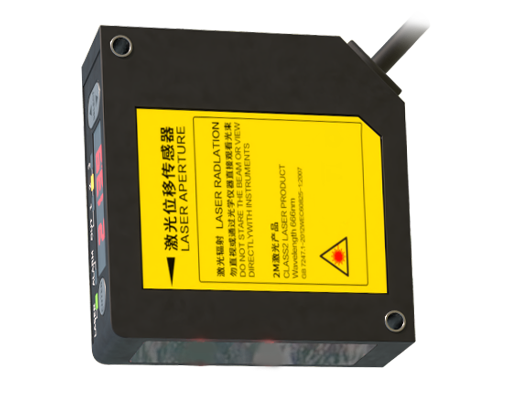
Furthermore, the laser sensor excels with low-contrast subjects. Photographing a plain white wall, a clear blue sky, or any uniformly textured surface can cause traditional AF systems to fail or hesitate. The laser system bypasses this issue entirely by relying on direct distance measurement rather than image pattern analysis. This results in fewer missed shots and reduced focus hunting, leading to a more responsive and reliable camera experience.
Integration is key. The laser AF sensor in the S21 Ultra does not work in isolation. It is part of a hybrid AF system that includes Dual Pixel phase-detection autofocus across the wide and ultra-wide lenses. The processor uses data from all available sources—laser, phase-detection, and contrast-detection—to make the most intelligent focusing decision. For instance, the laser provides an initial, ultra-fast distance lock, while the phase-detection pixels fine-tune the focus based on the actual image data. This multi-faceted approach ensures accuracy across a vast range of scenarios, from macro shots to distant landscapes.
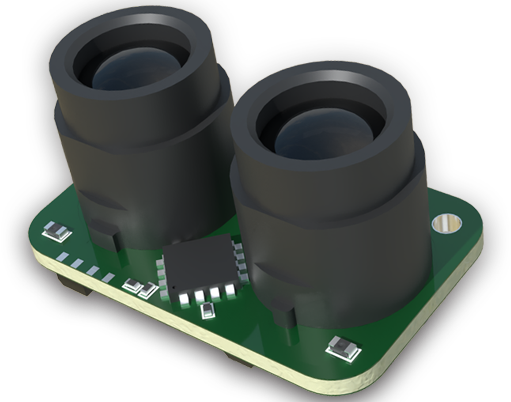
From an engineering perspective, the miniaturization of this ToF laser system for a smartphone is a notable achievement. The module must be incredibly compact, energy-efficient to avoid draining the battery, and safe for human eyes. Samsung employs a Class 1 laser product, which is the safest classification and poses no hazard under normal operating conditions. The module's placement on the camera bump is also strategic, ensuring an unobstructed path for the emitted and reflected beams.
In practical use, the benefits are immediately apparent. Users experience faster shot-to-shot times, especially in sequential shooting. Portrait mode and night mode computations benefit from precise depth information, leading to better subject separation and noise reduction. Videographers gain from smooth and confident focus pulls during recording, minimizing the "breathing" effect where the image subtly pulses in and out of focus.
However, it's important to understand its limitations. The effective range of the laser sensor is finite, typically optimal for subjects within a few meters. For distant subjects, the system gracefully hands off primary focusing duties to the long-range capabilities of the phase-detection system and the periscope telephoto lens's own AF mechanism. Additionally, the laser beam requires a solid surface to reflect from; aiming it at a perfectly transparent object like a clean glass window may not yield a reliable signal.
In conclusion, the laser autofocus sensor in the Samsung Galaxy S21 Ultra is not merely a marketing bullet point but a foundational technology that elevates the entire camera system. It solves specific, longstanding autofocus challenges in mobile photography by providing a fast, reliable, and light-independent method of distance measurement. When seamlessly integrated with other AF technologies, it creates a robust and intelligent focusing ecosystem that empowers both casual users and photography enthusiasts to capture sharp, clear images with consistent reliability, pushing the boundaries of what is possible with a smartphone camera.