Inductive proximity sensors have become a cornerstone in modern industrial automation, particularly in applications requiring precise, non-contact detection of metallic objects. One such specialized application is the detection of cups or similar containers in automated packaging, filling, and assembly lines. These sensors operate on the principle of electromagnetic induction, generating an oscillating electromagnetic field from a coil within the sensor. When a metallic cup—typically made of materials like aluminum, stainless steel, or tinplate—enters this field, eddy currents are induced on the cup's surface. This causes a change in the oscillation amplitude, which is detected by the sensor's circuitry, triggering a solid-state output signal.
The selection of an inductive sensor for cup detection depends on several critical factors. First, the sensing range must be appropriate for the application's mechanical layout. Standard shielded (flush-mountable) sensors offer shorter ranges but are immune to lateral metal interference, making them ideal for tight installations near conveyor edges. Unshielded sensors provide longer ranges but require more clearance from surrounding metal structures. For small metallic cups, a sensor with a nominal sensing distance (Sn) of 2mm to 5mm is often sufficient. However, factors like cup material, size, and orientation significantly influence the effective sensing distance. For instance, a sensor calibrated for mild steel will have a reduced range for aluminum or copper due to their lower permeability. Engineers must apply a correction factor—typically 0.3 to 0.4 for aluminum—to the sensor's rated Sn to ensure reliable detection.
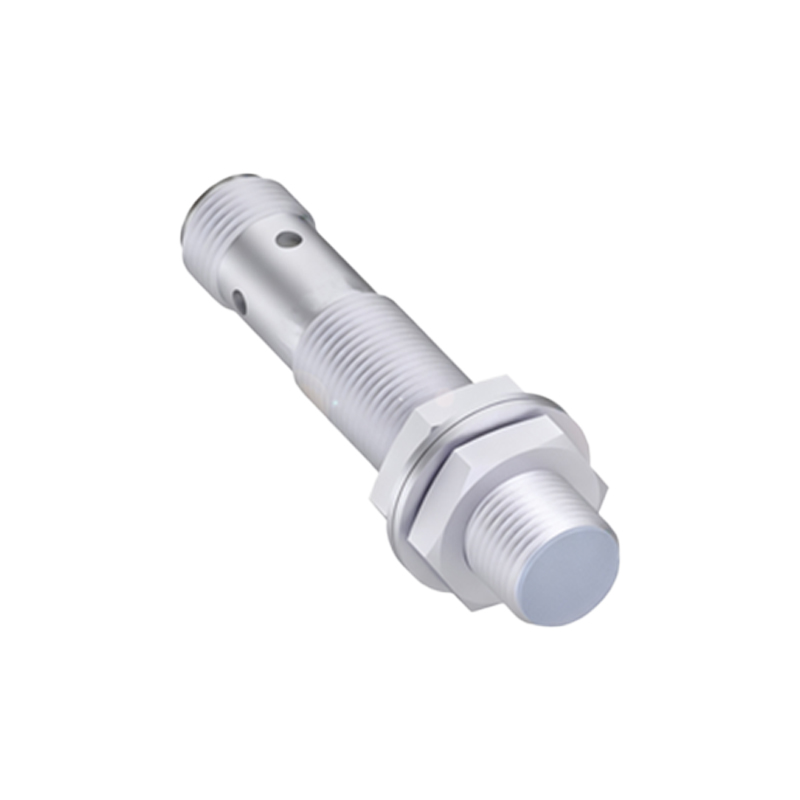
Environmental robustness is another vital consideration. In beverage or food processing lines, sensors are frequently exposed to moisture, condensation, cleaning agents, and temperature fluctuations. Therefore, sensors with high Ingress Protection (IP) ratings, such as IP67 or IP69K, are mandatory. The housing material is also crucial; stainless steel (e.g., V4A/AISI 316L) housings offer superior resistance to corrosive washdown environments compared to nickel-plated brass or PBT plastic. Furthermore, the sensor's operating temperature range must accommodate both ambient conditions and potential heat from nearby machinery.
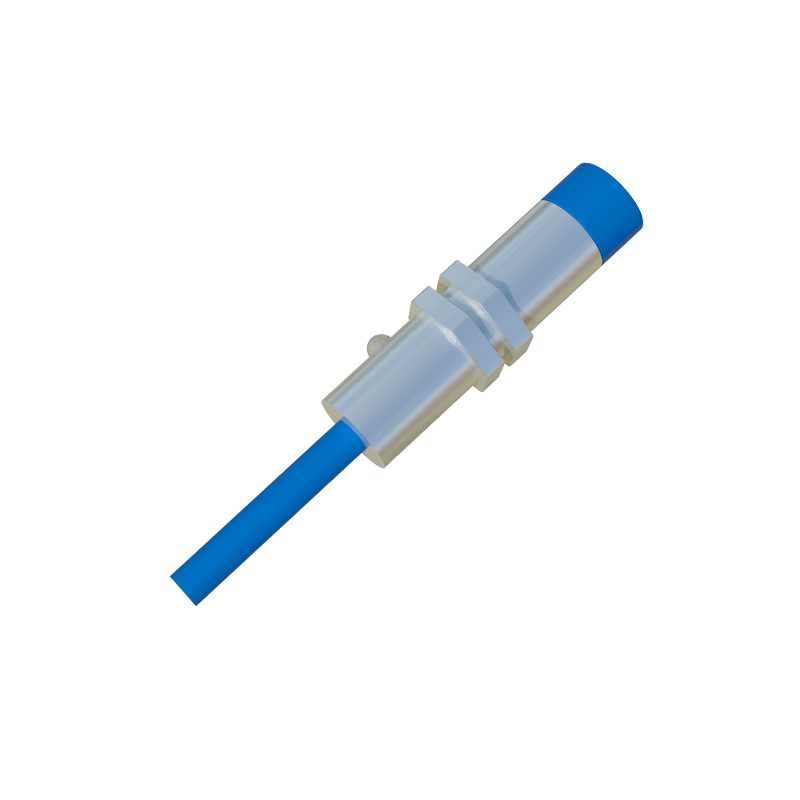
Electrical characteristics and output configuration must align with the control system. Most modern inductive sensors feature solid-state PNP or NPN outputs, compatible with programmable logic controllers (PLCs). For high-speed filling lines where cups move rapidly, a sensor with a fast switching frequency (e.g., 1-2 kHz) and minimal hysteresis is essential to prevent missed detections. Additionally, built-in diagnostics, such as LED status indicators and short-circuit protection, enhance maintenance efficiency and system uptime.
Installation and alignment are often overlooked yet critical for optimal performance. Even a slight misalignment can cause inconsistent detection or false triggers. Sensors should be mounted securely to minimize vibration-induced errors. For detecting small or thin-walled cups, using a sensor with a reduced factor of 1 (i.e., calibrated specifically for the target material) can improve accuracy. In applications where cups have non-metallic components (e.g., plastic handles or labels), careful positioning to sense only the metallic body is necessary.
Advanced inductive sensors now incorporate intelligent features like IO-Link communication, enabling parameterization, condition monitoring, and integration into Industry 4.0 networks. This allows for remote adjustment of switching points or sensitivity, facilitating quick changeovers for different cup sizes or materials without physical recalibration.
In summary, inductive proximity sensors provide a reliable, durable, and cost-effective solution for metallic cup detection. Their non-contact nature eliminates mechanical wear, ensuring long service life even in demanding high-cycle applications. By carefully considering factors such as sensing range, material influence, environmental protection, electrical interface, and precise installation, engineers can design robust and efficient cup handling systems that maximize productivity and minimize downtime. As automation evolves, these sensors will continue to play a pivotal role in ensuring precision and reliability across various industries.