Laser welding has emerged as a cornerstone technology in modern manufacturing, prized for its precision, speed, and ability to join a diverse range of materials. However, the quality and consistency of laser welds are highly dependent on real-time process control. This is where laser welding sensors play a transformative role. These sophisticated monitoring systems are integral to achieving high-quality, repeatable welds in demanding applications across automotive, aerospace, electronics, and medical device industries.
Fundamentally, laser welding sensors are designed to monitor the welding process in real-time by detecting various physical phenomena. The primary parameters monitored include plasma plume emission, thermal radiation, acoustic signals, and back-reflected laser light. Optical sensors, particularly those based on photodiodes or cameras, are the most prevalent. They analyze the intense light emitted from the welding zone—comprising both the laser wavelength and broader spectrum radiation from the molten pool and plasma. By processing this optical data, the sensor can infer critical information about weld penetration depth, seam tracking accuracy, and the presence of defects such as porosity, spatter, or incomplete fusion.
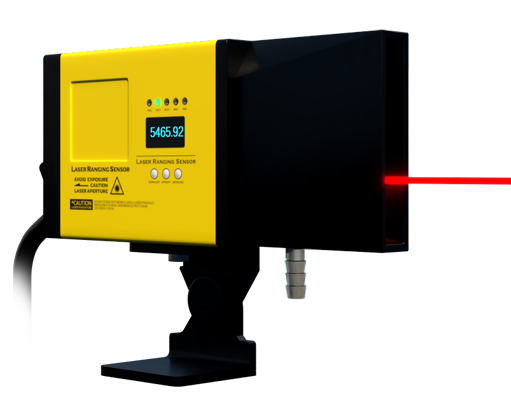
One of the most significant advancements is the integration of coaxial monitoring systems. Unlike side-view sensors, coaxial systems observe the process through the same optical path as the welding laser, providing a perfectly aligned view of the keyhole and melt pool. This configuration eliminates parallax error and offers unparalleled insight into the process dynamics. Modern coaxial sensors often employ high-speed cameras and specialized filters to capture clear images despite the extreme brightness, enabling real-time seam tracking and adaptive control of laser power or robot trajectory.
Another critical category is spectroscopic sensors. These analyze the specific wavelengths of light emitted by the plasma plume. The spectral lines can indicate the presence of specific elements, which is crucial for monitoring processes like remote laser welding of zinc-coated steels in automotive bodies. Vaporization of the zinc coating can cause blowholes; spectroscopic sensors can detect the unique signature of zinc vapor, allowing the control system to adjust parameters instantly to mitigate defects.
Beyond optical methods, acoustic emission sensors are gaining traction. The welding process generates characteristic sound waves from keyhole oscillations and metal vaporization. A microphone or piezoelectric sensor captures these acoustic signals. Changes in the signal's frequency or amplitude can correlate with the onset of defects, such as humping or undercut, often before they become visually apparent in the weld bead.
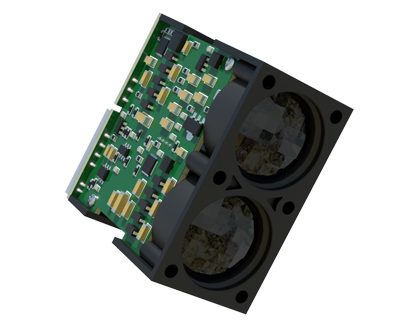
The true power of these sensors is unlocked through integration with closed-loop control systems. The sensor acts as the system's "eyes," continuously feeding data to a programmable logic controller (PLC) or industrial PC. Advanced algorithms compare the sensor input against predefined quality benchmarks. If a deviation is detected—for instance, a gap in the seam causing a lack of penetration—the system can autonomously command adjustments. These may include modulating laser power, altering welding speed, or fine-tuning the focal point position, all in real-time without stopping production. This adaptive control is essential for welding variable or poorly fitting parts, significantly reducing scrap rates and post-weld inspection costs.
Applications are vast and growing. In the electric vehicle (EV) battery industry, laser welding is used to assemble battery cells, modules, and packs. Sensors are critical here to ensure every weld on highly conductive materials like copper and aluminum is flawless, as any defect can impact electrical conductivity, thermal management, and ultimately, safety. In aerospace, sensors monitor the welding of thin-walled titanium or nickel-alloy components, where integrity is non-negotiable. For consumer electronics, miniature sensors enable the precise welding of tiny, delicate components.
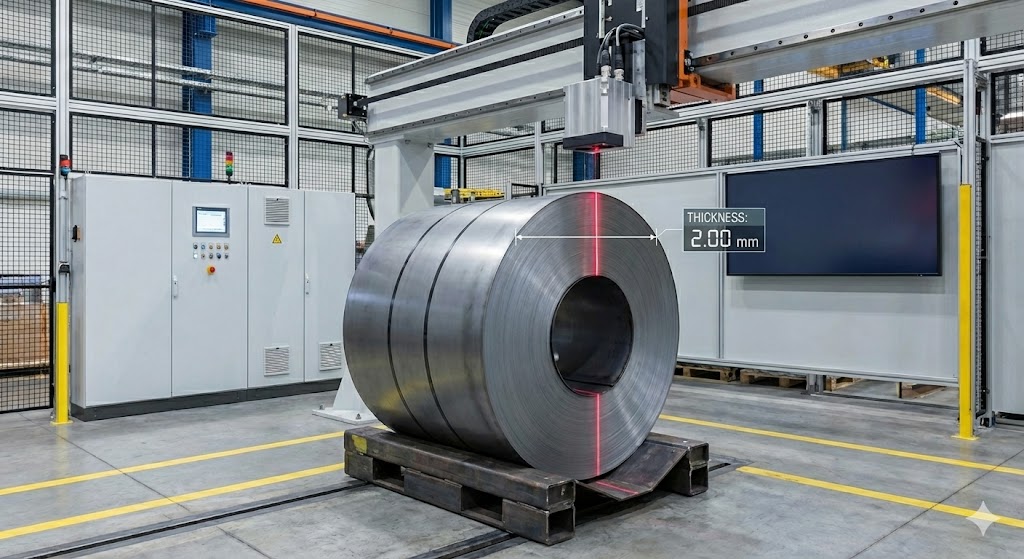
Looking ahead, the trend is toward multi-sensor data fusion and artificial intelligence. Combining data streams from optical, acoustic, and thermal sensors provides a more holistic process picture. Machine learning algorithms are being trained on this vast data to predict weld quality, identify subtle defect patterns, and optimize process windows autonomously. Furthermore, the rise of Industry 4.0 and the Industrial Internet of Things (IIoT) means sensor data is increasingly leveraged for predictive maintenance of welding equipment and full traceability of production batches.
In conclusion, laser welding sensors have evolved from simple monitoring devices to intelligent subsystems that are fundamental to automated, high-reliability manufacturing. They provide the critical feedback needed to transform laser welding from a skilled craft into a robust, data-driven industrial process. As sensor technology, data processing, and control algorithms continue to advance, they will push the boundaries of what is possible in precision joining, enabling new designs and materials in next-generation products.