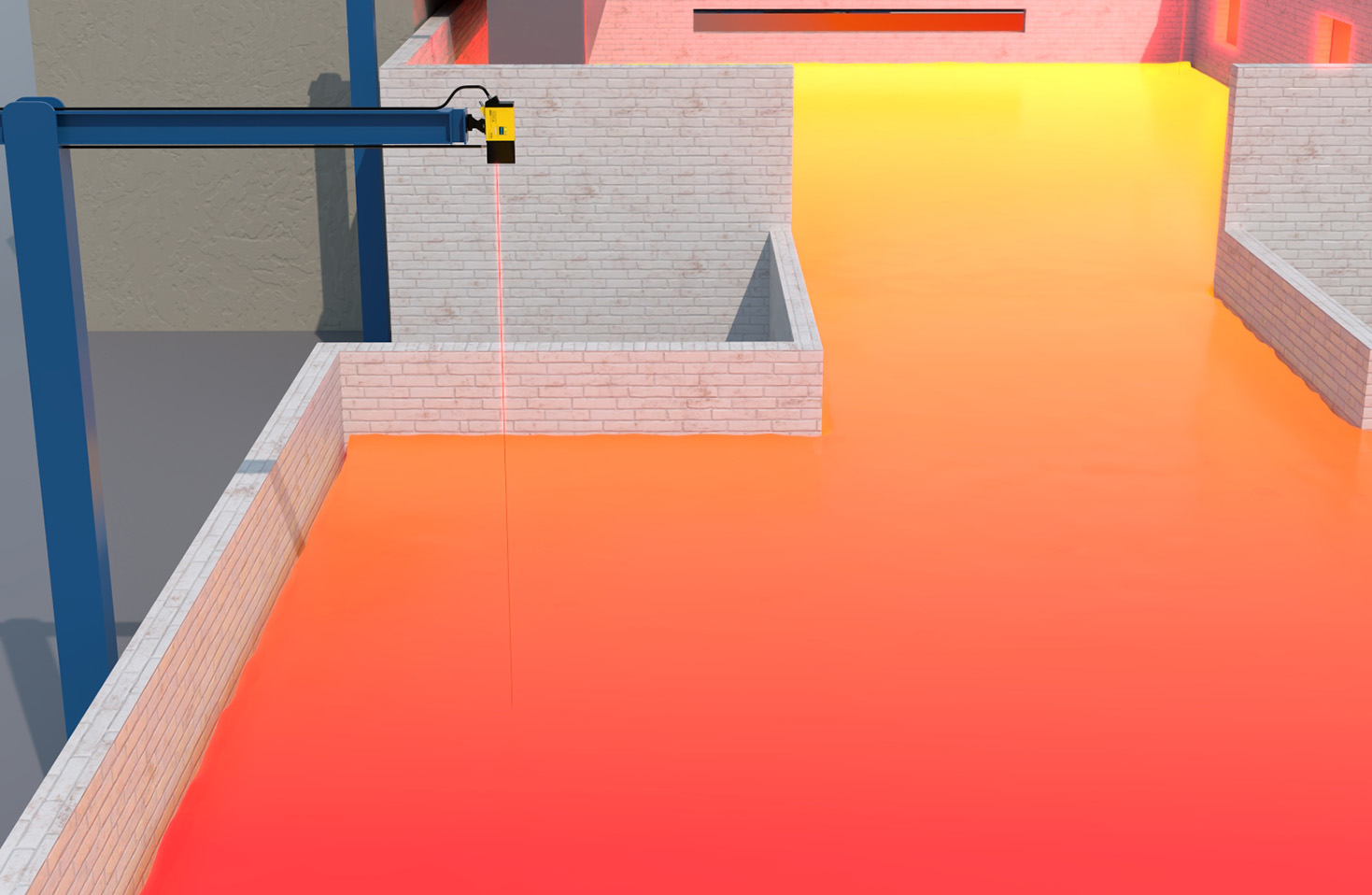
Laser interferometer sensors represent a pinnacle of precision measurement technology, widely utilized across industries demanding nanometer-level accuracy. At their core, these sensors operate on the principle of interference, a fundamental wave phenomenon. A coherent laser beam is split into two paths: a reference beam and a measurement beam. The measurement beam is directed towards a target surface or mirror. When it reflects back, it recombines with the reference beam. Any change in the optical path length of the measurement beam—caused by displacement, vibration, or changes in the refractive index of the medium—alters the phase relationship between the two beams. This recombination creates an interference pattern of alternating bright and dark fringes. By precisely analyzing this pattern, typically through photodetectors and sophisticated signal processing electronics, the sensor can calculate minute changes in distance, displacement, or other physical parameters with extraordinary resolution, often down to a fraction of the laser's wavelength.
The advantages of laser interferometry are manifold. The non-contact nature of the measurement eliminates mechanical loading on the target, preserving its natural state and enabling high-speed dynamic measurements. The technology offers exceptional linearity, stability, and a vast measurement range, from sub-nanometer displacements to several meters. Common system configurations include Michelson, Fabry-Perot, and Mach-Zehnder interferometers, each suited to specific application needs. For instance, the homodyne interferometer uses a single-frequency laser and is excellent for static or slow-moving measurements, while heterodyne interferometers employ a frequency-shifted beam, providing inherent direction sensitivity and superior performance in dynamic environments with high velocities.
In practical industrial applications, laser interferometer sensors are indispensable. In semiconductor manufacturing, they are critical for wafer stage positioning in lithography machines, ensuring the precise alignment of circuit patterns. In precision machining and coordinate measuring machines (CMMs), they calibrate axes and verify geometric accuracies. The aerospace industry relies on them for profiling airfoil surfaces and aligning large optical components in telescopes. Furthermore, they play a vital role in scientific research, from detecting gravitational waves in observatories like LIGO to characterizing material properties and monitoring structural health.
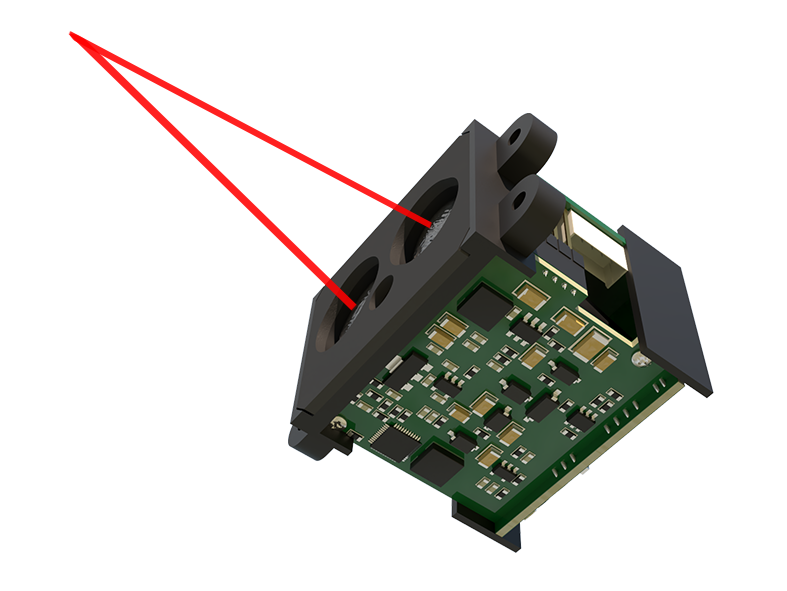
Recent technological advancements continue to push the boundaries. The integration of fiber optics has led to compact, robust fiber-optic interferometers suitable for harsh environments. Advances in laser sources, such as the development of more stable and compact frequency-stabilized lasers, have improved long-term measurement stability. Digital signal processing (DSP) and sophisticated algorithms now allow for real-time compensation of environmental factors like air temperature, pressure, and humidity, which affect the refractive index of air and thus the measurement accuracy. The emergence of multi-axis interferometers enables simultaneous measurement of multiple degrees of freedom—linear displacement, pitch, yaw, and straightness—streamlining complex metrology tasks.
Despite their prowess, implementing laser interferometers requires careful consideration. The system demands a stable environment; vibrations and air turbulence can introduce noise. The target surface must provide a sufficiently reflective and stable return signal. Proper alignment of optical components is crucial. The initial cost can be significant, though the return on investment in terms of quality assurance and process control is substantial for high-precision industries. Looking ahead, trends point towards greater miniaturization, enhanced integration with machine control systems, and the use of novel wavelengths and techniques to measure increasingly challenging surfaces and materials. As a cornerstone of ultra-precision metrology, the laser interferometer sensor remains an evolving technology, continuously enabling new frontiers in manufacturing and scientific discovery.