Infrared laser sensors represent a critical technology in modern industrial automation, automotive safety, and environmental monitoring. Their structure is meticulously engineered to optimize performance, reliability, and application-specific functionality. This article delves into the core architectural components and operational principles of a typical infrared laser sensor system.
At its heart, the sensor comprises three primary subsystems: the emission unit, the reception unit, and the signal processing circuitry. The emission unit is centered around an infrared laser diode, typically fabricated from materials like gallium arsenide (GaAs) or indium gallium arsenide (InGaAs), which emits coherent light in the near-infrared spectrum (often 850nm, 940nm, or 1550nm). This diode is housed within a precision-molded lens assembly. The lens collimates the emitted laser beam, ensuring it travels as a focused, low-divergence ray. This is crucial for achieving long detection ranges and high spatial resolution. A driver circuit meticulously controls the laser diode's operation, often employing a pulsed modulation scheme. Pulsing the laser at a specific frequency enhances noise immunity against ambient infrared radiation (e.g., from sunlight or incandescent bulbs) and improves the signal-to-noise ratio for the receiving end.
The reception unit, or photodetector, is the counterpart designed to capture the reflected or interrupted laser signal. The most common photodetector used is a photodiode or, for higher sensitivity applications, an avalanche photodiode (APD). It is spectrally matched to the laser's wavelength to maximize responsivity. An optical filter, placed directly in front of the photodetector, is a vital structural element. This bandpass filter selectively transmits the specific wavelength of the laser light while attenuating other infrared wavelengths, dramatically reducing interference from environmental IR sources. The photodetector converts the faint optical signal into a minute electrical current.

This weak electrical signal is then fed into the signal processing circuitry, a sophisticated electronic subsystem integral to the sensor's structure. A transimpedance amplifier (TIA) first converts the photocurrent into a measurable voltage. Following this, a series of filtering stages—including bandpass filters tuned to the laser's modulation frequency—extract the desired signal from electronic and optical noise. For distance measurement applications (like LiDAR or time-of-flight sensors), a timing circuit with picosecond precision measures the delay between the emitted laser pulse and the received reflection. In simpler presence/absence detection sensors, a comparator circuit triggers an output when the received signal strength crosses a predefined threshold.
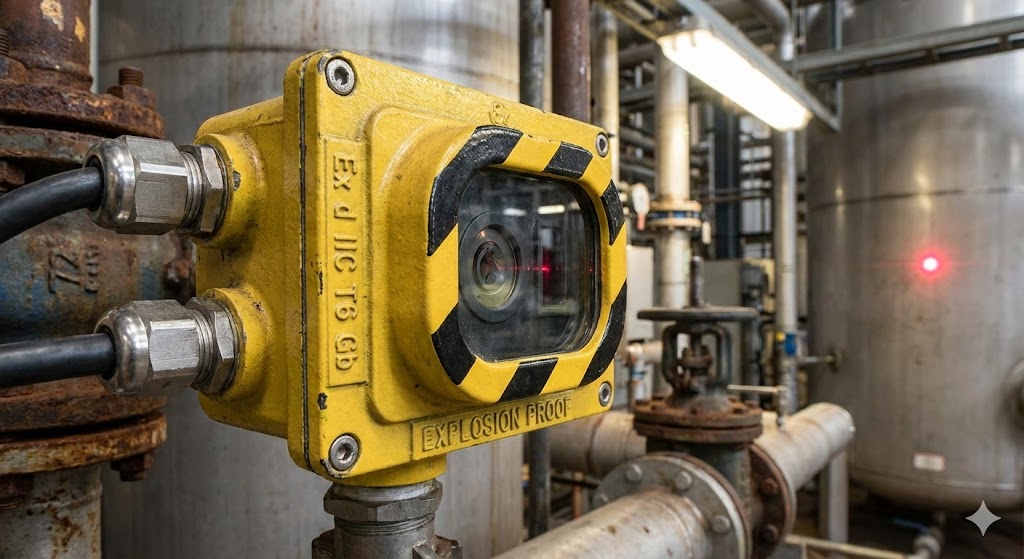
The mechanical housing is not merely a shell but a fundamental part of the sensor's structure. It ensures precise and stable alignment between the emission and reception optical axes—a parameter critical for triangulation-based sensors. The housing is often constructed from materials like anodized aluminum or engineered plastics, providing electromagnetic shielding, thermal stability to counteract diode wavelength drift, and environmental protection against dust and moisture (often rated to IP67 or similar standards). For sensors used in safety applications, the housing incorporates features to safely manage the laser's power, ensuring compliance with international laser safety classes (e.g., IEC 60825-1 Class 1 or Class 2).
Advanced infrared laser sensor structures may integrate additional elements. A temperature sensor and a feedback loop to the laser driver compensate for performance variations due to thermal changes. Some designs incorporate multiple laser diodes and photodetectors in an array to create a field of detection or for advanced imaging. The trend towards miniaturization and integration has also led to the development of Micro-Electro-Mechanical Systems (MEMS)-based scanning mirrors integrated into the optical path, enabling solid-state LiDAR systems.
In summary, the structure of an infrared laser sensor is a harmonious integration of optoelectronics, precision mechanics, and advanced electronics. Each component, from the laser diode and bandpass filter to the transimpedance amplifier and ruggedized housing, plays a definitive role in determining the sensor's range, accuracy, speed, and robustness. Understanding this intricate architecture is essential for engineers selecting, integrating, and developing next-generation sensing solutions for an increasingly automated world.