Proximity sensors are indispensable components in the vast landscape of industrial automation and control systems. These non-contact sensing devices detect the presence or absence of an object within a defined range without any physical contact, offering reliability, longevity, and precision. Their operation hinges on several critical internal components, each playing a vital role in converting a physical phenomenon into a usable electrical signal. This article delves into the core electronic components that constitute a typical proximity sensor and explores their industrial significance.
At the heart of most proximity sensors lies the oscillator circuit. This circuit generates a high-frequency electromagnetic field at the sensor's active face. In inductive proximity sensors, which detect metallic objects, this field is emitted continuously. When a metal target enters this oscillating field, eddy currents are induced on the target's surface. These currents draw energy from the oscillator, causing a measurable change in its amplitude or frequency. The oscillator typically relies on components like capacitors, inductors (often forming the sensing coil), and a transistor or integrated circuit to sustain oscillations. The stability and frequency of this oscillator are paramount for consistent sensing performance and noise immunity.
The signal from the oscillator is often weak and requires conditioning. This is where the trigger circuit or demodulator comes into play. This stage rectifies and filters the oscillating signal, converting the change in oscillation caused by the target into a clean, DC voltage level shift. It essentially determines the precise threshold at which the sensor recognizes an object's presence. Modern sensors use specialized comparator ICs or built-in functions within microcontrollers for this purpose, ensuring high accuracy and hysteresis to prevent output chattering when an object is at the exact sensing point.
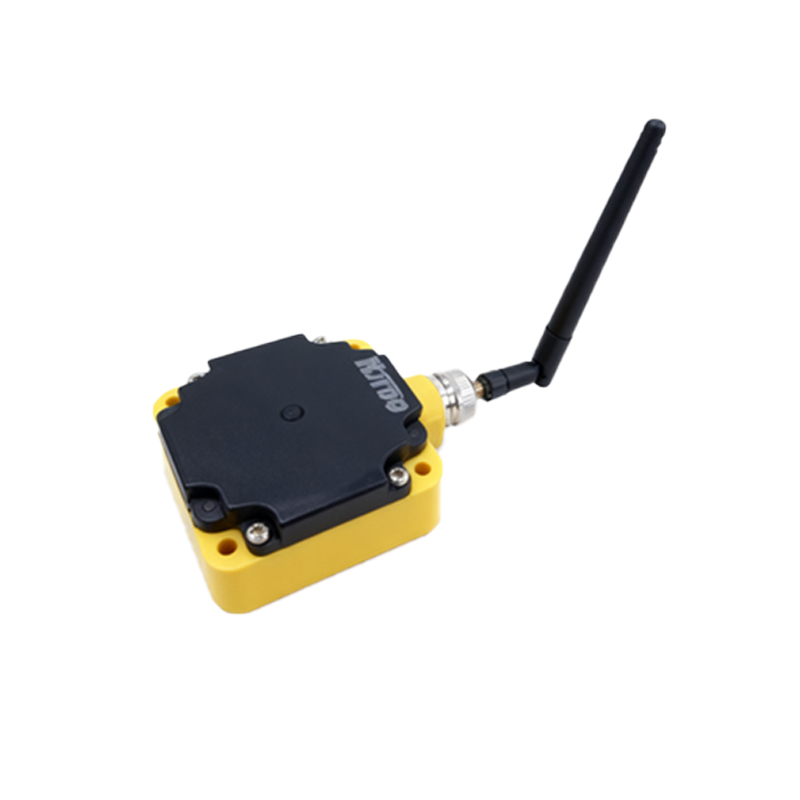
Following the trigger circuit is the output switching device. This component acts as the final actuator, controlling the flow of current to the connected load, such as a PLC input, relay, or indicator lamp. The three primary types are:
1. NPN Transistor (Sinking): Switches the negative (ground) side of the load.
2. PNP Transistor (Sourcing): Switches the positive (V+) side of the load.
3. Analog Output (e.g., 4-20mA, 0-10V): Provides a continuous signal proportional to the distance to the target, often using an operational amplifier circuit.
For sensors with digital logic, timing functions, or programmability, a microcontroller unit (MCU) or application-specific integrated circuit (ASIC) is the brain. It manages complex tasks like adjusting sensitivity, implementing time delays (on-delay, off-delay), setting output modes (latch, pulse), and facilitating communication via protocols like IO-Link. The MCU receives the conditioned signal from the trigger circuit and executes the programmed logic to control the output stage.
No sensor can function without a stable power supply. The power regulation and protection circuitry is crucial. It typically includes voltage regulators to provide stable DC voltage (e.g., 5V, 3.3V) to the internal ICs from a wider input range (commonly 10-30V DC). This section also incorporates protective components such as diodes for reverse polarity protection, transient voltage suppression (TVS) diodes for surge protection, and resistors or fuses for overcurrent protection. These components safeguard the sensitive electronics from common industrial electrical disturbances, ensuring ruggedness and longevity.
Finally, the physical construction involves passive components like resistors (for current limiting and biasing), capacitors (for filtering, decoupling, and timing), and the sensing coil/ferrite core (in inductive types) or phototransistor/LED pair (in optical types). The housing, usually made of metal (brass, stainless steel) or robust plastic (PBT), provides environmental protection (IP ratings) and shields the internal electronics from physical damage, coolant, chips, and electromagnetic interference (EMI).
In application, these components work in seamless harmony. On a high-speed packaging line, an inductive sensor with a robust oscillator and fast-switching transistor detects metal cans with micron-level repeatability, triggering a filler or capper. In a CNC machine, a capacitive sensor monitors coolant levels by detecting the change in capacitance from the liquid, its internal circuitry filtering out environmental variations. On an automated guided vehicle (AGV), multiple sensors with sophisticated MCUs help in obstacle detection and navigation.
Understanding these internal components—the oscillator, trigger circuit, output switch, controller, and protection network—empowers engineers to select the right sensor for the job. Factors like sensing distance, target material, response speed, output type, and environmental robustness all trace back to the design and quality of these fundamental parts. As Industry 4.0 advances, the integration of smarter MCUs and communication chips within