In the realm of industrial automation and control systems, proximity switches stand as fundamental components, enabling non-contact detection of objects with high reliability and precision. Unlike mechanical limit switches that require physical contact, proximity switches operate by sensing the presence or absence of a target object within a specified range without any direct touch. This key characteristic eliminates mechanical wear, reduces maintenance needs, and significantly enhances operational longevity, making them indispensable in modern manufacturing, packaging, material handling, and automotive assembly lines.
The core operating principle of most industrial proximity switches is based on electromagnetic or capacitive sensing. Inductive proximity switches, the most common type, are designed to detect metallic objects, primarily ferrous metals like steel and iron. They contain an oscillator circuit that generates a high-frequency electromagnetic field at the active sensing face. When a conductive metal target enters this field, eddy currents are induced on the target's surface. This causes a change in the oscillation amplitude, which is detected by a threshold circuit, subsequently triggering a solid-state output signal to switch the device state. These switches are highly valued for their robustness, resistance to environmental contaminants like dust, oil, and coolant, and their ability to function in harsh conditions.
Capacitive proximity switches, on the other hand, can detect both metallic and non-metallic materials, including liquids, plastics, glass, and wood. They function by generating an electrostatic field. When any material with a dielectric constant different from air enters this field, it alters the capacitance of the circuit, leading to a change in oscillation. This change is processed to activate the output. This versatility makes capacitive sensors ideal for applications like level detection in tanks, presence sensing of plastic bottles, or monitoring paper or wood products.
Another prominent category is the ultrasonic proximity sensor, which uses sound waves beyond the human hearing range. It emits ultrasonic pulses and measures the time taken for the echo to return from a target. This time-of-flight principle allows for precise distance measurement and detection of objects regardless of their color, transparency, or material composition, though they can be sensitive to environmental factors like temperature and air turbulence.
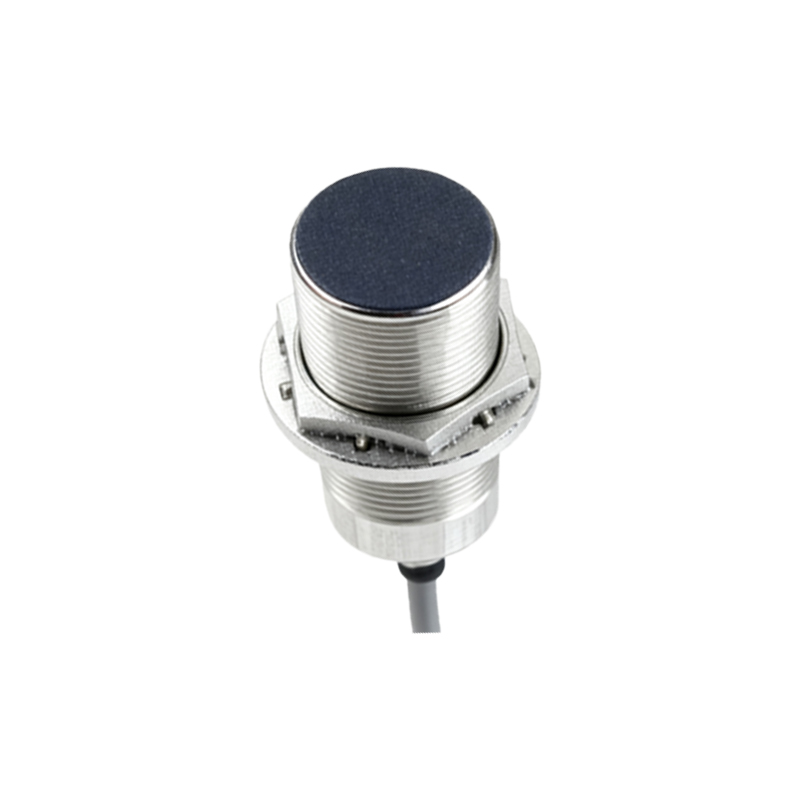
The output configuration of a proximity switch is a critical selection parameter. The two primary types are NPN (sinking) and PNP (sourcing) outputs, which define the switching logic and compatibility with Programmable Logic Controllers (PLCs) and other control systems. Many modern switches also feature analog outputs (4-20 mA or 0-10V) for continuous distance measurement or IO-Link digital communication for advanced diagnostics, parameter setting, and process data integration into Industry 4.0 frameworks.
Key performance specifications include sensing distance, repeat accuracy, response frequency, and housing material. The rated operating distance, or "Sn," is defined for a standard target under ideal conditions. Factors like target material, size, shape, and installation conditions (flush or non-flush) can affect the actual sensing range. Engineers must carefully consider these factors, along with environmental conditions such as temperature extremes, potential electrical interference, and required ingress protection (IP) ratings, to ensure optimal sensor selection and system reliability.
Applications are vast and varied. In automotive manufacturing, inductive sensors reliably count metal parts, confirm robot arm positions, and monitor door closures. In food and beverage processing, stainless-steel capacitive or ultrasonic sensors detect liquid levels or the presence of packaging without contamination. On conveyor systems, they provide object counting, jam detection, and precise positioning for sorting operations.
In conclusion, proximity switch technology is a cornerstone of efficient and automated industrial processes. Understanding the distinct operating principles, types, and application requirements is essential for design engineers and maintenance technicians. The correct selection and implementation of these sensors directly contribute to enhanced machine performance, reduced downtime, and improved overall system safety and productivity. As industries evolve towards smarter, more connected operations, the role of intelligent proximity sensors with diagnostic capabilities will only become more pronounced.