In the dynamic landscape of industrial automation, robotics, and advanced manufacturing, the demand for precise, reliable, and adaptable measurement solutions has never been greater. Off-the-shelf laser distance sensors provide a solid foundation, but they often fall short when confronted with unique environmental challenges, specific form-factor requirements, or extreme performance thresholds. This is where the strategic advantage of custom laser distance sensors becomes undeniable. By moving beyond standard specifications, engineers can partner with specialized manufacturers to develop sensors that are not merely components, but integral, optimized elements of a larger system.
The core technology of laser time-of-flight (ToF) or phase-shift measurement remains constant, but its implementation can be radically tailored. Customization begins with a deep analysis of the application's fundamental parameters. What is the exact measurement range? Is it sub-millimeter precision over 10 meters, or robust detection up to 300 meters in open terrain? The required accuracy and repeatability directly influence the choice of laser diode, optics, and signal processing algorithms. Environmental factors are paramount; a sensor destined for a sterile pharmaceutical cleanroom has vastly different housing and material requirements than one operating in a steel mill foundry with intense heat, airborne particulates, and electromagnetic interference. Custom seals, specialized cooling systems, or hardened optical windows can be integrated to ensure longevity and stable operation.
Form factor and integration are critical drivers for customization. Standard sensor housings may not fit the constrained spaces of modern collaborative robots or intricate assembly lines. Engineers can design compact, low-profile, or unusually shaped sensors. Furthermore, the interface and output signals can be tailored to match existing control architectures seamlessly. Whether it's a specific analog current loop, a high-speed digital protocol like EtherCAT or PROFINET, or a customized data packet structure, the sensor's communication layer can be built to plug directly into the host system, reducing integration complexity and development time.
Optical design offers another profound area for customization. The standard visible red dot laser may be unsuitable for certain materials. For instance, measuring the distance to a transparent glass panel or a highly reflective metal surface can cause erroneous readings. Custom sensors can employ lasers with different wavelengths, such as infrared or blue lasers, which interact more predictably with target materials. Beam shape can also be modified—from a precise point to a line or a pattern—to suit applications like edge detection, profile scanning, or monitoring uneven surfaces. Integrated optics for beam expansion or collimation can be specified to control the spot size over long distances.
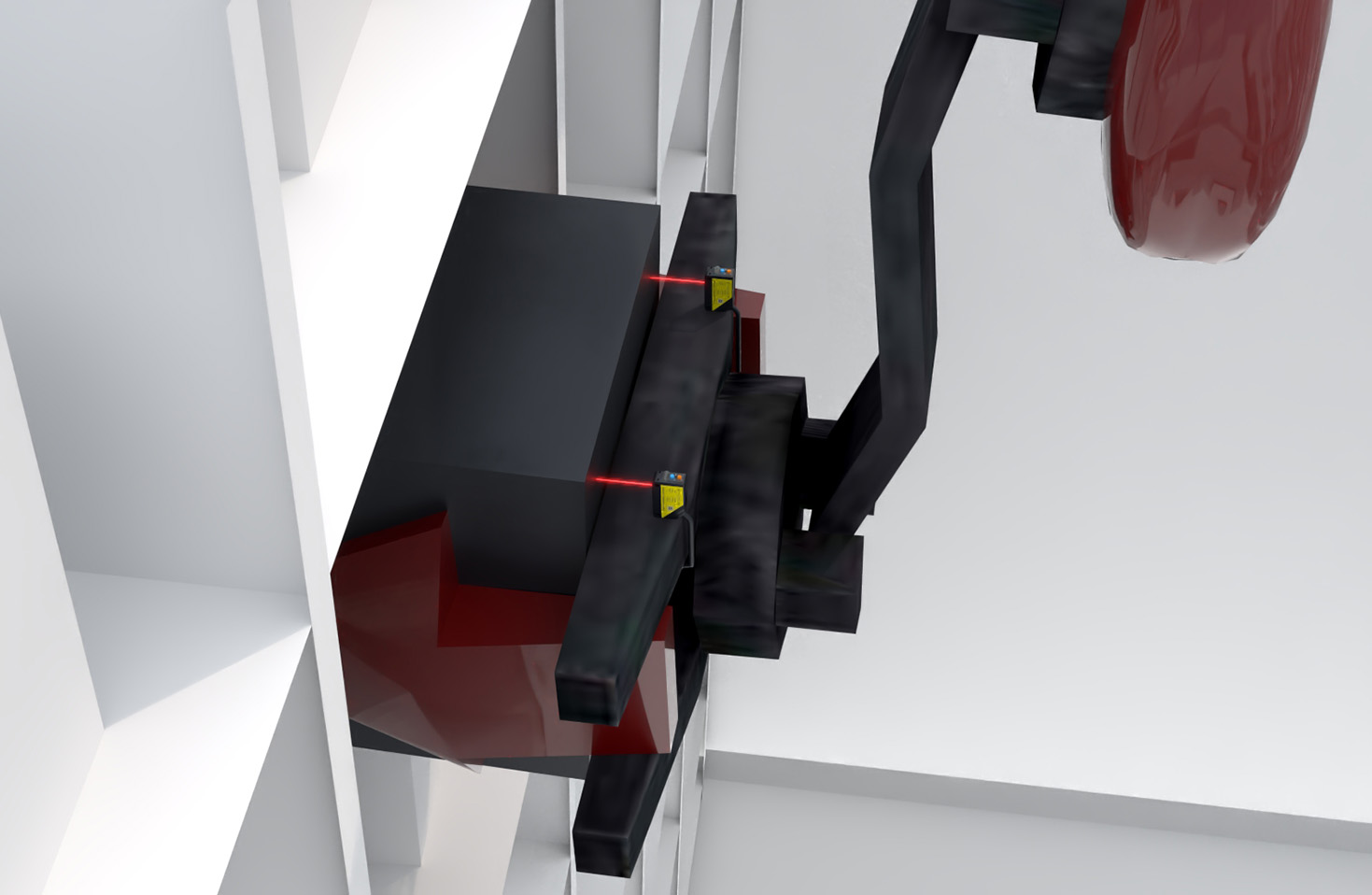
The firmware and software embedded within the sensor represent the intelligence behind the hardware. Customization here allows for the implementation of application-specific logic. This could include advanced filtering to ignore background objects, programmable multi-point averaging, in-sensor calculation of derived values (like diameter or volume), or specialized triggering modes. For autonomous vehicles or AGVs, custom algorithms might focus on high-speed, low-latency object detection and distance filtering in dynamic environments. This level of software tailoring transforms a generic measuring device into a smart sensor capable of pre-processing data, thereby reducing the computational load on the central controller.
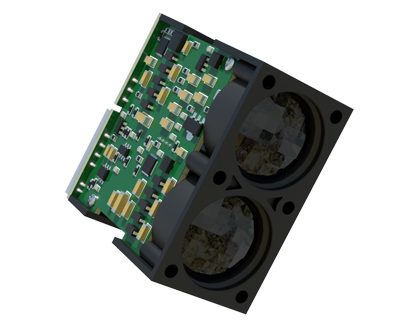
The development process for a custom laser distance sensor is inherently collaborative. It starts with a comprehensive requirements specification, co-created by the client's engineering team and the sensor manufacturer's application experts. Prototyping phases follow, where theoretical designs are validated under real or simulated conditions. Rigorous testing for performance metrics, environmental resilience, and long-term reliability ensures the final product not only meets but exceeds the operational demands. While the initial investment in time and resources for a custom solution is higher than purchasing a catalog item, the total cost of ownership is often lower. The result is a sensor that eliminates workarounds, boosts system efficiency, minimizes downtime, and delivers unmatched precision for that specific task.
In conclusion, the evolution from standard to custom laser distance sensors marks a shift from adaptation to optimization. As industries push the boundaries of speed, precision, and automation, the ability to specify every aspect of a sensor—from its physical shell to its computational core—provides a decisive competitive edge. Custom laser sensors are no longer a luxury for niche applications; they are becoming a strategic necessity for innovators seeking to build smarter, more resilient, and highly efficient measurement systems.