In modern industrial automation, proximity sensors play a critical role in detecting the presence or absence of objects without physical contact. While direct sensing—where the sensor directly faces the target—is common, indirect sensing applications often present unique challenges and innovative solutions. This article explores several case studies where proximity sensors are employed indirectly to enhance efficiency, safety, and reliability in complex environments.
One notable example involves monitoring rotating machinery components. In a conveyor system, direct installation of sensors near fast-moving parts may be impractical due to space constraints or risk of damage. Engineers have successfully used inductive proximity sensors mounted adjacent to non-metallic couplers. By attaching a small metal flag to a hidden rotating shaft, the sensor indirectly detects each rotation as the flag passes within its sensing range. This method allows for precise speed monitoring and fault detection without interfering with the machinery’s operation. The sensor’s output triggers alerts for deviations, preventing potential breakdowns and reducing maintenance downtime.
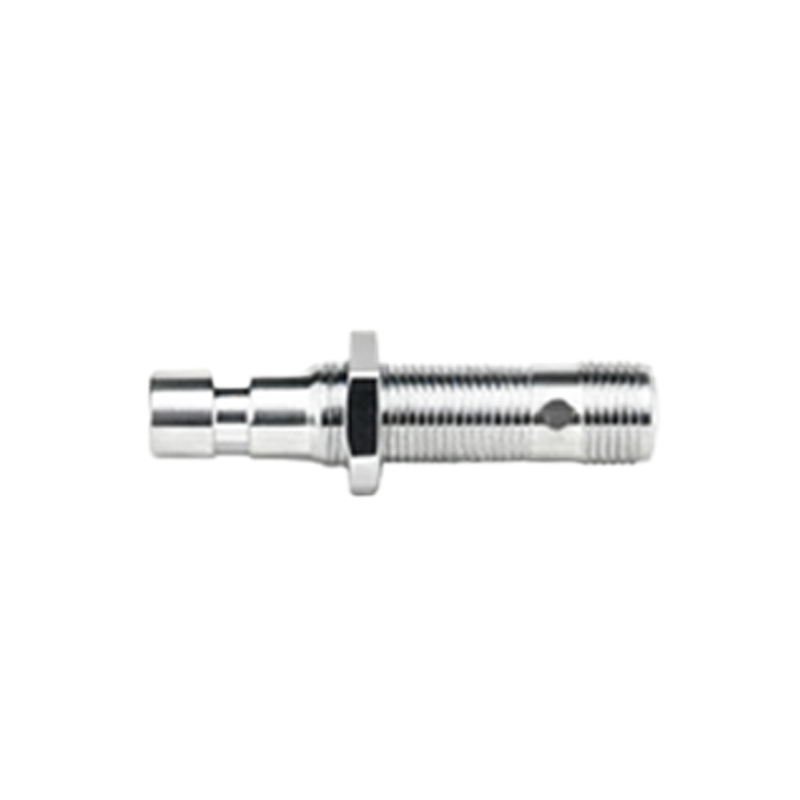
Another indirect application is found in liquid level control within opaque tanks. Ultrasonic proximity sensors are typically used for direct level measurement, but in scenarios involving corrosive fluids or high temperatures, direct exposure could compromise sensor integrity. A workaround involves mounting a capacitive proximity sensor externally on the tank wall. The sensor detects changes in the dielectric constant as the liquid level rises or falls, providing an indirect yet accurate measurement. This setup eliminates contact with the fluid, extending the sensor’s lifespan and ensuring consistent performance in harsh chemical processing plants.
In automotive assembly lines, proximity sensors facilitate indirect safety monitoring. For instance, in robotic welding stations, direct sensing of weld quality in real-time is challenging due to sparks and debris. Engineers implement magnetic proximity sensors to indirectly track the position of welding gun actuators. By monitoring the actuator’s movement patterns, the system infers whether welds are being applied correctly. Any anomaly in the sensor’s signal—such as an unexpected pause or shift—triggers an inspection routine, minimizing defects and enhancing product quality. This indirect approach reduces exposure to hazardous environments while maintaining high throughput.
The packaging industry also leverages indirect sensing for material handling. On high-speed filling lines, photoelectric proximity sensors are often used to detect labels on bottles directly. However, when labels are transparent or poorly contrasted, direct detection fails. An indirect solution involves placing a retro-reflective sensor to monitor the rotation of the labeling mechanism’s drive shaft. Each rotation corresponds to one label application, allowing the sensor to indirectly verify proper labeling by counting shaft movements. This method improves accuracy and reduces waste, showcasing how creative sensor placement can overcome material limitations.
Furthermore, in HVAC systems, indirect sensing aids in energy management. Duct-mounted airflow sensors may get clogged with dust, leading to false readings. Instead, engineers use inductive proximity sensors to monitor the vibration of fan blades indirectly. By analyzing vibration frequency and amplitude, the system deduces airflow rates and detects blockages. This indirect technique enhances reliability and reduces maintenance needs, contributing to energy savings in commercial buildings.
These case studies highlight the versatility of proximity sensors in indirect applications. Key considerations for implementation include selecting the appropriate sensor type—inductive, capacitive, ultrasonic, or photoelectric—based on environmental factors and target properties. Calibration is crucial to account for indirect signal variations, and regular testing ensures long-term accuracy. As industries evolve toward smarter automation, indirect sensing strategies will continue to enable innovative solutions for complex monitoring tasks, driving efficiency and safety forward.