In the realm of industrial automation and control systems, proximity switch sensors are indispensable components, enabling non-contact detection of objects with high precision and reliability. The nomenclature of these sensors, however, can often appear cryptic to engineers and technicians, especially those new to the field. This article delves into the standard naming conventions, key terminology, and practical implications of proximity sensor designations, providing clarity for selection and application.
Proximity sensors are broadly categorized based on their sensing technology. The most common types include inductive, capacitive, ultrasonic, and photoelectric sensors. Each type has a distinct naming structure that typically incorporates abbreviations indicating the technology, form factor, output type, and special features. For instance, an inductive proximity sensor designed for metallic object detection might carry a model number like "IM12-04NPS-ZW1." Here, "I" often denotes inductive, "M" might indicate a cylindrical housing, "12" could refer to the diameter in millimeters, "04" may specify the sensing distance in millimeters, "N" often stands for normally open output, "P" could imply PNP output configuration, "S" might indicate a short-circuit protected design, and "ZW1" may be a series or variant code. Understanding these alphanumeric sequences is crucial for matching the sensor to the application's electrical and mechanical requirements.
The naming conventions are not universally standardized across all manufacturers, but many follow guidelines set by international standards such as IEC 60947-5-2. This standard helps ensure consistency in terms of performance characteristics, but model numbering remains largely proprietary. A typical part number will encode information about the sensor's housing material (e.g., stainless steel, brass, or plastic), connection type (e.g., cable exit, connector), output function (e.g., NPN, PNP, analog, IO-Link), and environmental ratings like IP67 for dust and water resistance. For example, a capacitive sensor suitable for liquid level detection might be labeled "CA18-G08A-PSC," where "CA" could signify capacitive, "18" the diameter, "G" a certain housing style, "08" the sensing range, "A" an analog output, and "PSC" indicating additional protection features.
Engineers must pay close attention to these designations to avoid operational failures. A common pitfall is confusing output types; using an NPN sensor in a PNP-sourced input circuit, for instance, will result in malfunction. Similarly, the sensing distance indicated in the name, such as "5mm" or "10mm," is typically defined for a standard target (like mild steel for inductive sensors). Actual performance can vary with different materials and environmental conditions. Special suffixes like "T" for temperature resistance or "E" for extended range further refine the selection.
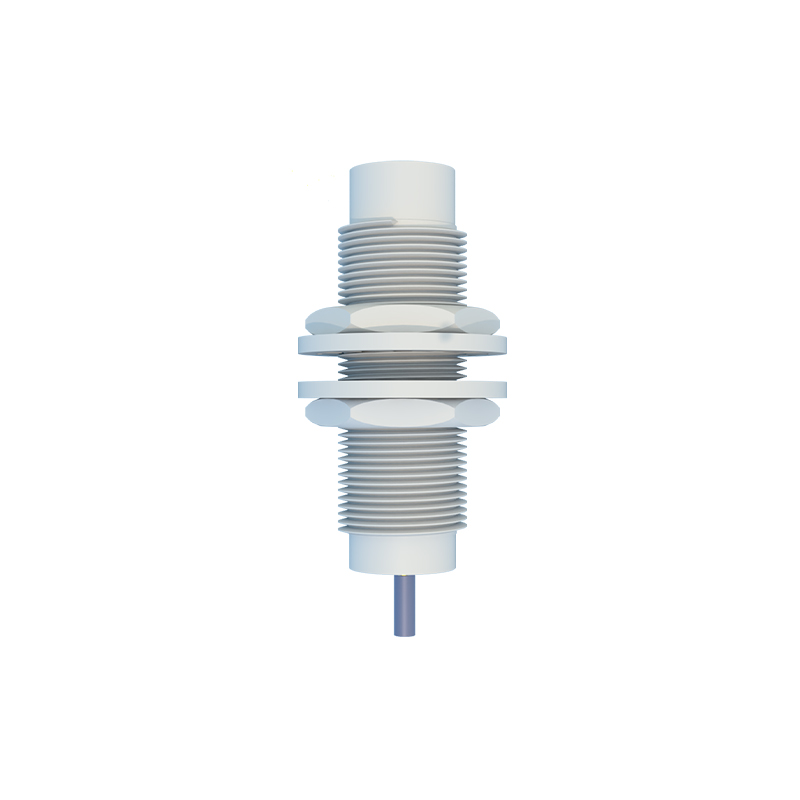
In practice, consulting the manufacturer's datasheet is imperative, as it provides the definitive breakdown of the nomenclature. However, recognizing patterns across brands can expedite the preliminary selection process. As Industry 4.0 advances, many modern proximity sensors now include smart features, with names incorporating terms like "IO-Link," "Diagnostics," or "PROFINET," reflecting their connectivity and data capabilities. This evolution adds layers to naming but follows the same logical structure—technology first, followed by physical and electrical specs, then advanced functions.
Ultimately, mastering proximity sensor nomenclature enhances system design efficiency, reduces downtime, and ensures compatibility. Whether for machine safety, object counting, or position verification, a clear understanding of what each character in a sensor's name represents empowers engineers to make informed decisions, optimizing both performance and cost in complex automation environments.