In the realm of industrial automation and control, proximity sensors are indispensable components. These non-contact devices detect the presence or absence of an object within their sensing range without any physical contact, offering reliability, longevity, and precision. Understanding the various types of proximity sensors is crucial for selecting the right technology for a specific application. This guide delves into the primary categories, their operating principles, advantages, and typical use cases.
The most prevalent type is the Inductive Proximity Sensor. This sensor generates an electromagnetic field using a coiled wire wound around a ferrite core. When a metallic object (the target) enters this field, it induces eddy currents on the object's surface. These currents cause a load on the sensor's oscillator, which is detected by the circuitry, triggering a switching signal. Inductive sensors are exclusively for detecting metals, with their effective sensing range varying based on the metal type—ferrous metals like iron and steel are detected at the nominal range, while non-ferrous metals like aluminum or copper require a reduced range. They are renowned for their robustness, high switching frequency, and immunity to environmental factors like dust, oil, or moisture. Common applications include position sensing of machine parts, limit switching, and metal detection in conveyor systems.
Another widely used category is the Capacitive Proximity Sensor. These sensors can detect both metallic and non-metallic objects, including liquids, powders, plastics, and wood. They operate by generating an electrostatic field between two electrodes (often the sensor face and a ground plane). When any material with a dielectric constant different from air enters this field, it changes the capacitance of the circuit. This change is measured, and when it exceeds a threshold, the sensor switches. Capacitive sensors are ideal for level detection in tanks (for liquids or granular materials), material handling, and detecting non-metallic objects on production lines. However, they can be more susceptible to environmental changes like humidity and require careful adjustment to avoid false triggers from background objects.
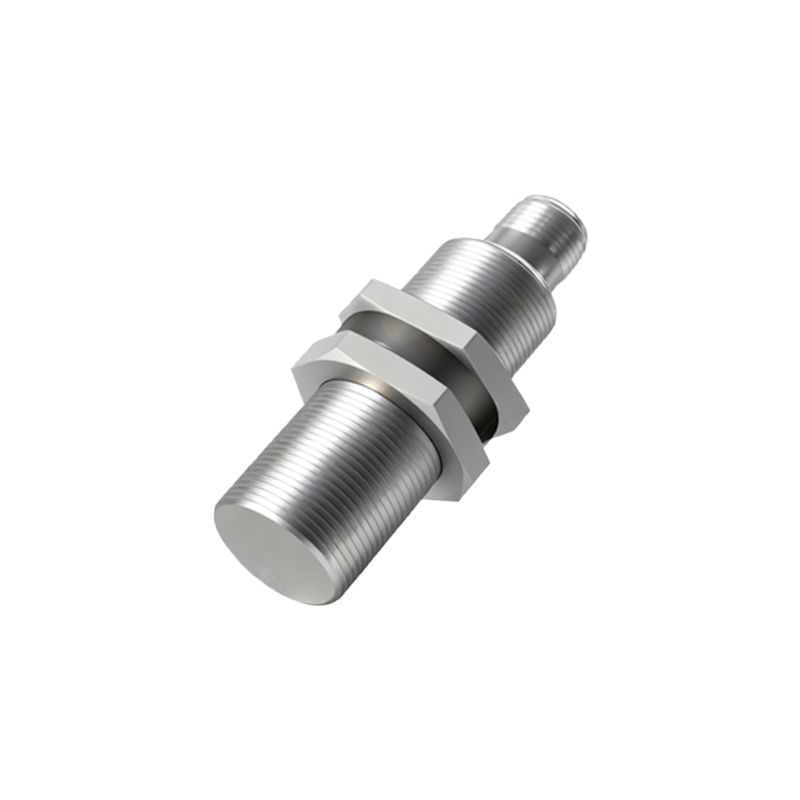
For applications requiring longer sensing distances or detection of any material, Ultrasonic Proximity Sensors are the solution. They work on the principle of echolocation. The sensor emits high-frequency sound waves (ultrasonic pulses) and then listens for the echo reflected from a target object. By measuring the time interval between the emission and reception of the sound wave, the sensor calculates the distance to the object. Ultrasonic sensors are excellent for detecting objects regardless of color, transparency, or material composition. They are used in distance measurement, level sensing for bulk solids or clear liquids, and object detection in challenging environments where optical sensors might fail due to dust or smoke.
Photoelectric Sensors, while sometimes categorized separately, function as a key type of non-contact proximity sensor. They use a light beam (visible red, infrared, or laser) to detect objects. The main types include through-beam (separate emitter and receiver), retro-reflective (uses a reflector), and diffuse (reflective), where the sensor itself contains both the light source and receiver. In the diffuse mode, it acts as a proximity sensor by detecting the light reflected directly from the target. Photoelectric sensors offer very long sensing ranges, especially through-beam types, and can detect virtually any object. They are perfect for packaging, material handling, and assembly line automation.
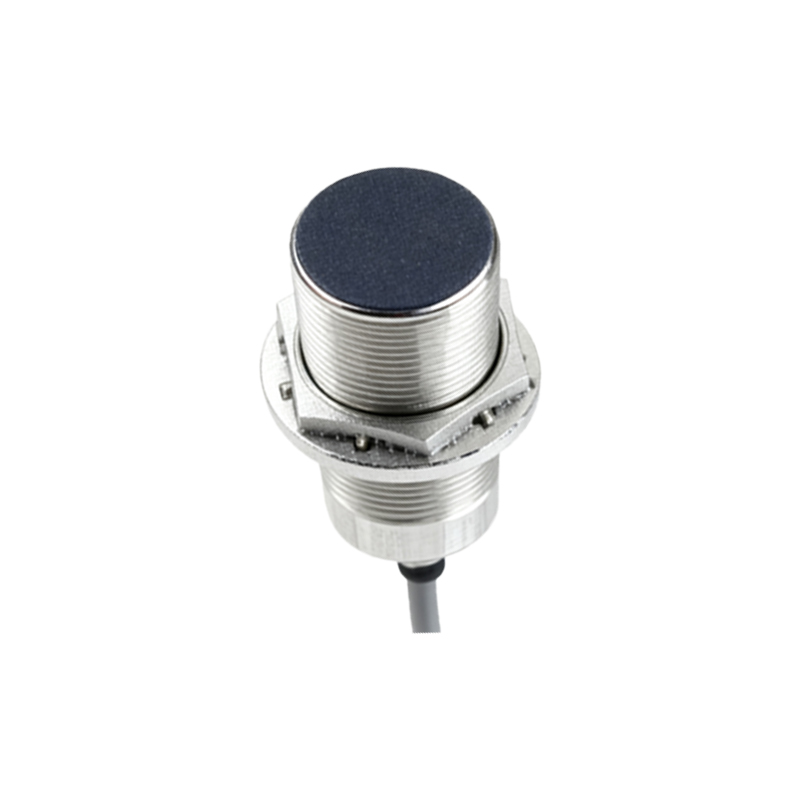
Finally, Magnetic Proximity Sensors (often Reed Switches or Hall Effect sensors) detect the presence of a permanent magnet. Reed switches consist of two ferromagnetic reeds sealed in a glass tube. When a magnet approaches, the reeds attract and close the contact. Hall Effect sensors produce a voltage change when exposed to a magnetic field. These sensors are extremely reliable for detecting the position of cylinders (with embedded magnets), doors, or any moving part where a magnet can be attached. They are simple, cost-effective, and can operate in harsh conditions.
Selecting the correct proximity sensor involves analyzing the target material, required sensing distance, environmental conditions (temperature, contaminants), electrical requirements (AC/DC, output type), and installation constraints. Inductive sensors are kings for metals in dirty environments. Capacitive sensors handle diverse materials including liquids. Ultrasonic sensors excel in long-range and challenging conditions. Photoelectric sensors offer versatility and long range for non-metallic detection. Magnetic sensors provide simple and reliable position feedback.
In conclusion, the evolution of proximity sensor technology continues to enhance precision, miniaturization, and intelligence with integrated IO-Link communication for diagnostics and parameter setting. A thorough understanding of these fundamental types empowers engineers and technicians to build more efficient, reliable, and smarter automated systems.